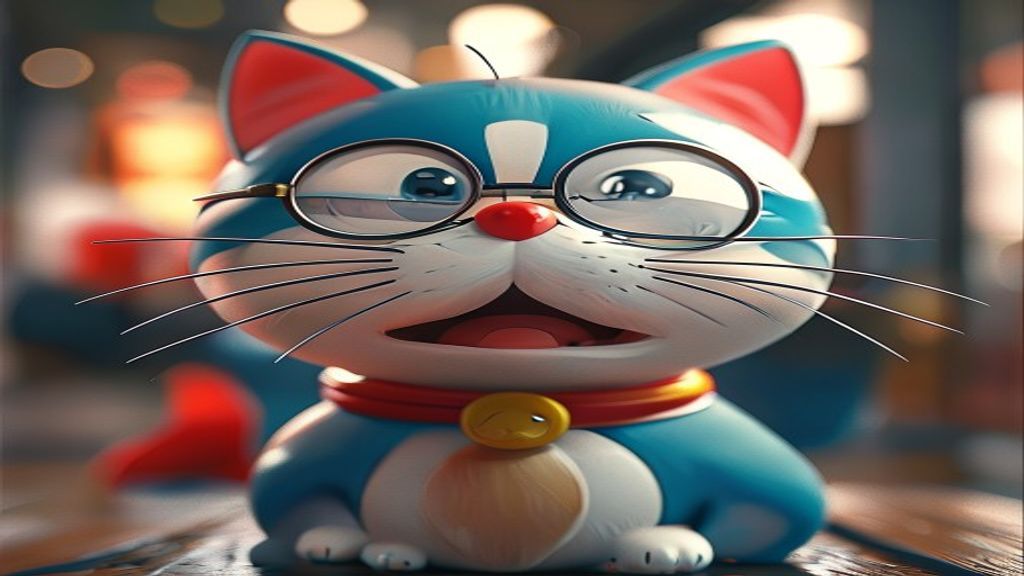
AI
Doraemon: From Manga Pages to Global Cultural Icon. Doraemon, created by Fujiko F. Fujio in December 1969, has carved a special place in the hearts of readers with 1,345 chapters arranged in 45 tankōbon volumes.. Early Days in a School Library
On a dusty afternoon in a school library in Jakarta, a fifth-grade student tightly gripped a blue-gray picture book with shining round eyes. On its cover was the name Doraemon , a earless robot cat that leaped across time. As the child flipped through the pages, unaware that they were delving into a three-decade-old manga legacy.
The Birth of an Icon
Doraemon first appeared in December 1969 by the creative duo behind the pen name Fujiko F. Fujio. This manga was published by Shogakukan, a leading publisher in Japan, and continued until 1996 , spanning the period of 1970-1996 . During this time, a total of 1,345 individual chapters were arranged into 45 tankōbon volumes. Each volume contained stories that combined science fiction, humor, and moral values easily digestible by children and adults alike.
Characters and Future Concepts
The story revolves around Doraemon, a robot cat from the 22nd century who came to help a boy named Nobita Nobi. Without the usual ears of a cat, Doraemon stood out with his magical pocket in his stomach, where he stored various futuristic gadgets. Each gadget – from the "Anywhere Door" to the "Time Ball" – was not just a fantasy element but also a reflection of humanity's hopes for technology that could simplify daily life.
From Pages to Hearts of Readers
Although detailed sales data is not mentioned in the primary source, Japanese entertainment industry reports state that Doraemon became one of the longest-running and most translated manga. This success was not just the result of marketing but also because the story highlighted values of friendship, hard work, and the desire to improve oneself – values that resonated across cultures.
Cultural Pop Heritage
Doraemon's influence extends beyond the pages. The character has appeared in various media – television, film, and commercial products – making it a symbol of Japanese pop culture pride. In the 2000s, UNESCO placed Doraemon on the list of intangible cultural heritage, recognizing its importance in promoting visual literacy among children. In Southeast Asia, particularly in Malaysia and Indonesia, Doraemon is often used as an example in informal education programs to teach basic science concepts through storytelling.
Future Perspectives
As technology advances with virtual reality and artificial intelligence, Doraemon remains relevant. The concept of a robot cat helping humans inspires engineers and designers to create more friendly social robots. Recent studies at the University of Technology Malaysia show that Doraemon's narrative is used as a reference material in human-machine interaction design courses, reaffirming the importance of art in driving innovation.
Conclusion: A Story That Remains Alive
Doraemon is not just a manga; it's a window connecting generations, cultures, and technology. From the 1,345 chapters published to the billion fans worldwide, the story of this robot cat reminds us that imagination, when combined with positive values, can transcend time.