First Surprise: Roads Without Wheels, But More Advanced Than Rome
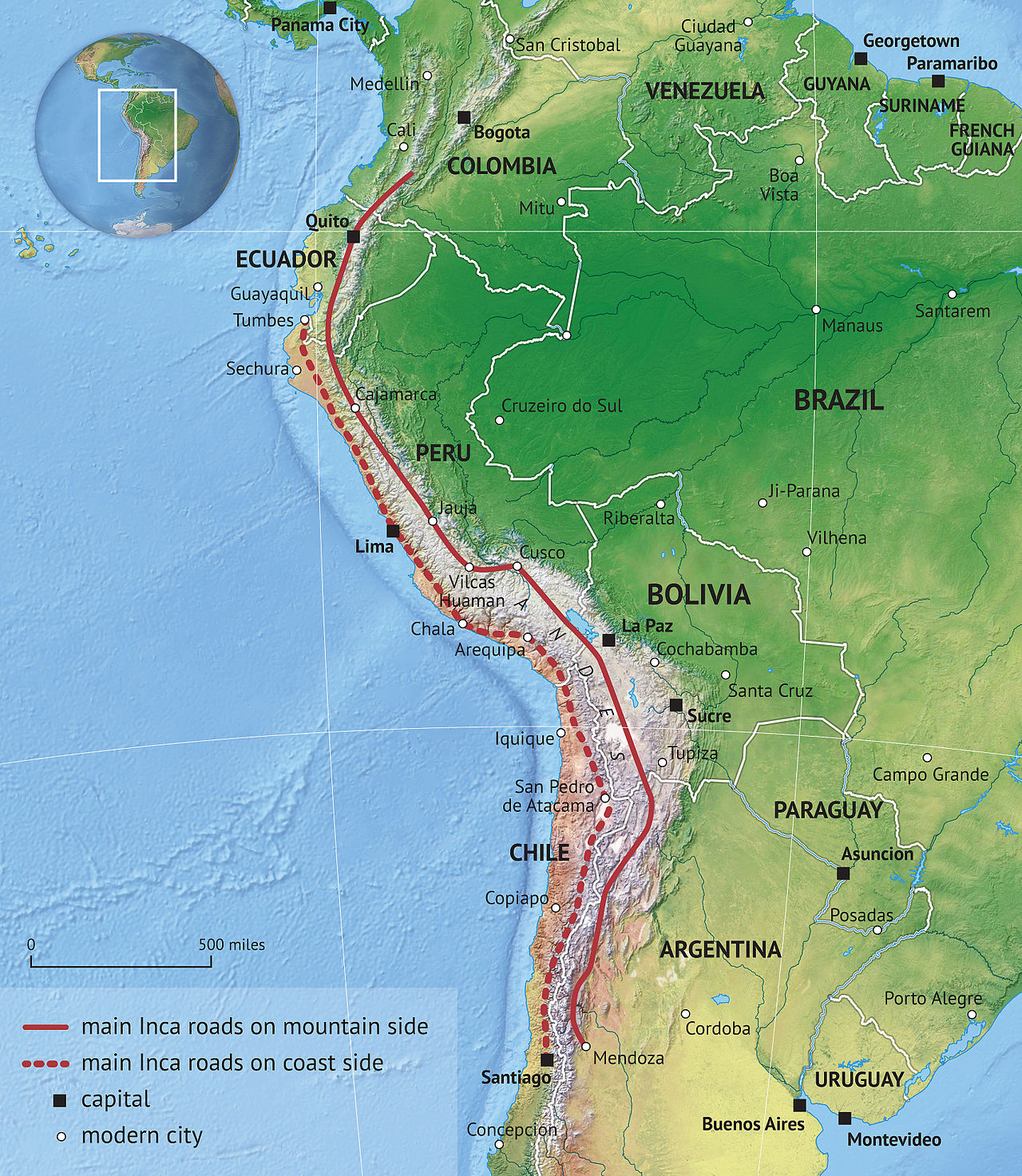
Imagine an empire building a road network of 40,000 kilometers—longer than the Earth's circumference—without using wheels, horses, or iron. That is what the Inca civilization did in the Andes mountains. This Qhapaq Ñan (Royal Road) network was not just dirt paths; it was an engineering system matching the Roman roads, and in some aspects even superior. How could a society considered 'primitive' create such infrastructure? The answer lies in their extraordinary innovation and organization.
Clever Design: Roads Living in the Mountains
Inca roads were designed to cross one of the most extreme landscapes in the world: high mountain peaks, dry deserts, and dense forests. Inca engineers used amazing techniques:
- Stone staircases to climb steep slopes, allowing hikers to reach thousands of meters without slipping.
- Advanced drainage systems to prevent erosion, including ditches and stone channels that carried rainwater away.
- Retaining walls to stabilize hill slopes, built from stones without mortar but still strong to this day.
- Suspension bridges made from plant fibers, capable of supporting the weight of humans and llamas, and easy to repair.
This excellence is not just theory; many parts of the road are still usable today, proving the durability of its design.
Runners: A Communication System Faster Than Post
Without horses, the Inca used runners called chasqui. They ran from one rest station (tambo) to the next, which were about 6-9 km apart. With this relay system, messages could be delivered as far as 240 km a day—faster than any courier system in Europe at that time. Chasqui not only carried oral messages but also quipu, a knotted string recording device that stored complex data such as population censuses, warehouse inventories, and military orders. This was an extremely efficient communication system, allowing the Inca emperor to control an empire of 2 million square kilometers quickly.
Logistics Organization: An Empire on the Move
Inca roads were not just pathways; they were the backbone of the empire's logistics. Every 20-30 km there were tambos—rest stations providing food, shelter, and supplies for runners and soldiers. Warehouses along the roads were filled with dried food, weapons, and other goods, enabling the army to move quickly without carrying heavy loads. This system allowed the Inca to deploy troops to any corner of the empire within a few days, something impossible for other civilizations at the time.
Comparison with Rome: More Efficient in Different Contexts
Roman roads are famous for their durability and scale, but Inca roads had unique advantages. Roman roads were built for horse-drawn carriages and foot soldiers, requiring flat and wide surfaces. In contrast, Inca roads were designed for pedestrians and llamas, allowing them to climb steep slopes that were impossible for wheeled vehicles. Even the Inca chasqui system could deliver messages faster than Roman couriers in mountainous areas. This shows that 'progress' is not just about having wheels, but about adapting technology to the environment.
Lost Heritage: What We Don't Know
Although we know much about the Inca road network, many mysteries remain. How did they build roads in areas without trees for wood? How did they measure distances without modern tools? And most importantly, why does history often ignore these achievements? Perhaps because it challenges the narrative that technology only advances with wheels and iron. The Inca road network proves that civilizations can achieve remarkable engineering feats without relying on 'modern technology'—a lesson relevant to us today.
Conclusion
The Inca road network is evidence of human genius often overlooked. With 40,000 km of roads, an efficient communication system, and resilient engineering, this civilization showed that progress is not linear. When we look at these roads, we must question what is taught in history—and perhaps, admire the capabilities of those who lived without wheels, yet moved faster than we thought possible.
---
*Reference: [Inca road system — Wikipedia](https://en.wikipedia.org/wiki/Inca_road_system)*