TITLE: Mercedes-Benz VLE-Class EV 2028: A Luxurious Electric Sedan Bridging Prestige and Practicality
SUMMARY: Mercedes-Benz will launch the VLE-Class EV in 2028 — a new luxury electric sedan on the modular platform (MMA) that bridges the gap between EQS and C-Class. This article analyzes speculation on specifications, expected price range of RM400,000–RM600,000, challenges with charging infrastructure in Nusantara, and its competition with BMW i5, Tesla Model S, and NIO ET7 — based on a report by Car and Driver (USA).
CONTENT:
Mercedes-Benz does not launch new models just to add to the list. Every letter in the VLE-Class name — Visionary Luxury Electric — is a promise. And the year 2028 is not just a number on the calendar; it is the time when the brand officially closes the chapter on internal combustion engines for the premium sedan segment, while opening up a new definition of electric luxury.
Between EQS and C-Class: A Strategically Filled Gap
The VLE-Class EV is not an evolution — it is a controlled revolution. It is specifically designed to fill a strategic gap: too large and expensive to be a daily choice like the C-Class, but not experimental or excessive enough like the EQS. According to a
Car and Driver (USA) report, this model will use the new Mercedes-Benz modular electric platform, known as MMA (
Mercedes Modular Architecture). This platform allows adjustments in wheelbase, battery capacity, and drive configuration without compromising structure. For the VLE-Class, the range is expected to reach 650 km (WLTP cycle), making it one of the most competitive in the luxury electric sedan segment.
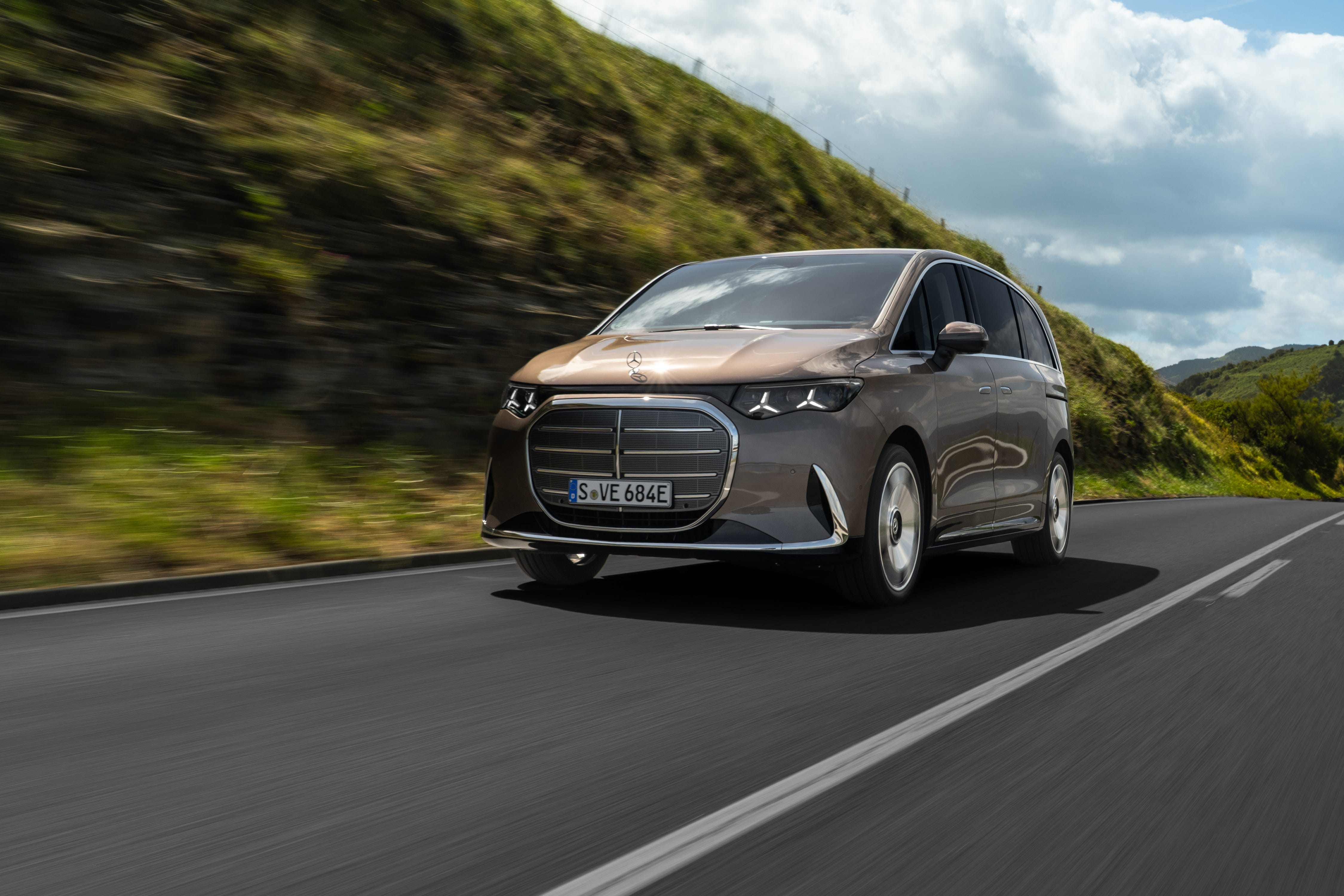
Its design combines the sharp lines of classic Mercedes — such as the smooth side profile and three-volume proportions — with modern aerodynamic sophistication. The traditional front grille is replaced by a solid black panel with dual functions: as a sensor surface and an interactive surface. The Digital Light headlights are not just accessories; they are standard features, allowing light adjustment based on road conditions and traffic.
Performance and Technology: Measured Power, Hidden Intelligence
The VLE-Class EV will be offered in three main variants: VLE 350 (rear-wheel drive, ~300 hp), VLE 450 4Matic (all-wheel drive, ~400 hp), and an AMG variant with power exceeding 600 hp. Acceleration from 0–100 km/h for the AMG variant is expected to be around 3.5 seconds — performance comparable to the Tesla Model S Plaid and Porsche Taycan Turbo S.
Inside the cabin, the focus shifts to the human experience: the MBUX Hyperscreen infotainment system may be available as a premium option, not a standard feature. More importantly, the VLE-Class will support Level 3 autonomous driving on certain highways — provided local laws allow it. A new battery management system is also being developed, enabling ultra-fast 300 kW charging: charging time from 10% to 80% is expected to be less than 20 minutes.
Price and Availability: Expensive Exclusivity, But Not Unreachable
Official pricing has not been announced. However, based on market position and specifications, the global estimate ranges between USD90,000 and USD130,000 (RM400,000–RM580,000). In Nusantara, import duties, excise taxes, and road taxes will increase the final price — likely exceeding RM600,000. Government incentives, such as import duty exemptions for electric vehicles (as in Malaysia), can ease the burden, but not eliminate the entire difference.
Early launch is expected in Europe and North America in early 2028. The Southeast Asian market — including Malaysia and Indonesia — is likely to receive the first units by late 2028 or early 2029. Limited distribution and high demand may result in waiting periods exceeding six months.
Significance for Nusantara: Luxury Mobility in a Tropical Reality
For buyers in Nusantara, the VLE-Class EV is not just a luxury car — it is a test of whether electric luxury can operate practically under tropical climates and developing infrastructure. Fast-charging station networks are expanding in major cities, but high-power (350 kW) stations required by the VLE-Class remain rare — especially outside KL, Singapore, and Jakarta.
High temperatures and constant humidity also place additional pressure on the battery thermal management system. Although Mercedes has tested this system in various climate zones, the long-term effects on battery life and performance stability can only be assessed after widespread use in this region.
Competition: Where Does the VLE-Class Stand?
In the luxury electric sedan segment, the VLE-Class will face off against the BMW i5 and i7 — which focus more on driving dynamics — and the Audi e-tron GT, which emphasizes sporty design. The Tesla Model S remains the benchmark for performance and software ecosystem. However, the most significant threat comes from China: the NIO ET7 offers similar range, comparable autonomous technology, and a lower price — with unique battery swapping network support.
The advantage of the VLE-Class does not lie solely in technical specs. It lies in the proven build quality, precise cabin design, and the irreplaceable brand heritage that cannot be replicated by data or algorithms. That is what is hard to imitate.
The VLE-Class EV is not just a new model. It is a statement: that electric luxury does not have to sacrifice peace of mind, comfort, or confidence. For automotive enthusiasts in Nusantara, it may not be a distant dream — but a reality being set in motion, step by step, toward 2028.
Mercedes-Benz VLE-Class EV 2028: A Luxurious Electric Sedan Bridging Prestige and Practicality. Mercedes-Benz will launch the VLE-Class EV in 2028 — a new luxury electric sedan on the modular platform (MMA) that bridges the gap between EQS and C-Class. This article analyzes speculation on specifications, expected price range of RM400,000–RM600,000, challenges with charging infrastructure in Nusantara, and its competition with BMW i5, Tesla Model S, and NIO ET7 — based on a report by Car and Driver (USA).. TITLE: Mercedes-Benz VLE-Class EV 2028: A Luxurious Electric Sedan Bridging Prestige and Practicality
SUMMARY: Mercedes-Benz will launch the VLE-Class EV in 2028 — a new luxury electric sedan on the modular platform MMA that bridges the gap between EQS and C-Class. This article analyzes speculation on specifications, expected price range of RM400,000–RM600,000, challenges with charging infrastructure in Nusantara, and its competition with BMW i5, Tesla Model S, and NIO ET7 — based on a report by Car and Driver USA .
CONTENT:
Mercedes-Benz does not launch new models just to add to the list. Every letter in the VLE-Class name — Visionary Luxury Electric — is a promise. And the year 2028 is not just a number on the calendar; it is the time when the brand officially closes the chapter on internal combustion engines for the premium sedan segment, while opening up a new definition of electric luxury.
Between EQS and C-Class: A Strategically Filled Gap
The VLE-Class EV is not an evolution — it is a controlled revolution. It is specifically designed to fill a strategic gap: too large and expensive to be a daily choice like the C-Class, but not experimental or excessive enough like the EQS. According to a Car and Driver USA report, this model will use the new Mercedes-Benz modular electric platform, known as MMA Mercedes Modular Architecture . This platform allows adjustments in wheelbase, battery capacity, and drive configuration without compromising structure. For the VLE-Class, the range is expected to reach 650 km WLTP cycle , making it one of the most competitive in the luxury electric sedan segment.
Its design combines the sharp lines of classic Mercedes — such as the smooth side profile and three-volume proportions — with modern aerodynamic sophistication. The traditional front grille is replaced by a solid black panel with dual functions: as a sensor surface and an interactive surface. The Digital Light headlights are not just accessories; they are standard features, allowing light adjustment based on road conditions and traffic.
Performance and Technology: Measured Power, Hidden Intelligence
The VLE-Class EV will be offered in three main variants: VLE 350 rear-wheel drive, 300 hp , VLE 450 4Matic all-wheel drive, 400 hp , and an AMG variant with power exceeding 600 hp. Acceleration from 0–100 km/h for the AMG variant is expected to be around 3.5 seconds — performance comparable to the Tesla Model S Plaid and Porsche Taycan Turbo S.
Inside the cabin, the focus shifts to the human experience: the MBUX Hyperscreen infotainment system may be available as a premium option, not a standard feature. More importantly, the VLE-Class will support Level 3 autonomous driving on certain highways — provided local laws allow it. A new battery management system is also being developed, enabling ultra-fast 300 kW charging: charging time from 10% to 80% is expected to be less than 20 minutes.
Price and Availability: Expensive Exclusivity, But Not Unreachable
Official pricing has not been announced. However, based on market position and specifications, the global estimate ranges between USD90,000 and USD130,000 RM400,000–RM580,000 . In Nusantara, import duties, excise taxes, and road taxes will increase the final price — likely exceeding RM600,000. Government incentives, such as import duty exemptions for electric vehicles as in Malaysia , can ease the burden, but not eliminate the entire difference.
Early launch is expected in Europe and North America in early 2028. The Southeast Asian market — including Malaysia and Indonesia — is likely to receive the first units by late 2028 or early 2029. Limited distribution and high demand may result in waiting periods exceeding six months.
Significance for Nusantara: Luxury Mobility in a Tropical Reality
For buyers in Nusantara, the VLE-Class EV is not just a luxury car — it is a test of whether electric luxury can operate practically under tropical climates and developing infrastructure. Fast-charging station networks are expanding in major cities, but high-power 350 kW stations required by the VLE-Class remain rare — especially outside KL, Singapore, and Jakarta.
High temperatures and constant humidity also place additional pressure on the battery thermal management system. Although Mercedes has tested this system in various climate zones, the long-term effects on battery life and performance stability can only be assessed after widespread use in this region.
Competition: Where Does the VLE-Class Stand?
In the luxury electric sedan segment, the VLE-Class will face off against the BMW i5 and i7 — which focus more on driving dynamics — and the Audi e-tron GT, which emphasizes sporty design. The Tesla Model S remains the benchmark for performance and software ecosystem. However, the most significant threat comes from China: the NIO ET7 offers similar range, comparable autonomous technology, and a lower price — with unique battery swapping network support.
The advantage of the VLE-Class does not lie solely in technical specs. It lies in the proven build quality, precise cabin design, and the irreplaceable brand heritage that cannot be replicated by data or algorithms. That is what is hard to imitate.
The VLE-Class EV is not just a new model. It is a statement: that electric luxury does not have to sacrifice peace of mind, comfort, or confidence. For automotive enthusiasts in Nusantara, it may not be a distant dream — but a reality being set in motion, step by step, toward 2028.