Neutral
AI
Baca 30 saat
- •Quenda merah ekor merah (Quelea quelea) adalah burung weaver kecil yang bernomad dan mengikut musim di Afrika.
- •Spesies ini
Kandungan Ditaja (Sponsored)
Red-billed Quelea: Nomadic Bird Stirring Up Sub-Saharan Africa. The red-billed quelea (Quelea quelea) is a seasonal and nomadic weaver bird species found across the African Peninsula. With its status as a significant agricultural pest and strategic role in the food chain, it serves as an important example of the interaction between wild ecology and agrarian stability.. Morphology and Physical Characteristics
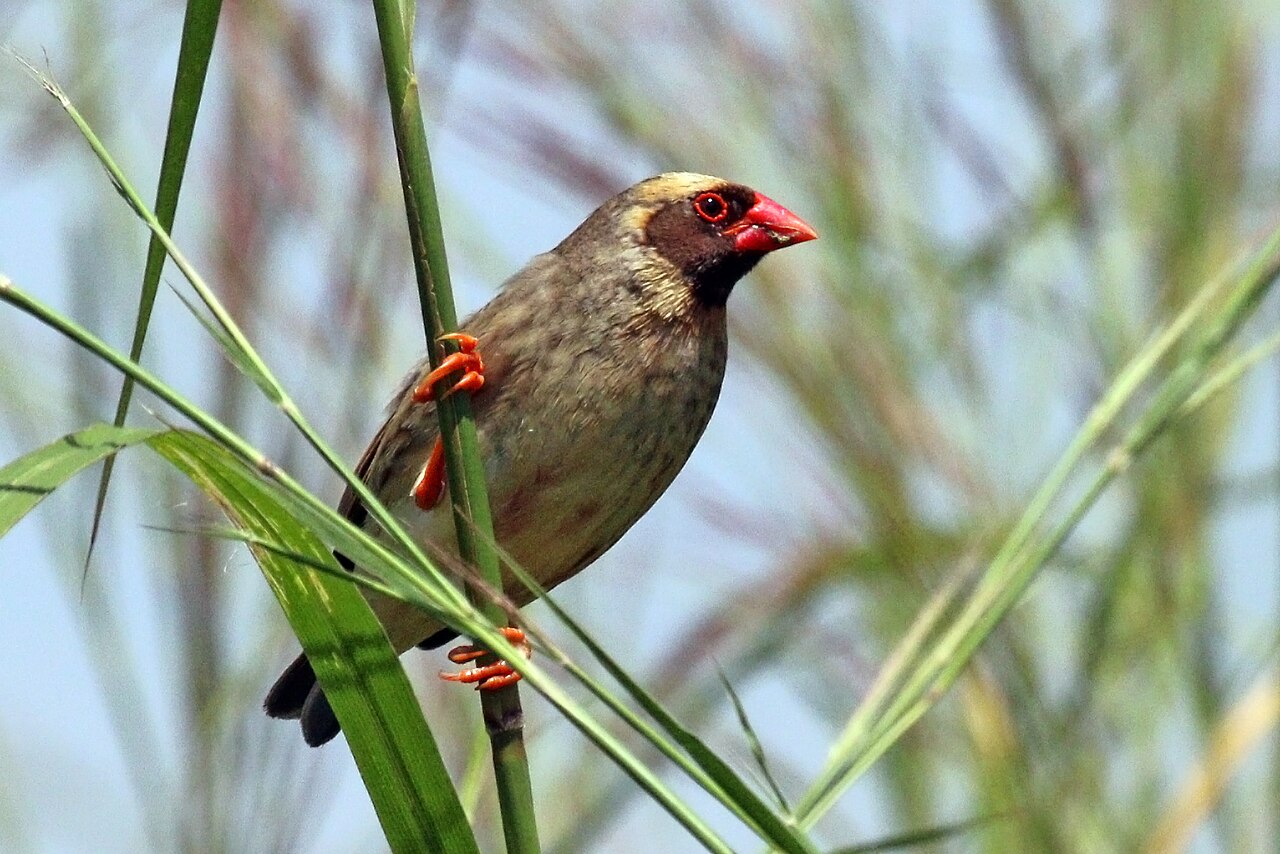
The red-billed quelea is a small and lightweight bird, with an average length of about 12 cm and a weight ranging from 15 to 26 grams. Based on assessments, the tail and beak feathers are pale pinkish-red, while the rest of the body is surrounded by light brown and gray patterns. Females, on the other hand, are more suited to earthy and gray tones, serving as natural visual camouflage among grasslands and low shrubs.
Seasonal Behavior and Migration Patterns
This species is seasonal and nomadic, meaning it does not stay fixed in one location but follows the rainy season and the availability of food resources. Its migration range spans nearly the entire Southern Africa, from Senegal in the west to Sudan in the east, and extends southward to areas such as Botswana and South Africa. This movement pattern is influenced by seasonal rainfall, dryness, and fluctuations in water sources, making the red-billed quelea population an important indicator of climate conditions and ecosystem stability in the region.
Social Groups and Reproductive Behavior
One interesting aspect of the red-billed quelea is its ability to form very large colonies, which can reach over a million individuals in a single location. These colonies typically form during the breeding season, where females build nests using leaves, feathers, and clay. Males are responsible for incubating the eggs, while females are more active in nest-building and raising the young. This temporary monogamous system allows the population to grow rapidly when environmental conditions are favorable, but also increases vulnerability to sudden environmental changes.
Impact on Agriculture and Economy
Although the red-billed quelea has high ecological value, it is also considered a significant pest in many agricultural areas of Africa. A large group of queleas can consume rice, corn, and other grains in a short time. This damage causes significant economic losses to farming communities, especially in countries such as Nigeria, Ghana, and Malawi. However, many agricultural experts emphasize that integrated management and preventive strategies can reduce negative impacts without destroying the natural ecosystem.
Role in Ecology and Food Chains
On the other hand, the red-billed quelea also plays an important role in food chains. It becomes an important food source for various predators, including raptors birds of prey , frogs, and crocodiles. Its large and rapidly growing population also contributes to the natural seeding of grains, helping to spread plants in open areas. This dynamic makes the red-billed quelea a keystone species in the complex tropical ecosystems of Africa.
Scientific Research and Global Awareness
Scientifically, the red-billed quelea has become a widely studied subject, particularly in the fields of behavioral ecology, population dynamics, and simulation models based on real data. Researchers from various African and international institutions have collected data on mass movements, population density, and habitat selection patterns. This research has made significant contributions to the global understanding of how climate, land use, and social changes affect the dynamics of rapidly reproducing wild species.
Management and Conservation Efforts
Although the red-billed quelea is not listed under the IUCN International Union for Conservation of Nature , management efforts have been carried out to prevent population fluctuations that threaten agricultural stability. Techniques such as the use of bird repellents, selective space treatment, and community education have been implemented in several areas. In addition, cooperation between local governments, regulatory agencies, and farmers in several African countries has helped create a balanced policy framework between agricultural interests and biodiversity conservation.
Lesser-Known Interesting Facts
One interesting fact is that the red-billed quelea has extremely high vision capabilities, allowing it to detect threats from long distances, especially when gathered in large numbers. In addition, it also has extraordinary adaptability to climate change, making it an important model in the study of evolution and ecology of living organisms amid the global climate crisis. Body temperature
Tags:
ekologi, biodiversiti, pertanian, migrasi burung, quenda merah ekor merah, burung Afrika