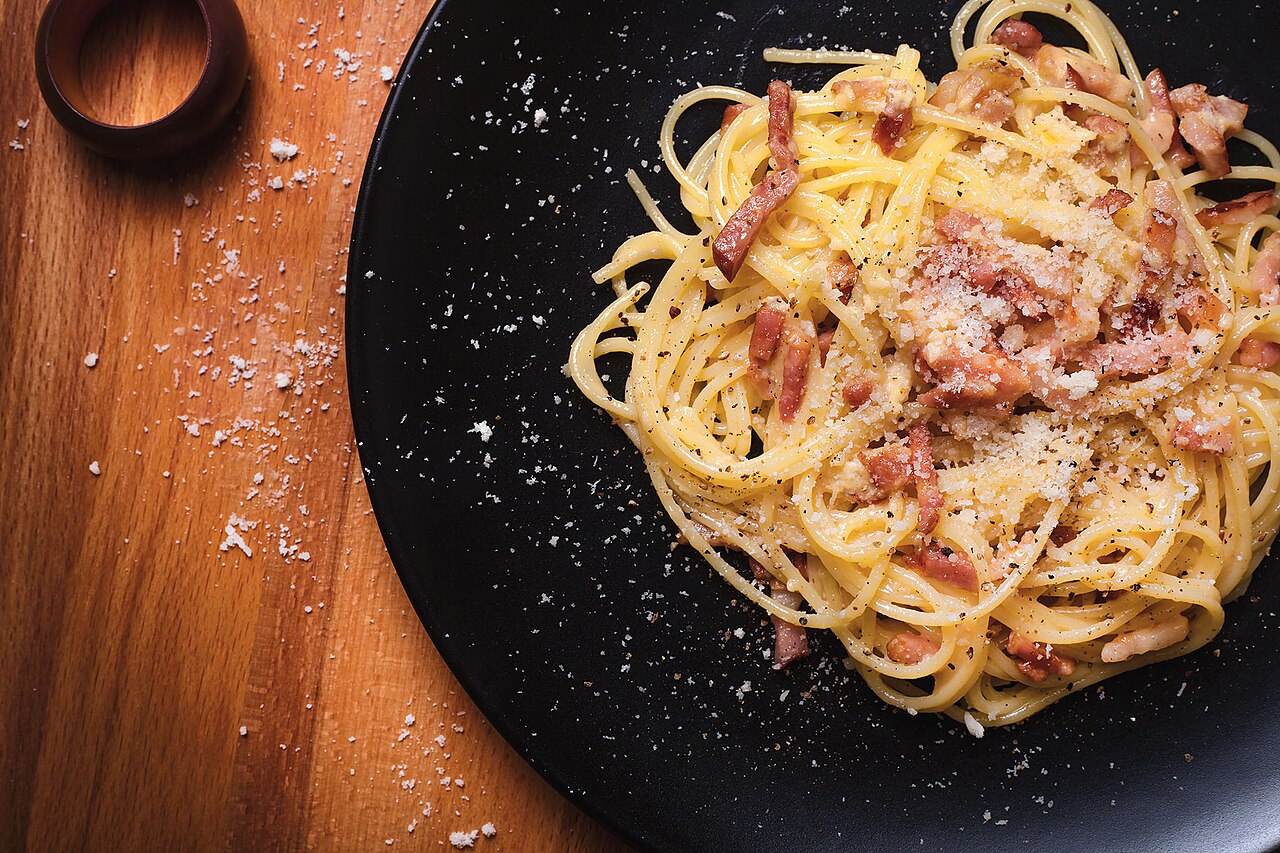
Carbonara is one of the most iconic pasta dishes in the world, renowned for its rich and creamy sauce made from eggs, cheese, cured pork, and black pepper. Although its modern recipe only emerged in the mid-20th century, this dish has become a symbol of Roman and Italian cuisine in general.
History and Origins
The origins of carbonara remain a mystery, with various theories attempting to explain its name. The first popular theory associates the name 'carbonara' with 'carbonaro' (charcoal burner), suggesting that the dish was originally prepared for Italian charcoal workers as a hearty meal. A second theory links it to the Carbonari, a secret society involved in the Italian unification movement (Risorgimento) in the early 19th century.
However, historical evidence indicates that the carbonara recipe did not exist before World War II. It is not mentioned in any Italian cookbooks before the 1930s, including Ada Boni's classic 'La cucina romana' (1930). The term 'spaghetti alla carbonara' first appeared in print in 1939 in a Dutch East Indies newspaper, which mentioned a restaurant in Trastevere, Rome, famous for the dish, without further details.
The Role of Allied Soldiers
Most food historians agree that carbonara as we know it today emerged after the liberation of Rome by the Allied forces in 1944. According to food writer Alan Davidson and historian Luca Cesari, American and British soldiers played a significant role in the creation of this dish. They brought supplies such as bacon and cheese, which were then combined with eggs and pasta by local cooks.
One popular story recounts that an Italian army cook named Renato Gualandi created the dish in 1944 in collaboration with other cooks to entertain American troops, using 'great bacon, excellent cream, a little cheese, and powdered egg yolks' supplied by the Americans. Another version suggests that carbonara originated from the 'spaghetti breakfast' requested by Allied soldiers, which consisted of bacon and eggs served over spaghetti.
Recipe Evolution
The first published carbonara recipe appeared in the cookbook 'Vittles and Vice' (1952) by Patricia Bronté in Chicago, USA. This suggests that the dish may have been brought to America by soldiers returning from Italy. The first Italian recipe appeared in the magazine 'La Cucina Italiana' in 1954, but it used pancetta, garlic, and Gruyère cheese – ingredients considered unorthodox by today's standards.
Gradually, the carbonara recipe evolved into the 'canonical' version using guanciale, Pecorino Romano, eggs, and black pepper. Cream, which was once a common ingredient in early recipes, began to be omitted in the 1990s as many Italian chefs sought to emphasize the dish's simplicity and purity. This change, according to historians, was driven by a desire to align the dish with the idealized stereotype of rustic Italian cuisine.
Ingredients and Preparation
The traditional carbonara recipe uses spaghetti as the pasta, although bucatini or rigatoni can also be used. The traditionally used meat is guanciale (cured pork jowl), but pancetta is often substituted outside of Italy. The most common cheese is Pecorino Romano, but Parmesan or Grana Padano can also be used, either alone or as a mixture.
The preparation process is relatively simple but requires precise technique. The pasta is boiled in lightly salted water, as the meat and cheese are already salty. The guanciale is briefly fried in a pan to render its fat. Meanwhile, eggs (whole or just yolks) are beaten with grated cheese and black pepper. Once the pasta is cooked, it is mixed with the egg and cheese mixture off the heat to prevent the eggs from scrambling. The guanciale fat is then added, creating a rich and creamy sauce.
Variations
Although the traditional recipe does not use cream, garlic, or other additions, many variations exist outside of Italy. In English-speaking countries, bacon often replaces guanciale, and cream is frequently added to make the sauce more stable. Other variations may include peas, broccoli, mushrooms, or other vegetables. For vegetarians, there are recipes that use mushrooms and vegetables as a meat substitute.
Conclusion
Carbonara is a dish steeped in history and controversy, from its debated origins to its evolving recipe. Although the modern recipe only emerged after World War II, it is now considered one of Italy's most beloved classic pasta dishes, both in Italy and worldwide. Whether enjoyed in a fancy restaurant or cooked at home, carbonara proves that the simplicity of quality ingredients can result in an extraordinary meal.
---