Ferrofluid is one of the most amazing materials ever created by NASA scientists in the 1960s. Essentially, ferrofluid is a regular liquid (such as oil or water) containing very small magnetite particles (iron oxide) — usually about 10 nanometers in size — evenly dispersed in the liquid with the help of a surfactant to prevent these particles from clumping together.
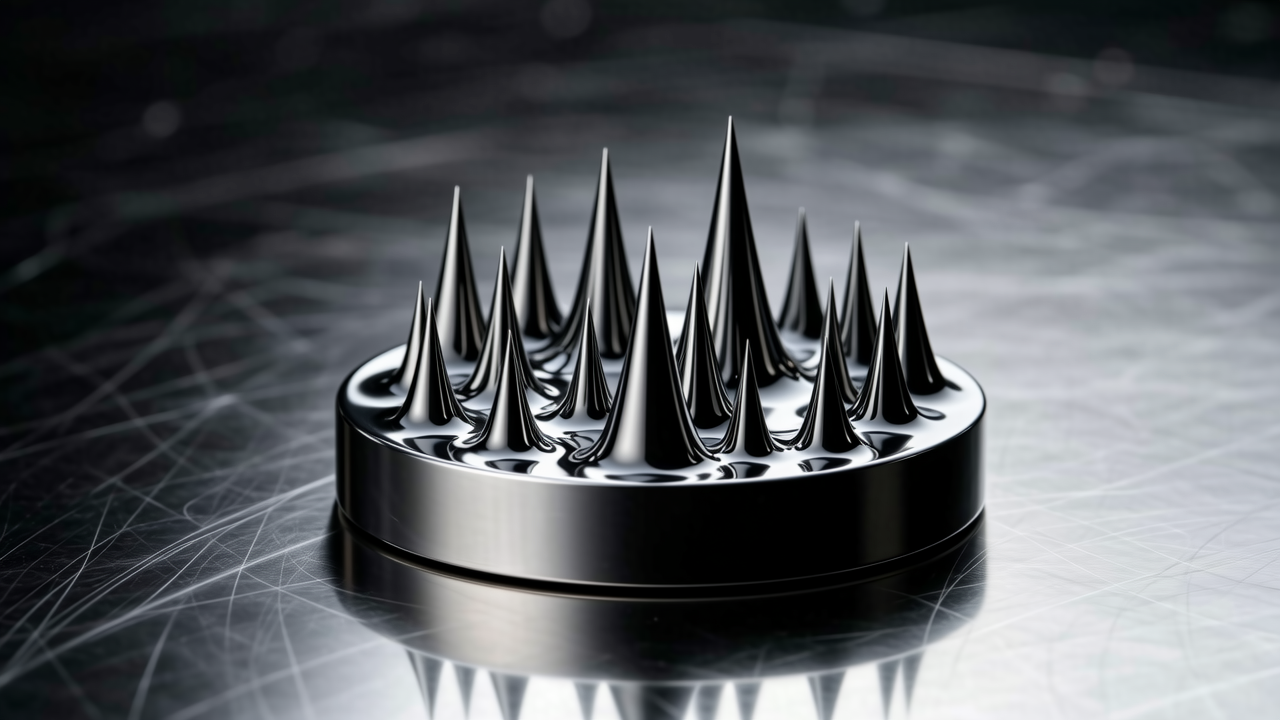
When no magnet is nearby, ferrofluid behaves exactly like a regular liquid — it flows, seeps, and wets surfaces. However, when a magnet is brought close, a dramatic transformation occurs. The magnetite particles in the liquid respond to the magnetic field, causing the liquid to be strongly attracted towards the magnet. The surface of the ferrofluid forms sharp spikes called Rosensweig peaks — a pattern that looks like a dramatic "liquid hedgehog".
This phenomenon of spike formation occurs due to the competition between three forces: the magnetic force pulling the ferrofluid toward the magnet, surface tension trying to maintain a smooth liquid surface, and gravity. When the magnetic force exceeds the combination of surface tension and gravity, the surface becomes unstable, and spikes form at regular intervals determined by the balance of these forces.
Ferrofluid has important practical applications. NASA originally developed it as a way to transport fuel in zero-gravity conditions using magnets. Now it is used in speakers (as a coolant and lubricant for voice coils), in hard disk drives to seal dust, in medical therapy (as an MRI contrast agent and for magnetic hyperthermia cancer treatment), and in various sensor systems.
## Science Facts #30: Magnetic Liquid (Ferrofluid) Can Be Fully Manipulated by Magnet. Ferrofluid is a fascinating magnetic liquid — it flows like a regular liquid but dramatically changes shape and forms sharp lines when approached by a magnet.. Ferrofluid is one of the most amazing materials ever created by NASA scientists in the 1960s. Essentially, ferrofluid is a regular liquid such as oil or water containing very small magnetite particles iron oxide — usually about 10 nanometers in size — evenly dispersed in the liquid with the help of a surfactant to prevent these particles from clumping together.
When no magnet is nearby, ferrofluid behaves exactly like a regular liquid — it flows, seeps, and wets surfaces. However, when a magnet is brought close, a dramatic transformation occurs. The magnetite particles in the liquid respond to the magnetic field, causing the liquid to be strongly attracted towards the magnet. The surface of the ferrofluid forms sharp spikes called Rosensweig peaks — a pattern that looks like a dramatic "liquid hedgehog".
This phenomenon of spike formation occurs due to the competition between three forces: the magnetic force pulling the ferrofluid toward the magnet, surface tension trying to maintain a smooth liquid surface, and gravity. When the magnetic force exceeds the combination of surface tension and gravity, the surface becomes unstable, and spikes form at regular intervals determined by the balance of these forces.
Ferrofluid has important practical applications. NASA originally developed it as a way to transport fuel in zero-gravity conditions using magnets. Now it is used in speakers as a coolant and lubricant for voice coils , in hard disk drives to seal dust, in medical therapy as an MRI contrast agent and for magnetic hyperthermia cancer treatment , and in various sensor systems.