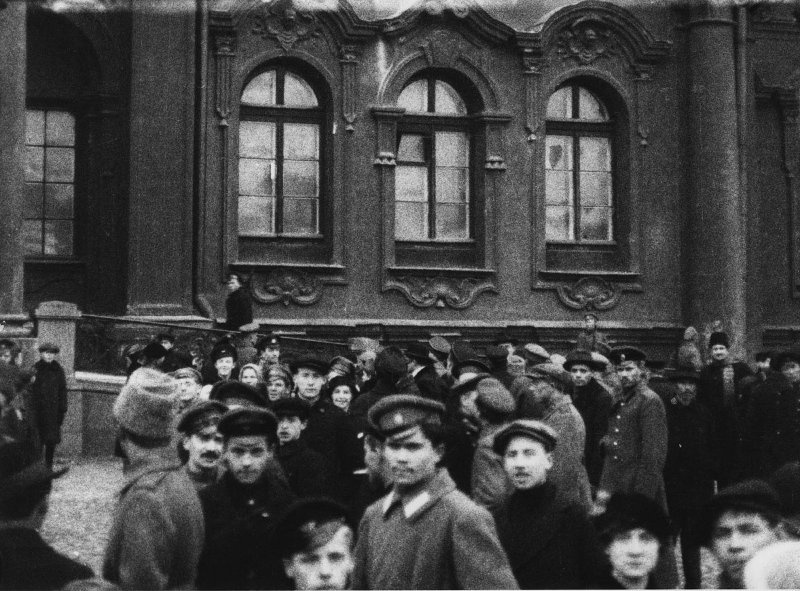
On November 7, 1917, a historic moment that altered the trajectory of world geopolitics took place in Petrograd (now St. Petersburg), Russia. Based on the Gregorian calendar widely used today, that date marks the occurrence of the October Revolution—an event where the Bolsheviks launched a massive armed takeover of power. Although known as the October Revolution because its date fell on October 25 according to the Julian calendar used in Russia at the time, the implications of this event transcended time zone and calendar boundaries.
The main event symbolizing the success of this uprising was the storming of the Winter Palace, which at that time served as the headquarters of the Russian Provisional Government. The Bolshevik success overthrew the remnants of the post-Tsarist administration and laid the foundation for the emergence of a new power on the international political stage.
Socio-Political Turmoil of the Provisional Government and the Bolshevik Rise
To understand the causes of the October Revolution, the historical context throughout the year 1917 needs to be examined closely. In March 1917 (or February according to the Julian calendar), the February Revolution forced Tsar Nicholas II to abdicate, thereby ending the rule of the Romanov dynasty which had been in power for over three centuries. A Provisional Government led by liberals and moderate socialists was subsequently formed to lead the country.
However, the Provisional Government under the leadership of Alexander Kerensky faced worsening domestic problems. The Provisional Government's decision to continue Russia's participation in the First World War was highly unpopular among a populace that was already exhausted, starving, and burdened by economic decline. This situation enabled the Bolsheviks, a radical Marxist faction led by Vladimir Lenin, to win strong support from workers, peasants, and soldiers through their popular slogan: "Peace, Land, and Bread".
Moments of the Petrograd Winter Palace Storming
On the night of November 6 to 7, 1917, the Petrograd Military Revolutionary Committee, controlled by the Bolsheviks, began mobilizing the Red Guards and defecting soldiers. Without fierce resistance, they successfully seized important infrastructure around Petrograd, including main bridges, post offices, railway stations, and the state bank. This isolation strategy was meticulously executed to ensure that the Provisional Government could not request external assistance.
The culmination of this operation was the siege and storming of the Winter Palace, where members of the Provisional Government cabinet had gathered. Warning shots from the battleship Aurora anchored in the Neva River signaled the start of the final assault. The storming process took place with minimal surprise and almost without bloodshed or significant casualties in its initial stages. Members of the Provisional Government were eventually arrested, while Kerensky managed to escape to gather support that never materialized.
Strategic Roles of Vladimir Lenin and Leon Trotsky
The success of the October Revolution cannot be separated from the leadership of two main figures, namely Vladimir Lenin and Leon Trotsky. Lenin was the ideological planner who consistently urged that political power be seized by force through armed insurrection, rather than through the parliamentary democratic process supported by other socialist factions.
Meanwhile, Leon Trotsky acted as the military and tactical planner on the ground. As Chairman of the Petrograd Soviet, Trotsky successfully organized the Military Revolutionary Committee to systematically coordinate the movement of armed troops and workers. The combination of Lenin's ideological vision and Trotsky's tactical efficiency ensured that this uprising could be carried out quickly and effectively.
Impact of the Uprising: Civil War and the Formation of the Soviet Union
Although the initial phase of the power grab in Petrograd took place without many casualties, the long-term implications of this event were extremely bloody. The abrupt overthrow of the Provisional Government triggered the Russian Civil War (1917–1923), a devastating conflict between the Red Army (Bolsheviks) and the White Army (a coalition of various anti-Bolshevik factions including monarchists and moderate socialists). This civil war claimed millions of lives and brought severe economic devastation.
The Red Army's victory in the civil war consolidated Bolshevik power and led to the establishment of the Union of Soviet Socialist Republics (USSR) in 1922. The formation of the world's first communist state altered the global balance of power throughout the 20th century, initiating the era of Block Competition and the Cold War. The legacy of the October Revolution of November 7, 1917 remains one of the most important events shaping modern human history.
Source: Wikipedia — https://en.wikipedia.org/wiki/October_Revolution | License: CC BY-SA 4.0_
1917: The October Revolution and Bolshevik Control over the Petrograd Winter Palace. On November 7, 1917, the Bolsheviks led by Vladimir Lenin launched an armed uprising in Petrograd, Russia, leading to the storming of the Winter Palace. This event, known as the October Revolution according to the Julian calendar, overthrew the Russian Provisional Government with minimal casualties in its initial stages. This success not only triggered the Russian Civil War but also became the starting point for the formation of the world's first socialist state.. On November 7, 1917, a historic moment that altered the trajectory of world geopolitics took place in Petrograd now St. Petersburg , Russia. Based on the Gregorian calendar widely used today, that date marks the occurrence of the October Revolution—an event where the Bolsheviks launched a massive armed takeover of power. Although known as the October Revolution because its date fell on October 25 according to the Julian calendar used in Russia at the time, the implications of this event transcended time zone and calendar boundaries.
The main event symbolizing the success of this uprising was the storming of the Winter Palace, which at that time served as the headquarters of the Russian Provisional Government. The Bolshevik success overthrew the remnants of the post-Tsarist administration and laid the foundation for the emergence of a new power on the international political stage.
Socio-Political Turmoil of the Provisional Government and the Bolshevik Rise
To understand the causes of the October Revolution, the historical context throughout the year 1917 needs to be examined closely. In March 1917 or February according to the Julian calendar , the February Revolution forced Tsar Nicholas II to abdicate, thereby ending the rule of the Romanov dynasty which had been in power for over three centuries. A Provisional Government led by liberals and moderate socialists was subsequently formed to lead the country.
However, the Provisional Government under the leadership of Alexander Kerensky faced worsening domestic problems. The Provisional Government's decision to continue Russia's participation in the First World War was highly unpopular among a populace that was already exhausted, starving, and burdened by economic decline. This situation enabled the Bolsheviks, a radical Marxist faction led by Vladimir Lenin, to win strong support from workers, peasants, and soldiers through their popular slogan: "Peace, Land, and Bread".
Moments of the Petrograd Winter Palace Storming
On the night of November 6 to 7, 1917, the Petrograd Military Revolutionary Committee, controlled by the Bolsheviks, began mobilizing the Red Guards and defecting soldiers. Without fierce resistance, they successfully seized important infrastructure around Petrograd, including main bridges, post offices, railway stations, and the state bank. This isolation strategy was meticulously executed to ensure that the Provisional Government could not request external assistance.
The culmination of this operation was the siege and storming of the Winter Palace, where members of the Provisional Government cabinet had gathered. Warning shots from the battleship Aurora anchored in the Neva River signaled the start of the final assault. The storming process took place with minimal surprise and almost without bloodshed or significant casualties in its initial stages. Members of the Provisional Government were eventually arrested, while Kerensky managed to escape to gather support that never materialized.
Strategic Roles of Vladimir Lenin and Leon Trotsky
The success of the October Revolution cannot be separated from the leadership of two main figures, namely Vladimir Lenin and Leon Trotsky. Lenin was the ideological planner who consistently urged that political power be seized by force through armed insurrection, rather than through the parliamentary democratic process supported by other socialist factions.
Meanwhile, Leon Trotsky acted as the military and tactical planner on the ground. As Chairman of the Petrograd Soviet, Trotsky successfully organized the Military Revolutionary Committee to systematically coordinate the movement of armed troops and workers. The combination of Lenin's ideological vision and Trotsky's tactical efficiency ensured that this uprising could be carried out quickly and effectively.
Impact of the Uprising: Civil War and the Formation of the Soviet Union
Although the initial phase of the power grab in Petrograd took place without many casualties, the long-term implications of this event were extremely bloody. The abrupt overthrow of the Provisional Government triggered the Russian Civil War 1917–1923 , a devastating conflict between the Red Army Bolsheviks and the White Army a coalition of various anti-Bolshevik factions including monarchists and moderate socialists . This civil war claimed millions of lives and brought severe economic devastation.
The Red Army's victory in the civil war consolidated Bolshevik power and led to the establishment of the Union of Soviet Socialist Republics USSR in 1922. The formation of the world's first communist state altered the global balance of power throughout the 20th century, initiating the era of Block Competition and the Cold War. The legacy of the October Revolution of November 7, 1917 remains one of the most important events shaping modern human history.
Source: Wikipedia — https://en.wikipedia.org/wiki/October Revolution License: CC BY-SA 4.0