Introduction: Nightmare Behind the Glass Dome
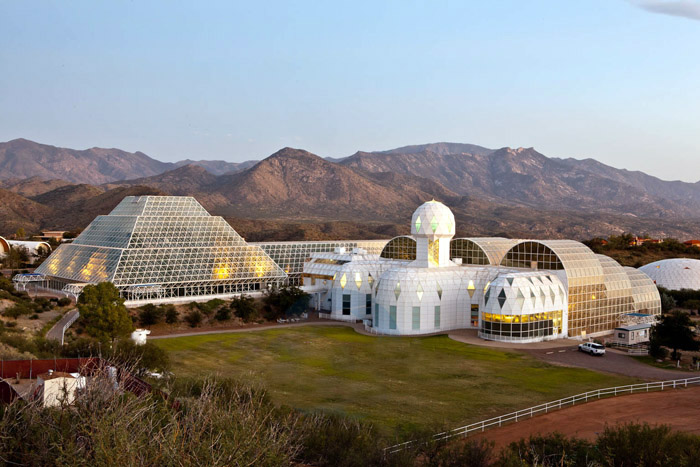
Imagine being locked in a small world of 1.27 hectares, with eight other people, for two years without any contact with the outside world. That is what happened to the crew of Biosphere 2, one of the most daring and controversial science experiments in history. When the steel doors closed on September 26, 1991, the world watched with bated breath. However, what happened inside the glass dome was far more dramatic than any science fiction film. Oxygen started to disappear, carbon dioxide surged, and the fragile natural balance began to waver. Who would have thought that this 'mini-Earth' almost became a tomb for its inhabitants?
Loss of Oxygen: A Puzzle That Baffled Scientists
One of the most surprising discoveries in this experiment was the drastic drop in oxygen levels inside Biosphere 2. In the first 16 months, the oxygen concentration fell from 20.9% to 14.2%, equivalent to being at the top of a mountain over 4,000 meters high. Scientists were confused. Where did the oxygen go? Initial theories blamed microorganisms in the soil rich in organic material. The soil used for agriculture and the small forest turned out to contain bacteria that 'inhalated' oxygen to decompose carbon. This produced carbon dioxide, but the increase in CO2 was not balanced with the loss of O2. Eventually, further research revealed that the concrete walls of the dome also absorbed oxygen through the process of carbonation. This was a design flaw that led to death.
Carbon Dioxide: A Ticking Time Bomb
Along with the loss of oxygen, the level of carbon dioxide (CO2) increased rapidly. Initially, it was still within a safe range, but when plants could not absorb enough CO2 due to lack of light and immature forest areas, the situation became critical. At one point, CO2 levels reached a point where the crew experienced headaches, fatigue, and breathing problems. The air filtration system designed failed to function properly. More confusingly, there were mysterious daily fluctuations in CO2 levels—rising at night and falling during the day, but not fast enough. This was almost like the world we live in now, but on a smaller scale. If CO2 levels continued to rise, the crew might suffocate within another year.
Food Crisis: From Dream to Bitter Reality
One of the main objectives of Biosphere 2 was to test whether humans could live sustainably by producing their own food. They grew rice, wheat, vegetables, and also raised goats and chickens. However, what happened was an agricultural disaster. Crops failed due to uncontrolled pests. Without chemical pesticides, their fields were attacked by pests and fungi. The harvest only provided enough calories for 80% of daily needs. The crew started to starve. Their weight dropped drastically—some lost up to 15 kilograms. They had to reduce physical activity and sleep longer to conserve energy. This situation reminds us of the fragility of the global food system.
Microclimate Disruption: Rain That Never Came
Inside the dome, there were various biomes: rainforests, deserts, savannas, and mini-oceans. Each biome depended on an accurate climate control system. However, due to the lack of advanced computer models at the time, the microclimate began to become unstable. For example, the rain designed to moisten the rainforest never fell at the right time. This caused plants to die and the humidity in the air to be unbalanced. The desert became too dry, causing dust to spread throughout the dome. Temperatures changed drastically between day and night. The crew had to live in uncomfortable conditions—sometimes too hot, sometimes too cold. Heating and cooling systems dependent on solar energy were also not efficient enough.
Psychological Disturbance: When Humans Are Trapped
Not only the physical aspects were affected, but the mental health of the crew was also tested. These eight people lived in a confined space without real privacy. Tensions between them increased day by day. There were reports of minor arguments, feelings of isolation, and depression. One of the crew members, Jane Poynter, later wrote a book about the shift between the group managing the project outside and those inside. Some felt like prisoners in a glass prison. When one crew member injured his finger and had to be taken out, it sparked a debate about the safety and ethics of this experiment. Was it appropriate to continue trapping humans in uncertain conditions?
Conclusion: A Bitter Lesson Not Learned
The Biosphere 2 experiment ended on September 26, 1993, with the crew exiting in a thin and exhausted state. The project received heavy criticism from the scientific community due to the lack of scientific control and external interference (oxygen and food had to be supplied from outside). However, it left valuable data about the interaction between humans, ecosystems, and technology. Today, Biosphere 2 is a climate research center at the University of Arizona. However, a big question remains in our minds: Are we really ready to colonize Mars or the Moon if we cannot manage our own 'mini-Earth'? Or are we just repeating the same mistakes on a larger planetary scale? The answer may be more frightening than we think.
---
*Reference: [Biosphere 2 — Wikipedia](https://en.wikipedia.org/wiki/Biosphere_2)*