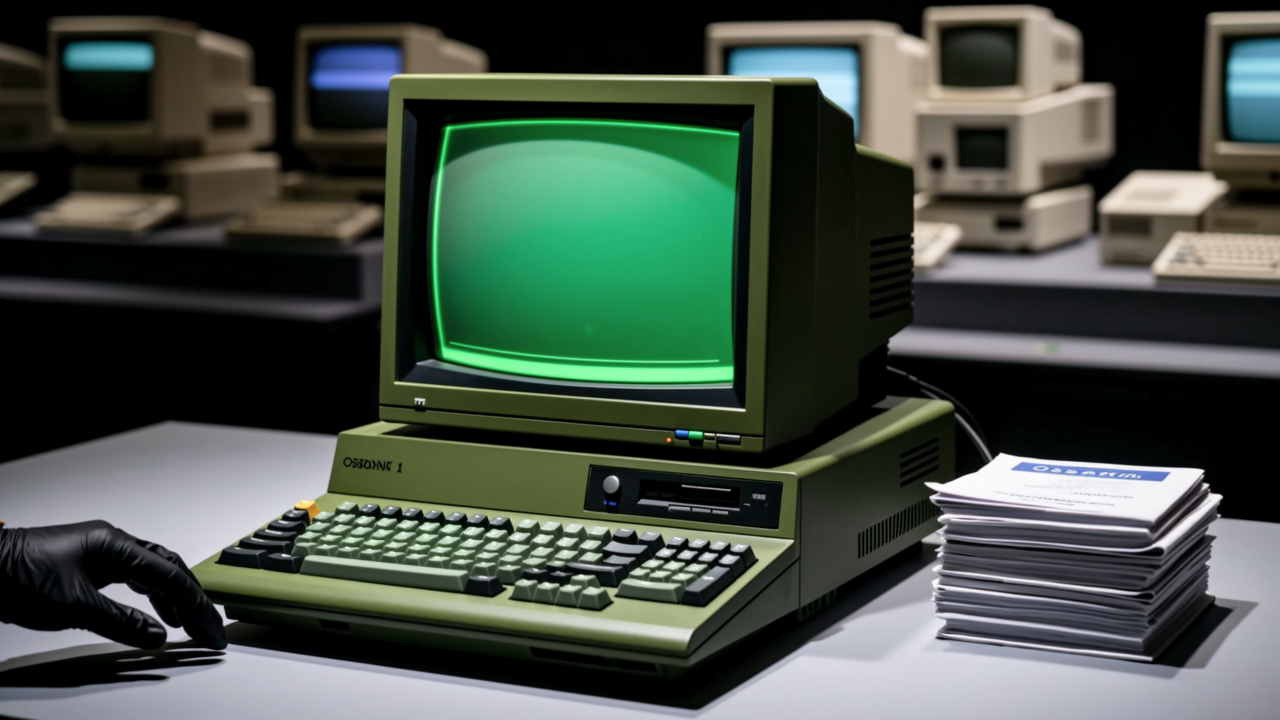
Imagine a computer that takes up most of your desk, weighs 11 kilograms, and needs to be plugged into an electrical socket all the time. That's the Osborne 1, often considered the first commercially successful laptop. However, the journey to create this portable machine started earlier.
What Exactly Is a 'Laptop'?
The term 'laptop' or portable computer refers to a personal computer designed to be easily carried and used on one's lap. Its main feature is the clamshell design with a keyboard and screen that can be closed. However, before the term became established, many early portable devices did not have a full clamshell form.
Who Created the First Laptop?
There is no single inventor. Several pioneers contributed. In 1979, Bill Moggridge from Grid Systems designed the Grid Compass 1101, which had a clamshell design and was used by NASA. However, it was sold at a high price and was not popular. In 1980, John Ellenby developed it. But the first laptop to reach a wide market was the Osborne 1, launched in April 1981 by Adam Osborne.
So, Was the Osborne 1 the First?
The Osborne 1 is often referred to as the first commercial laptop. It had a 5-inch screen, a full keyboard, two 5.25-inch floppy disk drives, and weighed 11.1 kg. It used the CP/M operating system. Its price was $1,795 (equivalent to about $5,000 today). Although less portable by today's standards, it proved that portable computers could be sold.
Who Were the Competitors of the Osborne 1?
Not long after, the Epson HX-20 (1981) emerged with a modern notebook-like form, but it was a smaller laptop with an LCD screen and an integrated printer. It was considered the first 'notebook'. Later, the IBM PC Convertible (1986) set the standard for IBM-compatible laptops.
How Has Technology Evolved from the Osborne 1 to Today?
From the large and expensive Osborne 1, we see the miniaturization of components, improved performance, and reduced prices. In the 1990s, Pentium and Windows brought laptops into the mainstream. Today, we have devices more powerful than old supercomputers, yet lightweight and capable of lasting all day.
Why Is This Story Important?
Understanding this innovation's history reminds us that every convenience we enjoy today comes from bold experiments and early failures. The Osborne 1, although awkward, laid the foundation for digital mobility that we now take for granted.
What Can We Learn?
Main lesson: Innovation requires the courage to start with something imperfect. The Osborne 1 was not a perfect laptop, but it started a revolution. Without it, we might not have ultrabooks today.
---
Reference: One Laptop Per Child — Wikipedia
Looking Back: What Was the First Laptop in the World?. Before the era of ultrabooks and MacBook Air, the world was introduced to a 'laptop' weighing 11 kilograms. Let's explore the history of the first laptop that changed the way we work.. Imagine a computer that takes up most of your desk, weighs 11 kilograms, and needs to be plugged into an electrical socket all the time. That's the Osborne 1, often considered the first commercially successful laptop. However, the journey to create this portable machine started earlier.
What Exactly Is a 'Laptop'?
The term 'laptop' or portable computer refers to a personal computer designed to be easily carried and used on one's lap. Its main feature is the clamshell design with a keyboard and screen that can be closed. However, before the term became established, many early portable devices did not have a full clamshell form.
Who Created the First Laptop?
There is no single inventor. Several pioneers contributed. In 1979, Bill Moggridge from Grid Systems designed the Grid Compass 1101, which had a clamshell design and was used by NASA. However, it was sold at a high price and was not popular. In 1980, John Ellenby developed it. But the first laptop to reach a wide market was the Osborne 1, launched in April 1981 by Adam Osborne.
So, Was the Osborne 1 the First?
The Osborne 1 is often referred to as the first commercial laptop. It had a 5-inch screen, a full keyboard, two 5.25-inch floppy disk drives, and weighed 11.1 kg. It used the CP/M operating system. Its price was $1,795 equivalent to about $5,000 today . Although less portable by today's standards, it proved that portable computers could be sold.
Who Were the Competitors of the Osborne 1?
Not long after, the Epson HX-20 1981 emerged with a modern notebook-like form, but it was a smaller laptop with an LCD screen and an integrated printer. It was considered the first 'notebook'. Later, the IBM PC Convertible 1986 set the standard for IBM-compatible laptops.
How Has Technology Evolved from the Osborne 1 to Today?
From the large and expensive Osborne 1, we see the miniaturization of components, improved performance, and reduced prices. In the 1990s, Pentium and Windows brought laptops into the mainstream. Today, we have devices more powerful than old supercomputers, yet lightweight and capable of lasting all day.
Why Is This Story Important?
Understanding this innovation's history reminds us that every convenience we enjoy today comes from bold experiments and early failures. The Osborne 1, although awkward, laid the foundation for digital mobility that we now take for granted.
What Can We Learn?
Main lesson: Innovation requires the courage to start with something imperfect. The Osborne 1 was not a perfect laptop, but it started a revolution. Without it, we might not have ultrabooks today.
---
Reference: One Laptop Per Child — Wikipedia https://ms.wikipedia.org/wiki/One Laptop Per Child