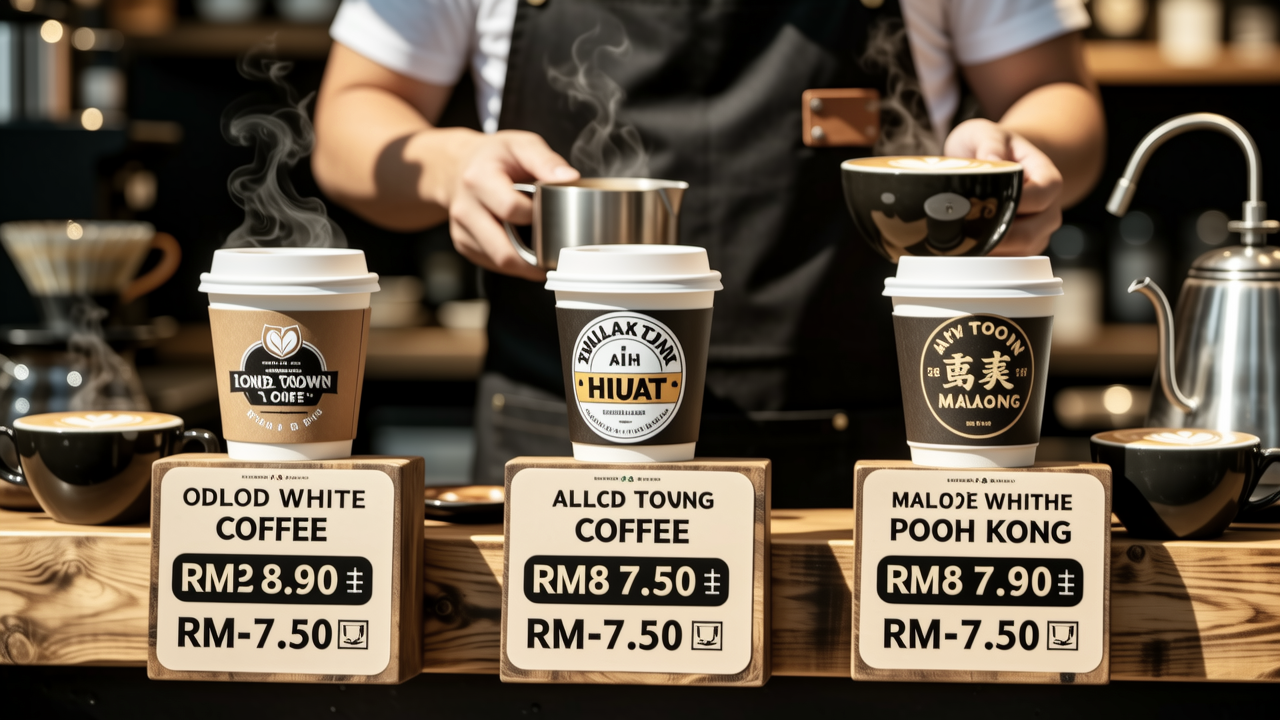
A Morning in Sri Petaling
The clock struck exactly seven in the morning. Azman, a 34-year-old bank clerk, stepped into a small café in Sri Petaling. His eyes darted across the menu: a cup of hot coffee priced at RM3.50 from brand A, RM4.20 from brand B. Two months ago, it was RM3.20 and RM3.90. He sighed. "Where is the cheap coffee that used to be?"
Azman is not the only one asking this question. In Kuala Lumpur, Johor Bahru, and Kuching—more and more Malaysians are feeling that their favorite cup of coffee is getting more expensive. Yet, at the same time, competition between local brands like OldTown, Bensdorp, and new entrants like Hello Kitty Coffee & Tea is intensifying. Logically, more brands should bring more price cuts. But the reality says otherwise.
Local Brands Rising
In the past five years, the local coffee market has grown remarkably. According to a report by Euromonitor International, the value of the Malaysian coffee market reached RM3.8 billion in 2024, up 15% compared to 2019. This growth has been accompanied by the emergence of at least 20 new brands in the same period. They are racing to introduce unique flavors, from Malacca sugar mixed Liberica coffee to Robusta coffee with a tempoyak twist.
Initially, many predicted a price drop. "When supply is abundant, prices must fall," said economist Dr. Rahman bin Hashim from the University of Malaya. However, as we have seen, coffee prices in cafes and supermarket shelves continue to rise. "The problem is not the number of brands, but the production costs," explained Dr. Rahman. Key factors include the global coffee price increase due to extreme weather in Brazil and Vietnam, as well as high logistics costs post-pandemic.
Different Strategies
Hello Kitty Coffee, for example, approaches the market differently: premium coffee at a top-tier price. "We don't want to compete on price, but on story and experience," said their spokesperson in a recent interview. They use single-origin Arabica coffee from Sabah and package it in recyclable glass bottles. As a result, their prices are double that of regular brands.
In contrast, Bensdorp takes the opposite approach. Their focus is on quantity and affordability. "We want coffee that everyone can afford," said their marketing officer. They sell instant coffee in large packages at low prices, targeting school canteens and government offices. This strategy reduces margins, but increases sales.
OldTown, as a leading player, is in the middle. They try to balance quality and price, but pressure from both sides forces them to raise prices by 5-10% this year. "We had to do it to maintain quality," said their representative.
Questions Among Consumers
The main question: will this competition eventually lower prices? The answer—no necessarily. "In a market with too many brands, each player will maintain their own margins by avoiding an open price war," said Prof. Marina bt. Abdullah, a marketing expert from UiTM. Instead, competition changes the face of the market: more variety, more luxurious packaging, more special coffees. But for affordable daily drinks, options are becoming limited.
However, there is light at the end of the tunnel. Some local coffee companies are starting to invest in their own plantations to control costs. A agricultural technology company in Johor, Agriroots Sdn Bhd, recently announced a collaboration with small farmers to produce local coffee at a lower cost. If successful, coffee prices in cafes may drop in the long term.
Prices of the Heart and Coffee
Azman finally chose a sweet iced coffee from a new social media brand C. Its price was RM5.50—the highest he has ever paid. "I don't know," he said while sipping the drink, "as long as it's delicious, I'm willing to pay a little more. But don't let it become a habit."
What is certain, the local coffee brand war is not over. While prices may not drop drastically, the diversity of choices gives a new breath to Malaysia's coffee culture. And for coffee lovers like Azman, love for a fragrant cup often outweighs the dislike of the price tag.
*Note: This article is based on market surveys and expert interviews. All character details and dialogues are fictional for storytelling purposes.*