The Battle of Nezib: A Turning Point in Middle Eastern Power
On 24 June 1839, near the dusty plains of Nezib in southeastern Anatolia, the Egyptian army under the direct command of Ibrahim Pasha completely defeated the Ottoman army led by Hafiz Pasha. This victory was not just a tactical win — it marked the peak of Muhammad Ali's military reforms and the beginning of Egypt's rise as a sovereign regional power.
The Egyptian army, systematically trained by French advisors and armed with heavy artillery and rapid-fire rifles, faced an Ottoman force still dependent on old organizational structures and weak logistics. In a battle lasting less than a day, the Ottoman lines collapsed after repeated attacks on their right wing. Hafiz Pasha failed to mount an effective response; many of his units fled before the order to retreat was given.
Background: Reforms in the Shadow of Istanbul
Muhammad Ali, the Wāli of Egypt since 1805, never recognized the absolute sovereignty of the Ottoman Sultan. From the start of his rule, he developed modern institutions: military schools in Aswan, arms factories in Helwan, and medical academies in Cairo — all built with the support of European experts and funded through a cotton trade monopoly.
Ibrahim Pasha, who led the campaign in Syria (1831–1833) and captured Acre and Damascus, was not only a political heir but also a direct product of the new training system. He mastered Napoleonic strategies, understood the importance of logistics and battlefield communication, and was able to move multi-ethnic divisions — Mamluks, Sudanese, and local Egyptian troops — as a coherent entity.
The Nezib conflict was a direct continuation of the Kütahya Agreement (1833), which gave Egypt de facto control over Syria and Palestine. When Sultan Mahmud II tried to reclaim these territories after the death of Hafiz Pasha (not the Nezib figure), Muhammad Ali refused — and sent Ibrahim to Anatolia to determine the fate of the Ottoman Empire with weapons.
Key Figures: Two Heroes at the Crossroads of Decline
Ibrahim Pasha stood before his troops at Nezib in a simple gray coat and a French baret — a symbol of deliberate simplicity, different from the traditional opulence of Ottoman commanders. Egyptian soldiers' accounts noted how he stood on a small hill throughout the battle, directing artillery with flag signals, never once leaving his position.
Hafiz Pasha, former Governor of Aleppo and one of the highest-ranking officials in the Ottoman War Council, was chosen not for his record of victories, but for his loyalty to the Sultan. He had never commanded a large force on an open battlefield before Nezib. His army — partly conscripted from Kurdistan and Armenia — was poorly trained, inadequately supplied with ammunition, and given inaccurate maps of the terrain.
Deep Impact: Not Just a Defeat, But the End of an Era
The defeat at Nezib resulted in the loss of more than 10,000 Ottoman soldiers — including almost all senior officers — and the loss of all heavy artillery. Within three weeks, the Ottoman fleet in Alexandria surrendered without firing a shot to Egypt. Sultan Mahmud II died two days after the news of the defeat reached Istanbul — a death often linked to psychological pressure from the loss of his military power.
As a result, the Ottoman Empire never fully recovered its power in the Middle East. Britain and Austria intervened directly after Nezib, forcing the London Treaty of 1840, which compelled Egypt to withdraw from Syria — but could not undo the reality that Egypt now had the most advanced army in the region, and a more efficient administration than Istanbul.
The legacy of Nezib is not about conquered or lost territory, but about a paradigm shift: that power is now determined not by dynastic legitimacy or historical destiny, but by institutional capacity, logistical discipline, and technical skill. Today in Cairo, a small monument in Ramses Square lists the name 'Nezib' among three major victories — alongside Acre and Homs — as evidence that the battle is still remembered not as a war episode, but as the rebirth of modern Egypt.
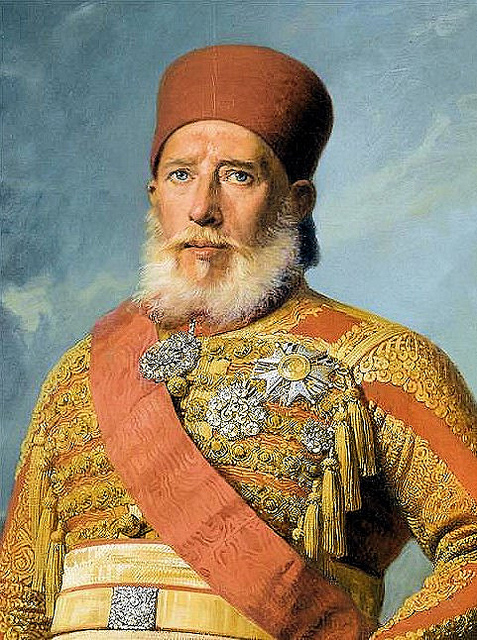
1839: Ibrahim Pasha's Victory at the Battle of Nezib. On 24 June 1839, the Egyptian army under Ibrahim Pasha destroyed the Ottoman army led by Hafiz Pasha at Nezib — a victory that affirmed the superiority of modern Egyptian military and accelerated the decline of Ottoman dominance in the Middle East.. The Battle of Nezib: A Turning Point in Middle Eastern Power
On 24 June 1839, near the dusty plains of Nezib in southeastern Anatolia, the Egyptian army under the direct command of Ibrahim Pasha completely defeated the Ottoman army led by Hafiz Pasha. This victory was not just a tactical win — it marked the peak of Muhammad Ali's military reforms and the beginning of Egypt's rise as a sovereign regional power.
The Egyptian army, systematically trained by French advisors and armed with heavy artillery and rapid-fire rifles, faced an Ottoman force still dependent on old organizational structures and weak logistics. In a battle lasting less than a day, the Ottoman lines collapsed after repeated attacks on their right wing. Hafiz Pasha failed to mount an effective response; many of his units fled before the order to retreat was given.
Background: Reforms in the Shadow of Istanbul
Muhammad Ali, the Wāli of Egypt since 1805, never recognized the absolute sovereignty of the Ottoman Sultan. From the start of his rule, he developed modern institutions: military schools in Aswan, arms factories in Helwan, and medical academies in Cairo — all built with the support of European experts and funded through a cotton trade monopoly.
Ibrahim Pasha, who led the campaign in Syria 1831–1833 and captured Acre and Damascus, was not only a political heir but also a direct product of the new training system. He mastered Napoleonic strategies, understood the importance of logistics and battlefield communication, and was able to move multi-ethnic divisions — Mamluks, Sudanese, and local Egyptian troops — as a coherent entity.
The Nezib conflict was a direct continuation of the Kütahya Agreement 1833 , which gave Egypt de facto control over Syria and Palestine. When Sultan Mahmud II tried to reclaim these territories after the death of Hafiz Pasha not the Nezib figure , Muhammad Ali refused — and sent Ibrahim to Anatolia to determine the fate of the Ottoman Empire with weapons.
Key Figures: Two Heroes at the Crossroads of Decline
Ibrahim Pasha stood before his troops at Nezib in a simple gray coat and a French baret — a symbol of deliberate simplicity, different from the traditional opulence of Ottoman commanders. Egyptian soldiers' accounts noted how he stood on a small hill throughout the battle, directing artillery with flag signals, never once leaving his position.
Hafiz Pasha, former Governor of Aleppo and one of the highest-ranking officials in the Ottoman War Council, was chosen not for his record of victories, but for his loyalty to the Sultan. He had never commanded a large force on an open battlefield before Nezib. His army — partly conscripted from Kurdistan and Armenia — was poorly trained, inadequately supplied with ammunition, and given inaccurate maps of the terrain.
Deep Impact: Not Just a Defeat, But the End of an Era
The defeat at Nezib resulted in the loss of more than 10,000 Ottoman soldiers — including almost all senior officers — and the loss of all heavy artillery. Within three weeks, the Ottoman fleet in Alexandria surrendered without firing a shot to Egypt. Sultan Mahmud II died two days after the news of the defeat reached Istanbul — a death often linked to psychological pressure from the loss of his military power.
As a result, the Ottoman Empire never fully recovered its power in the Middle East. Britain and Austria intervened directly after Nezib, forcing the London Treaty of 1840, which compelled Egypt to withdraw from Syria — but could not undo the reality that Egypt now had the most advanced army in the region, and a more efficient administration than Istanbul.
The legacy of Nezib is not about conquered or lost territory, but about a paradigm shift: that power is now determined not by dynastic legitimacy or historical destiny, but by institutional capacity, logistical discipline, and technical skill. Today in Cairo, a small monument in Ramses Square lists the name 'Nezib' among three major victories — alongside Acre and Homs — as evidence that the battle is still remembered not as a war episode, but as the rebirth of modern Egypt.