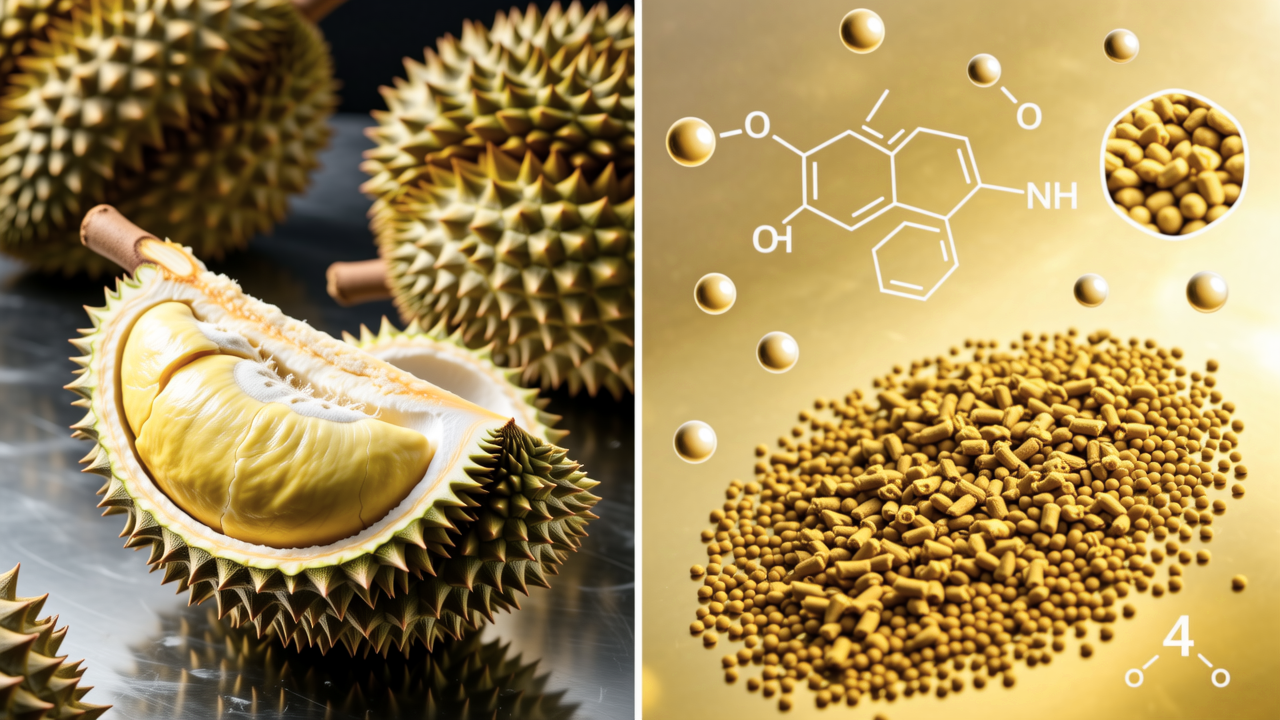
Have you ever wondered why durian has such a strong smell? Or why its skin is covered with sharp spines? More than just a popular fruit, durian actually holds various scientific secrets that make it unique among tropical fruits. Let's delve into five interesting facts about the science behind durian.
1. Aroma That Divides the World
The smell of durian is no ordinary one. Scientists have identified over 50 volatile sulfur compounds responsible for the strong aroma of this fruit. Among the main compounds are ethyl methyl sulfide, ethyl thioacetate, and methionine. Interestingly, the concentration of these compounds varies by species and ripeness level, making each type of durian have its own unique aroma profile.
A study from Universiti Teknologi Malaysia found that the smell of durian can be detected from several kilometers away. This is why durian is often banned in hotels and public transportation in Southeast Asia. However, for durian lovers, this aroma is what signals the deliciousness of the fruit's flesh that is about to be enjoyed.
2. Sharp Spines: A Natural Defense Mechanism
The spiky skin of durian is not just for show. From an evolutionary perspective, these spines function as a defense mechanism against animals that want to eat the fruit before its seeds are mature. Large mammals like elephants and tigers find it difficult to bite into a fruit full of sharp spines. When the durian falls from the tree, the spines also reduce damage to the flesh by absorbing the impact.
The structure of the spines consists of strong lignin, similar to wood. Each spine is actually a modified trichome—plant hair that hardens and sharpens. This proves that nature is very creative in creating defensive tools.
3. Creamy Flesh Rich in Nutrients
The flesh of durian is known for its soft texture and unique sweet taste. Scientifically, the flesh contains sugar compounds such as sucrose, fructose, and glucose that provide a natural sweetness. The high fat content gives it a creamy texture, almost resembling butter.
In terms of nutrition, durian is rich in potassium, fiber, vitamin C, and antioxidants. Interestingly, durian also contains tryptophan, an amino acid that can help produce serotonin—the happiness hormone. This may explain why many people feel happy after enjoying durian!
4. Complex Ripening Process
Durian requires a suitable environment to ripen perfectly. The ripening process involves complex chemical changes, including an increase in enzyme activity that breaks down starch into sugar and reduces organic acids. Ethylene hormone plays a key role in triggering ripening, similar to other climacteric fruits.
Temperature and humidity also affect the quality of the fruit. Durians picked too early may not reach optimal sweetness, while those that are too ripe will result in soft flesh and an overly strong smell. Experienced durian farmers know the best time to harvest—usually when the fruit stalks start to split slightly.
5. Extraordinary Genetic Diversity
There are approximately 30 species of Durio, but only 9 species produce edible fruits. Among the most famous are Durio zibethinus (common durian), Durio kutejensis (lai), and Durio oxleyanus (Dutch durian). This genetic diversity results in variations in flesh color, thickness, and aroma.
In Malaysia and Indonesia, there are hundreds of durian clones cultivated, such as Musang King, D24, and Udang Merah. Each clone has a unique genetic profile that affects taste and texture. Recent research uses genetic markers to identify superior disease-resistant and highly commercially potential varieties.
From its captivating aroma to its protective spines, durian is indeed a magical fruit from a scientific perspective. So, whenever you enjoy your next durian, remember that each bite is the result of evolution and the amazing chemistry of nature.
5 Scientific Facts That Make Durian Truly the 'King of Fruits'. Strong aroma, sharp spines, and luscious flesh—durian is more than just a seasonal fruit. Let's explore the science behind this title of 'king of fruits' in five surprising facts.. Have you ever wondered why durian has such a strong smell? Or why its skin is covered with sharp spines? More than just a popular fruit, durian actually holds various scientific secrets that make it unique among tropical fruits. Let's delve into five interesting facts about the science behind durian.
1. Aroma That Divides the World
The smell of durian is no ordinary one. Scientists have identified over 50 volatile sulfur compounds responsible for the strong aroma of this fruit. Among the main compounds are ethyl methyl sulfide, ethyl thioacetate, and methionine. Interestingly, the concentration of these compounds varies by species and ripeness level, making each type of durian have its own unique aroma profile.
A study from Universiti Teknologi Malaysia found that the smell of durian can be detected from several kilometers away. This is why durian is often banned in hotels and public transportation in Southeast Asia. However, for durian lovers, this aroma is what signals the deliciousness of the fruit's flesh that is about to be enjoyed.
2. Sharp Spines: A Natural Defense Mechanism
The spiky skin of durian is not just for show. From an evolutionary perspective, these spines function as a defense mechanism against animals that want to eat the fruit before its seeds are mature. Large mammals like elephants and tigers find it difficult to bite into a fruit full of sharp spines. When the durian falls from the tree, the spines also reduce damage to the flesh by absorbing the impact.
The structure of the spines consists of strong lignin, similar to wood. Each spine is actually a modified trichome—plant hair that hardens and sharpens. This proves that nature is very creative in creating defensive tools.
3. Creamy Flesh Rich in Nutrients
The flesh of durian is known for its soft texture and unique sweet taste. Scientifically, the flesh contains sugar compounds such as sucrose, fructose, and glucose that provide a natural sweetness. The high fat content gives it a creamy texture, almost resembling butter.
In terms of nutrition, durian is rich in potassium, fiber, vitamin C, and antioxidants. Interestingly, durian also contains tryptophan, an amino acid that can help produce serotonin—the happiness hormone. This may explain why many people feel happy after enjoying durian!
4. Complex Ripening Process
Durian requires a suitable environment to ripen perfectly. The ripening process involves complex chemical changes, including an increase in enzyme activity that breaks down starch into sugar and reduces organic acids. Ethylene hormone plays a key role in triggering ripening, similar to other climacteric fruits.
Temperature and humidity also affect the quality of the fruit. Durians picked too early may not reach optimal sweetness, while those that are too ripe will result in soft flesh and an overly strong smell. Experienced durian farmers know the best time to harvest—usually when the fruit stalks start to split slightly.
5. Extraordinary Genetic Diversity
There are approximately 30 species of Durio, but only 9 species produce edible fruits. Among the most famous are Durio zibethinus common durian , Durio kutejensis lai , and Durio oxleyanus Dutch durian . This genetic diversity results in variations in flesh color, thickness, and aroma.
In Malaysia and Indonesia, there are hundreds of durian clones cultivated, such as Musang King, D24, and Udang Merah. Each clone has a unique genetic profile that affects taste and texture. Recent research uses genetic markers to identify superior disease-resistant and highly commercially potential varieties.
From its captivating aroma to its protective spines, durian is indeed a magical fruit from a scientific perspective. So, whenever you enjoy your next durian, remember that each bite is the result of evolution and the amazing chemistry of nature.