Not Foam, Not Glass: What Exactly is Aerogel?
When we say 'gel', our minds immediately picture wobbly, wet jelly. But in the world of science, a gel is simply a solid network infused with liquid. Aerogel takes this concept a step further: it is a gel whose liquid in its pores has been completely replaced by gas, without causing the solid structure to collapse. The result is the lightest solid ever created by humans—lighter than air, with a density as low as 0.001 grams per cubic centimeter. By comparison, ordinary air has a density of about 0.0012 g/cm³. Yes, aerogel is actually lighter than the air we breathe every day.
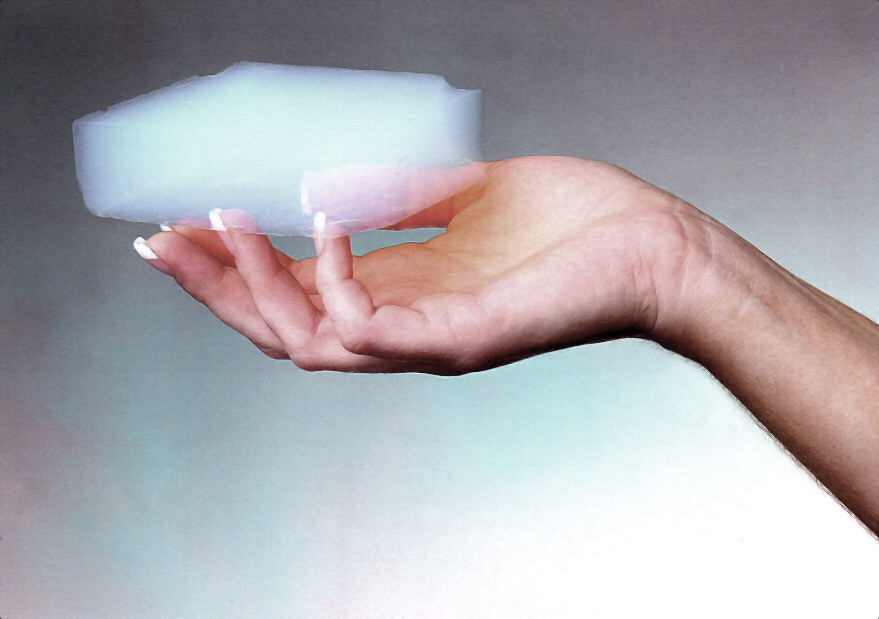
Aerogel is not a powder, not a foam, and not ordinary glass. It is a kind of 'solid smoke'—a term often used to describe the appearance of silica aerogel, which is transparent yet fragile like polystyrene foam. Although fragile at first touch, some types of polymer-based aerogels can feel hard like rigid foam. This difference depends on the base material and production method.
How Do Scientists Dry a Gel Without Destroying It?
The main challenge in producing aerogel is removing the liquid from the gel without causing the solid structure to collapse. If we dry the gel normally using evaporation, the surface tension of the liquid will pull on the solid pore walls until the entire structure deflates like a deflated balloon. This is why ordinary gels like jelly shrink and crack when dried.
The solution is through a process called supercritical drying or freeze drying. In supercritical drying, the liquid in the gel is heated and compressed beyond its critical point—the temperature and pressure at which liquid and gas are no longer distinguishable. In this state, no surface tension exists, and the liquid can be removed without damaging the solid structure. The freeze drying method freezes the liquid first, then sublimates it directly into gas. Both techniques require specialized equipment and high energy, making aerogel one of the most expensive materials to produce.
A Brief History: From Samuel Kistler's Garage to the International Space Station
Aerogel was first created in 1931 by Samuel Kistler, an American scientist working at Pacific College in California. Kistler bet with his colleague that he could replace the liquid in a gel with gas without shrinking the structure. Using silica gel and a self-designed supercritical drying process, he succeeded—and named his invention 'aerogel'. Kistler's early work also explored aerogels based on alumina, chromia, and tin dioxide, showing that this concept could be applied to various materials.
However, aerogel remained a laboratory curiosity for decades. Only in the late 1980s, when scientists began developing carbon aerogels, did the true potential of this material begin to emerge. Now, NASA and other space agencies use aerogel to capture comet dust (Stardust mission) and as insulation in Mars rovers. On Earth, aerogel is used in fireproof clothing, sports equipment, and even as highly efficient water filters.
Magical Properties: The Most Efficient Insulator in the World
One of the most amazing properties of aerogel is its extremely low thermal conductivity—as low as 0.015 W/mK. This makes it the most efficient thermal insulator known to humans. By comparison, still air has a thermal conductivity of about 0.026 W/mK, while ordinary glass wool is around 0.040 W/mK. How does it work? The very small pore structure of aerogel—measuring in nanometers—hinders the movement of air molecules, reducing convection. At the same time, the very thin solid walls reduce heat conduction through the solid material. As a result, heat can hardly pass through it.
Besides thermal insulation, aerogel is also a good sound insulator, with the ability to reduce noise by up to 99.8%. It is also highly hydrophobic—repelling water—and can absorb oil up to 900 times its own weight, making it a powerful tool for cleaning up oil spills. Imagine a sponge that can absorb oil without absorbing water, and you will understand how valuable aerogel is in environmental remediation.
Surprising Applications: From Spacecraft to Running Shoes
Aerogel may sound like a futuristic material only used in labs, but it is already entering our daily lives. In the sports industry, brands like Adidas and Nike have started using aerogel in running shoes for lightweight insulation and cushioning. Winter clothing made with aerogel can maintain body temperature even in freezing conditions, with a thickness of only a few millimeters.
In the medical world, aerogel is used as a drug carrier because its pores can be filled with drugs and then released slowly. In electronics, carbon aerogel is used in supercapacitors for fast and efficient energy storage. In fact, scientists are studying the use of aerogel in building greenhouses on Mars, due to its extraordinary insulation properties and light weight.
The Future of Aerogel: Will We Live in Aerogel Houses?
Although aerogel has extraordinary potential, the main challenges hindering its widespread use are high production costs and its fragility. Silica aerogel easily cracks under mechanical stress, while the supercritical drying process requires expensive energy and equipment. However, recent research is producing stronger and cheaper hybrid aerogels, such as cellulose-based aerogels from agricultural waste or graphene aerogels.
Imagine if one day our houses are built with thin aerogel walls that can maintain indoor temperature without air conditioning or heaters. Or clothing so light that we don't realize we are wearing it, yet able to protect us from the most extreme cold. Aerogel may seem like magic, but it is pure science. The remaining question is: how long must we wait before the lightest material in the world becomes part of our daily lives?
---
Reference: Aerogel — Wikipedia
Aerogel: The Lightest Substance in the World That Can Withstand Heat and Time. Aerogel is the lightest synthetic material in the world, made by replacing the liquid in a gel with gas. First created in 1931 by Samuel Kistler, this material has low density and extremely low thermal conductivity, making it superior in insulation, aerospace, and pollution cleanup applications. This article explores the scientific mystery, production methods, and extraordinary potential of aerogel that few people know about.. Not Foam, Not Glass: What Exactly is Aerogel?
When we say 'gel', our minds immediately picture wobbly, wet jelly. But in the world of science, a gel is simply a solid network infused with liquid. Aerogel takes this concept a step further: it is a gel whose liquid in its pores has been completely replaced by gas, without causing the solid structure to collapse. The result is the lightest solid ever created by humans—lighter than air, with a density as low as 0.001 grams per cubic centimeter. By comparison, ordinary air has a density of about 0.0012 g/cm³. Yes, aerogel is actually lighter than the air we breathe every day.
Aerogel is not a powder, not a foam, and not ordinary glass. It is a kind of 'solid smoke'—a term often used to describe the appearance of silica aerogel, which is transparent yet fragile like polystyrene foam. Although fragile at first touch, some types of polymer-based aerogels can feel hard like rigid foam. This difference depends on the base material and production method.
How Do Scientists Dry a Gel Without Destroying It?
The main challenge in producing aerogel is removing the liquid from the gel without causing the solid structure to collapse. If we dry the gel normally using evaporation, the surface tension of the liquid will pull on the solid pore walls until the entire structure deflates like a deflated balloon. This is why ordinary gels like jelly shrink and crack when dried.
The solution is through a process called supercritical drying or freeze drying. In supercritical drying, the liquid in the gel is heated and compressed beyond its critical point—the temperature and pressure at which liquid and gas are no longer distinguishable. In this state, no surface tension exists, and the liquid can be removed without damaging the solid structure. The freeze drying method freezes the liquid first, then sublimates it directly into gas. Both techniques require specialized equipment and high energy, making aerogel one of the most expensive materials to produce.
A Brief History: From Samuel Kistler's Garage to the International Space Station
Aerogel was first created in 1931 by Samuel Kistler, an American scientist working at Pacific College in California. Kistler bet with his colleague that he could replace the liquid in a gel with gas without shrinking the structure. Using silica gel and a self-designed supercritical drying process, he succeeded—and named his invention 'aerogel'. Kistler's early work also explored aerogels based on alumina, chromia, and tin dioxide, showing that this concept could be applied to various materials.
However, aerogel remained a laboratory curiosity for decades. Only in the late 1980s, when scientists began developing carbon aerogels, did the true potential of this material begin to emerge. Now, NASA and other space agencies use aerogel to capture comet dust Stardust mission and as insulation in Mars rovers. On Earth, aerogel is used in fireproof clothing, sports equipment, and even as highly efficient water filters.
Magical Properties: The Most Efficient Insulator in the World
One of the most amazing properties of aerogel is its extremely low thermal conductivity—as low as 0.015 W/mK. This makes it the most efficient thermal insulator known to humans. By comparison, still air has a thermal conductivity of about 0.026 W/mK, while ordinary glass wool is around 0.040 W/mK. How does it work? The very small pore structure of aerogel—measuring in nanometers—hinders the movement of air molecules, reducing convection. At the same time, the very thin solid walls reduce heat conduction through the solid material. As a result, heat can hardly pass through it.
Besides thermal insulation, aerogel is also a good sound insulator, with the ability to reduce noise by up to 99.8%. It is also highly hydrophobic—repelling water—and can absorb oil up to 900 times its own weight, making it a powerful tool for cleaning up oil spills. Imagine a sponge that can absorb oil without absorbing water, and you will understand how valuable aerogel is in environmental remediation.
Surprising Applications: From Spacecraft to Running Shoes
Aerogel may sound like a futuristic material only used in labs, but it is already entering our daily lives. In the sports industry, brands like Adidas and Nike have started using aerogel in running shoes for lightweight insulation and cushioning. Winter clothing made with aerogel can maintain body temperature even in freezing conditions, with a thickness of only a few millimeters.
In the medical world, aerogel is used as a drug carrier because its pores can be filled with drugs and then released slowly. In electronics, carbon aerogel is used in supercapacitors for fast and efficient energy storage. In fact, scientists are studying the use of aerogel in building greenhouses on Mars, due to its extraordinary insulation properties and light weight.
The Future of Aerogel: Will We Live in Aerogel Houses?
Although aerogel has extraordinary potential, the main challenges hindering its widespread use are high production costs and its fragility. Silica aerogel easily cracks under mechanical stress, while the supercritical drying process requires expensive energy and equipment. However, recent research is producing stronger and cheaper hybrid aerogels, such as cellulose-based aerogels from agricultural waste or graphene aerogels.
Imagine if one day our houses are built with thin aerogel walls that can maintain indoor temperature without air conditioning or heaters. Or clothing so light that we don't realize we are wearing it, yet able to protect us from the most extreme cold. Aerogel may seem like magic, but it is pure science. The remaining question is: how long must we wait before the lightest material in the world becomes part of our daily lives?
---
Reference: Aerogel — Wikipedia https://en.wikipedia.org/wiki/Aerogel