Introduction: A World of Ice Holding Earth's Secrets
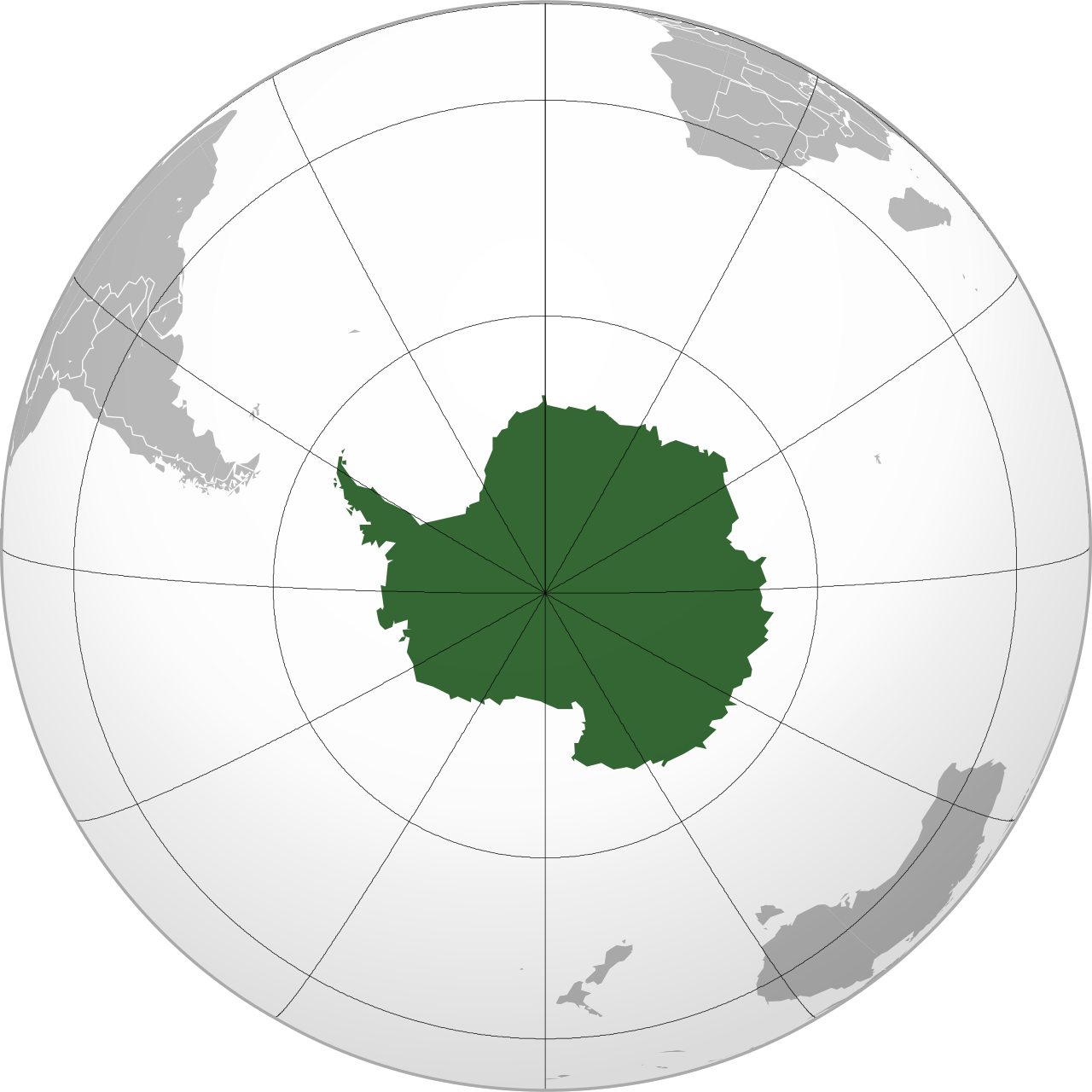
Imagine a continent larger than Europe, but without permanent residents. No cities, no roads, just an expanse of white ice stretching as far as the eye can see. That is Antarctica — the southernmost continent on our planet, mostly located within the Antarctic Circle and surrounded by the Southern Ocean. With an area of 14.2 million square kilometers, Antarctica is the fifth-largest continent in the world, about 40% larger than Europe. However, what makes Antarctica truly extraordinary is not its size, but its extreme characteristics that make it the most unique place on Earth.
Giant Ice Sheets: The World's Freshwater Reservoir
One of the most astonishing facts about Antarctica is its ice cover. The Antarctic ice sheet has an average thickness of 1.9 kilometers — if you stacked the Petronas Towers on top of each other six times, they still wouldn't reach the top of this ice sheet! This ice contains approximately 70% of the world's fresh water reserve. Imagine if all this ice melted: global sea levels would rise almost 60 meters, enough to submerge most major coastal cities like New York, Shanghai, and Jakarta. This is why scientists closely monitor temperature changes in Antarctica, as they directly affect the future of humanity.
The Coldest Temperature on Earth
Antarctica holds the record for the lowest temperature ever measured on the surface of the Earth: −89.2°C, recorded at Vostok Station in 1983. This temperature is colder than the surface of Mars on a hot day! The average temperature in the interior of the continent is around −60°C to −70°C. However, in coastal areas, temperatures can reach more than 10°C during summer — still very cold by our standards, but enough for ice to melt. These extreme temperature differences make Antarctica a polar desert, with annual precipitation less than 200 mm in coastal areas and much less in the interior.
Life in the Icy World: More Than Just Penguins
Although its environment is harsh, Antarctica is not devoid of life. Native species include various types of penguins, such as the famous Emperor penguin known for its resilience to the cold, and the smaller Adélie penguin. Seals, such as Weddell seals and crabeater seals, also inhabit the surrounding waters. However, the most fascinating life forms may be the smallest ones: tardigrades, or "water bears," which can survive in the most extreme conditions on Earth, including cosmic radiation and total dehydration. In addition, there are nematodes and pests that live in soil that rarely freezes. Life here is proof of how resilient organisms can be.
Scientific Importance and the Antarctic Treaty
Antarctica is not just a cold and quiet place; it is a natural laboratory of great importance for science. Here, scientists study climate change, astronomy, and extremophile biology. Research stations such as McMurdo (USA) and Vostok (Russia) serve as centers for year-round research. The Antarctic Treaty, signed in 1959, established this continent as a scientific reserve free from military and mining activities. Only scientific research is permitted. This makes Antarctica the only continent in the world fully dedicated to science.
The Future of Antarctica: Challenges and Reflections
Antarctica faces significant challenges due to global climate change. Although its ice sheets appear stable, recent studies show that melting in the western part is accelerating. If global temperatures continue to rise, the impact on Antarctica could be catastrophic. However, this continent also reminds us of the beauty and uniqueness of the planet we inhabit. When you look at pictures of towering icebergs or penguins marching in line on the snow, you cannot help but feel amazed. Antarctica is an invaluable gift — and our responsibility to protect it.
---
Reference: Antarctica — Wikipedia
Antarctica: The Coldest, Driest, and Most Mysterious Continent on Earth. Antarctica is the southernmost and least populated continent on Earth, entirely located south of the Antarctic Circle. Covered by a layer of ice 1.9 km thick, this continent holds 70% of the world's fresh water, which, if melted, would raise global sea levels by almost 60 meters. With the lowest temperature ever recorded at −89.2°C, Antarctica is a unique polar desert with wildlife such as penguins, seals, and tardigrades. This article explores the scientific facts, ecological importance, and mysteries of this amazing ice continent.. Introduction: A World of Ice Holding Earth's Secrets
Imagine a continent larger than Europe, but without permanent residents. No cities, no roads, just an expanse of white ice stretching as far as the eye can see. That is Antarctica — the southernmost continent on our planet, mostly located within the Antarctic Circle and surrounded by the Southern Ocean. With an area of 14.2 million square kilometers, Antarctica is the fifth-largest continent in the world, about 40% larger than Europe. However, what makes Antarctica truly extraordinary is not its size, but its extreme characteristics that make it the most unique place on Earth.
Giant Ice Sheets: The World's Freshwater Reservoir
One of the most astonishing facts about Antarctica is its ice cover. The Antarctic ice sheet has an average thickness of 1.9 kilometers — if you stacked the Petronas Towers on top of each other six times, they still wouldn't reach the top of this ice sheet! This ice contains approximately 70% of the world's fresh water reserve. Imagine if all this ice melted: global sea levels would rise almost 60 meters, enough to submerge most major coastal cities like New York, Shanghai, and Jakarta. This is why scientists closely monitor temperature changes in Antarctica, as they directly affect the future of humanity.
The Coldest Temperature on Earth
Antarctica holds the record for the lowest temperature ever measured on the surface of the Earth: −89.2°C, recorded at Vostok Station in 1983. This temperature is colder than the surface of Mars on a hot day! The average temperature in the interior of the continent is around −60°C to −70°C. However, in coastal areas, temperatures can reach more than 10°C during summer — still very cold by our standards, but enough for ice to melt. These extreme temperature differences make Antarctica a polar desert, with annual precipitation less than 200 mm in coastal areas and much less in the interior.
Life in the Icy World: More Than Just Penguins
Although its environment is harsh, Antarctica is not devoid of life. Native species include various types of penguins, such as the famous Emperor penguin known for its resilience to the cold, and the smaller Adélie penguin. Seals, such as Weddell seals and crabeater seals, also inhabit the surrounding waters. However, the most fascinating life forms may be the smallest ones: tardigrades, or "water bears," which can survive in the most extreme conditions on Earth, including cosmic radiation and total dehydration. In addition, there are nematodes and pests that live in soil that rarely freezes. Life here is proof of how resilient organisms can be.
Scientific Importance and the Antarctic Treaty
Antarctica is not just a cold and quiet place; it is a natural laboratory of great importance for science. Here, scientists study climate change, astronomy, and extremophile biology. Research stations such as McMurdo USA and Vostok Russia serve as centers for year-round research. The Antarctic Treaty, signed in 1959, established this continent as a scientific reserve free from military and mining activities. Only scientific research is permitted. This makes Antarctica the only continent in the world fully dedicated to science.
The Future of Antarctica: Challenges and Reflections
Antarctica faces significant challenges due to global climate change. Although its ice sheets appear stable, recent studies show that melting in the western part is accelerating. If global temperatures continue to rise, the impact on Antarctica could be catastrophic. However, this continent also reminds us of the beauty and uniqueness of the planet we inhabit. When you look at pictures of towering icebergs or penguins marching in line on the snow, you cannot help but feel amazed. Antarctica is an invaluable gift — and our responsibility to protect it.
---
Reference: Antarctica — Wikipedia https://en.wikipedia.org/wiki/Antarctica