'We Have Already Seen Its Shadow in the Night Sky'
On 15 February 2013, at 09:20 local time, the sky over Chelyabinsk, Russia, exploded without warning. Not lightning. Not thunder. It was a meteor weighing 12,000 tons — equivalent to 20 school buses — passing through the atmosphere at a speed of 19 km/s. An airburst explosion equivalent to 400–500 kilotons of TNT — 25–30 times stronger than the Hiroshima atomic bomb — destroyed 7,200 windows, injured more than 1,600 people, and triggered a shockwave that shook buildings up to 100 km away. The most surprising? Earth telescopes
did not detect the object at all. It came from the direction of the Sun — a blind spot for most NEO monitoring systems due to the glare of the main star. This fact is not speculation: official reports from NASA and ESA confirm that nearly 60% of all large meteors that exploded in the atmosphere in the last two decades were
never cataloged before the event.
Not Fiction: NASA's Kill List
Since 2002, NASA has operated the
Sentry Risk Table — a living database listing all near-Earth objects (NEOs) with a collision chance of >0.0001% within the next 100 years. As of 1 June 2024, the list contains
1,528 active entries, including asteroids like
2024 YR4, which has a 1 in 430 chance of hitting Earth on 22 December 2032. Don't be mistaken: this number is not 'small'. In astronomical terms, it is equivalent to rolling a die 430 times and waiting for the number '1' to appear — but if it does, the object would be 50–110 meters in diameter and could destroy an entire metropolitan city. More seriously, approximately
40% of all NEOs larger than 140 meters remain undiscovered, according to a 2023 U.S. Congress report. This means that half of the potential mass destruction weapons that could hit Earth are still hidden in the darkness of interstellar space.
Two Real Tests: One Failure, One Success — But What Does It Mean?
In July 2022, the
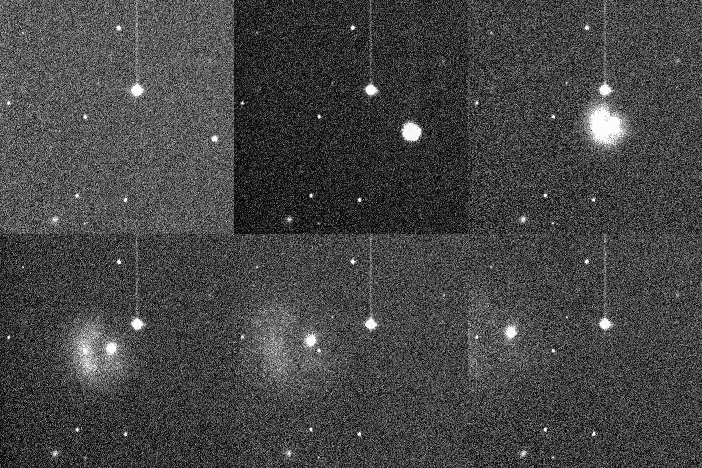
DART (Double Asteroid Redirection Test) mission became the first experiment in human history to deliberately strike an asteroid to change its orbit. Its target:
Dimorphos, a small 160-meter-diameter moon orbiting the main asteroid Didymos. The impact successfully reduced Dimorphos' orbital period by
32 minutes — far exceeding the minimum target of 72 seconds. This success proved that the
kinetic impactor principle truly works. However, one rarely reported fact is that DART only succeeded because Dimorphos is a
binary system, and its orbital change was measured through light variations — a method that cannot be used for single asteroids moving independently in space. Conversely, another test — the
NEOShield European project — encountered serious technical challenges when testing the
gravity tractor (using the spacecraft's gravity to slowly pull the asteroid). Simulation models show that it would take
more than 10 years to move a 300-meter-diameter asteroid — but the average real-world warning time from discovery to potential impact? Only
3–7 years, according to analysis of Minor Planet Center data from 2023.
The Chicxulub Shadow: A Threat That Never Truly Went Away
The Chicxulub crater in Mexico — 180 km in diameter — is not just a big hole. It is a geological wound that holds evidence of
impact winter: a global layer of iridium 1–10 cm thick, volcanic ash that lasted 10 years in the stratosphere, and a drop in Earth's average temperature by 25°C for months. New climate models from the University of Colorado (2022) show that an asteroid over 5 km in diameter today would cause global crop failure for
at least four consecutive years, not just 'a cold season'. And this is not a question of 'if', but 'when': statistical analysis from Palomar Observatory confirms that the chance of an asteroid impact over 1 km in the next 1,000 years is
1 in 500 — higher than the chance of dying from a combination of volcanic eruptions or tsunamis.
What Is Being Built Now — and Why It Still Isn't Enough?
Three major projects are underway:
NEOCam (an infrared telescope in the Sun-Earth L1 orbit to detect NEOs from the direction of the Sun),
Vigil (Airbus and ESA's mission for 24/7 monitoring from geostationary orbit), and NASA's
Planetary Defense Coordination Office (PDCO) — which now has a budget of $250 million per year. But these numbers are only 0.02% of NASA's total budget. Compare this to the cost of building one U.S. nuclear submarine: $3.5 billion. Moreover, no country in the world has a
legally binding international protocol for activating anti-asteroid weapons. No UN Charter, no Geneva agreement, no guidelines on who has the right to 'shoot' an asteroid — especially if it potentially hits another country's airspace during the transfer process. The darkest question is not about technology. It is about politics: when radar shows a 'certain collision in 8 years', who will press the button — and who will bear the consequences if the transfer fails and the object breaks into more dangerous fragments?
Final Words: We Are Not Spectators — We Are Earth's Last Line of Defense
Asteroids are not a future threat. They are a continuing geophysical reality — like earthquakes or supervolcanic eruptions. The difference: for the first time in evolutionary history, this species has the capacity
to prevent cosmic disasters. But that capacity does not automatically become ability. It requires sustained funding, unconditional international cooperation, and — most importantly — public awareness not clouded by the illusion of safety. Every time a telescope discovers a new NEO, it is not just data. It is another name on the waiting list. And this list, as written by Dr. Lindley Johnson, an astrophysicist from PDCO, 'is not a threat list — it is a list of opportunities. Our last opportunity to prove that human intelligence is stronger than cosmic fate.'
---
References: Asteroid impact avoidance — Wikipedia
World-Ending Asteroid Is Watching — And We Have Just Begun to Learn How to Dodge. 66 million years ago, a city-sized asteroid killed all the dinosaurs — not a myth, but a geological fact carved in rocks. Today, more than 34,000 near-Earth objects have been detected... and 1,500 of them are on NASA's 'High Risk' list. We are no longer waiting for fate — we are building cosmic weapons to change the orbit of sky demons. But is it fast enough?. 'We Have Already Seen Its Shadow in the Night Sky'
On 15 February 2013, at 09:20 local time, the sky over Chelyabinsk, Russia, exploded without warning. Not lightning. Not thunder. It was a meteor weighing 12,000 tons — equivalent to 20 school buses — passing through the atmosphere at a speed of 19 km/s. An airburst explosion equivalent to 400–500 kilotons of TNT — 25–30 times stronger than the Hiroshima atomic bomb — destroyed 7,200 windows, injured more than 1,600 people, and triggered a shockwave that shook buildings up to 100 km away. The most surprising? Earth telescopes did not detect the object at all. It came from the direction of the Sun — a blind spot for most NEO monitoring systems due to the glare of the main star. This fact is not speculation: official reports from NASA and ESA confirm that nearly 60% of all large meteors that exploded in the atmosphere in the last two decades were never cataloged before the event .
Not Fiction: NASA's Kill List
Since 2002, NASA has operated the Sentry Risk Table — a living database listing all near-Earth objects NEOs with a collision chance of 0.0001% within the next 100 years. As of 1 June 2024, the list contains 1,528 active entries , including asteroids like 2024 YR4 , which has a 1 in 430 chance of hitting Earth on 22 December 2032. Don't be mistaken: this number is not 'small'. In astronomical terms, it is equivalent to rolling a die 430 times and waiting for the number '1' to appear — but if it does, the object would be 50–110 meters in diameter and could destroy an entire metropolitan city. More seriously, approximately 40% of all NEOs larger than 140 meters remain undiscovered , according to a 2023 U.S. Congress report. This means that half of the potential mass destruction weapons that could hit Earth are still hidden in the darkness of interstellar space.
Two Real Tests: One Failure, One Success — But What Does It Mean?
In July 2022, the DART Double Asteroid Redirection Test mission became the first experiment in human history to deliberately strike an asteroid to change its orbit. Its target: Dimorphos , a small 160-meter-diameter moon orbiting the main asteroid Didymos. The impact successfully reduced Dimorphos' orbital period by 32 minutes — far exceeding the minimum target of 72 seconds. This success proved that the kinetic impactor principle truly works. However, one rarely reported fact is that DART only succeeded because Dimorphos is a binary system, and its orbital change was measured through light variations — a method that cannot be used for single asteroids moving independently in space. Conversely, another test — the NEOShield European project — encountered serious technical challenges when testing the gravity tractor using the spacecraft's gravity to slowly pull the asteroid . Simulation models show that it would take more than 10 years to move a 300-meter-diameter asteroid — but the average real-world warning time from discovery to potential impact? Only 3–7 years , according to analysis of Minor Planet Center data from 2023.
The Chicxulub Shadow: A Threat That Never Truly Went Away
The Chicxulub crater in Mexico — 180 km in diameter — is not just a big hole. It is a geological wound that holds evidence of impact winter : a global layer of iridium 1–10 cm thick, volcanic ash that lasted 10 years in the stratosphere, and a drop in Earth's average temperature by 25°C for months. New climate models from the University of Colorado 2022 show that an asteroid over 5 km in diameter today would cause global crop failure for at least four consecutive years , not just 'a cold season'. And this is not a question of 'if', but 'when': statistical analysis from Palomar Observatory confirms that the chance of an asteroid impact over 1 km in the next 1,000 years is 1 in 500 — higher than the chance of dying from a combination of volcanic eruptions or tsunamis.
What Is Being Built Now — and Why It Still Isn't Enough?
Three major projects are underway: NEOCam an infrared telescope in the Sun-Earth L1 orbit to detect NEOs from the direction of the Sun , Vigil Airbus and ESA's mission for 24/7 monitoring from geostationary orbit , and NASA's Planetary Defense Coordination Office PDCO — which now has a budget of $250 million per year. But these numbers are only 0.02% of NASA's total budget. Compare this to the cost of building one U.S. nuclear submarine: $3.5 billion. Moreover, no country in the world has a legally binding international protocol for activating anti-asteroid weapons. No UN Charter, no Geneva agreement, no guidelines on who has the right to 'shoot' an asteroid — especially if it potentially hits another country's airspace during the transfer process. The darkest question is not about technology. It is about politics: when radar shows a 'certain collision in 8 years', who will press the button — and who will bear the consequences if the transfer fails and the object breaks into more dangerous fragments?
Final Words: We Are Not Spectators — We Are Earth's Last Line of Defense
Asteroids are not a future threat. They are a continuing geophysical reality — like earthquakes or supervolcanic eruptions. The difference: for the first time in evolutionary history, this species has the capacity to prevent cosmic disasters . But that capacity does not automatically become ability. It requires sustained funding, unconditional international cooperation, and — most importantly — public awareness not clouded by the illusion of safety. Every time a telescope discovers a new NEO, it is not just data. It is another name on the waiting list. And this list, as written by Dr. Lindley Johnson, an astrophysicist from PDCO, 'is not a threat list — it is a list of opportunities. Our last opportunity to prove that human intelligence is stronger than cosmic fate.'
---
References: Asteroid impact avoidance — Wikipedia https://en.wikipedia.org/wiki/Asteroid impact avoidance