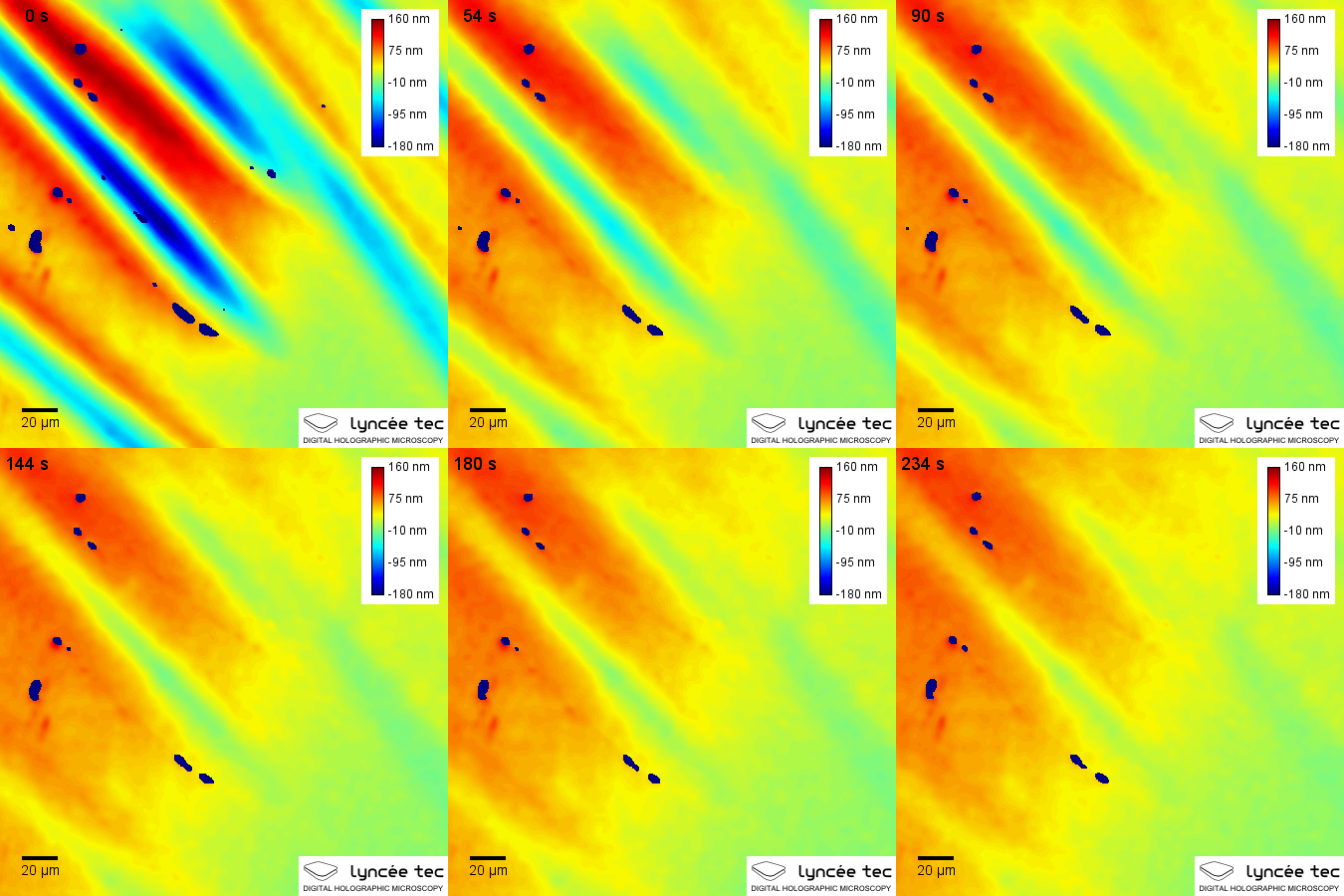
How Can Materials 'Feel' and 'Heal' Themselves?
The concept of self-healing materials is often misunderstood as a biological process—as if the material has a nervous or immune system. In reality, its mechanism is entirely passive and based on thermodynamic and chemical kinetics principles. When microscopic cracks (usually 10–100 micrometers in size) form in a polymer, it activates one of two main strategies:
intrinsic or
extrinsic. In the extrinsic approach, the material is filled with microcapsules 10–200 micrometers in diameter containing a binding monomer (such as dicyclopentadiene) and separate catalysts. Cracks cause the capsules to rupture, releasing their contents, which then undergo
ring-opening metathesis polymerization (ROMP), forming a new polymer network along the crack surface within less than 24 hours. The intrinsic approach relies on dynamically recoverable chemical bonds—examples include hydrogen bonds, disulfide bonds, or metal-ligand complexes that can break and reform under pressure or heat. At the University of Illinois, experiments showed that disulfide-based materials could restore up to 95% of the original tensile strength after three crack-recovery cycles.
Not Just Plastic: Metals and Concrete Can Heal Too
Although polymers dominate early literature, recent discoveries have proven that the self-healing principle can be applied to inorganic materials. In metals,
grain boundary engineering is used to create grain structures that allow metal atoms to migrate to crack areas at high temperatures—a phenomenon known as
creep-assisted self-healing. A study at Karlsruhe Institute of Technology (2021) showed that a nickel-cobalt alloy with 0.8% boron could close a 20-micrometer crack at 700°C within 48 hours due to boron diffusion accelerating the formation of intermetallic bonding phases. Meanwhile, in concrete,
Bacillus pasteurii bacteria are added to cement mixtures along with calcium lactate nutrient sources. When cracks allow water to enter, the bacteria become active and produce calcium carbonate through the
microbially induced calcite precipitation (MICP) process, filling gaps up to 0.5 mm deep. A field test project at Delft University showed that this biotic concrete increased water permeability resistance by 90% after 28 days.
From Lab to Real World: Three Operational Applications
Three real-world applications have passed field tests and are now in commercial stages. First, German company
BASF produces the
Infinicoat® coating for luxury cars containing organic silicon microcapsules; minor scratches disappear within 60 minutes at room temperature. Second, an experimental road in Negeri Sembilan uses MICP concrete in a 200-meter segment—two-year monitoring data showed a 40% reduction in crack rates compared to conventional concrete. Third, photovoltaic solar panels at the Malaysia Solar Energy Research Center (SESP) in Serdang are coated with disulfide-based polymers; 18-month weather resistance tests showed 92% efficiency retention, compared to 76% on panels without a healing layer.
Why Aren't All Materials 'Made' to Heal?
Limitations do not come from a lack of knowledge but from engineering trade-offs. Materials with intrinsic healing mechanisms often have lower initial stiffness due to the presence of weaker dynamic bonds. Microcapsules can also reduce tensile strength by up to 15% if the density exceeds 12% by weight. Moreover, most healing systems only function once or twice—the process is not infinite because the active ingredients are consumed. As a creative comparison: if conventional materials are like a stone wall that collapses and needs to be rebuilt, self-healing materials are more like a clay wall that 'softens' at the crack point and then 'hardens' again—not perfect, but sufficient to delay structural failure for years.
What Does 'Healing' Mean for the Future of Sustainability?
Amid climate change challenges, self-healing materials are not just an engineering innovation—they are a resource mitigation strategy. A study by the International Energy Agency (IEA, 2023) estimated that 22% of global carbon emissions come from the production and replacement of building materials. By extending the lifespan of bridges, pipes, and buildings by an additional 30–50 years, the potential emission reduction could reach 1.4 gigatonnes of CO₂ annually by 2040. However, an important reflective question arises: if materials can heal themselves, will we become less attentive to initial design? Will this technology encourage a more hidden 'throw away and replace' attitude? The answer lies in design ethics—self-healing is not a substitute for durability, but a complement to material wisdom. As a materials expert from the University of Malaya stated at the ASEAN Materials Science 2022 seminar:
‘Materials that heal are not materials that don’t need care—they are materials that deserve to be valued longer.’
Where Is Malaysia in This Wave?
Malaysia is entering a translational research phase. The Advanced Materials Research Centre (AMRC) at UTM Johor Bahru has developed graphene oxide-based polyurethane nanocomposites with thermal healing capacity—capable of restoring tensile strength up to 88% after heating at 120°C for 20 minutes. Meanwhile, a collaboration between Universiti Putra Malaysia and the National Water Services Corporation (SYABAS) is testing bioactive concrete for underground pipes in Selangor. Although there are no fully commercial domestic products yet, Malaysia has a unique advantage: the diversity of local microorganisms that can be optimized for MICP, as well as the urgent need for tropical weather-resistant infrastructure—making the country not just a user of technology, but a candidate for creating regional-specific solutions.
---
Rujukan: Self-healing material — Wikipedia
Self-Healing Materials: Not Science Fiction, But a Chemical Reality Transforming the Built and Electronic Worlds. Self-healing materials are synthetic substances capable of repairing microscopic defects without human intervention. This technological development is rooted in advanced chemical and physical principles such as microcapsules, capillary channels, and metal-memory-based recovery mechanisms. It is now being tested in electronic coatings, durable roads, and aircraft components—promising global maintenance cost reductions of billions of ringgit per year. Its importance goes beyond material resilience; it represents a paradigm shift from 'reactive repair' to 'proactive prevention' in engineering design.. How Can Materials 'Feel' and 'Heal' Themselves?
The concept of self-healing materials is often misunderstood as a biological process—as if the material has a nervous or immune system. In reality, its mechanism is entirely passive and based on thermodynamic and chemical kinetics principles. When microscopic cracks usually 10–100 micrometers in size form in a polymer, it activates one of two main strategies: intrinsic or extrinsic . In the extrinsic approach, the material is filled with microcapsules 10–200 micrometers in diameter containing a binding monomer such as dicyclopentadiene and separate catalysts. Cracks cause the capsules to rupture, releasing their contents, which then undergo ring-opening metathesis polymerization ROMP , forming a new polymer network along the crack surface within less than 24 hours. The intrinsic approach relies on dynamically recoverable chemical bonds—examples include hydrogen bonds, disulfide bonds, or metal-ligand complexes that can break and reform under pressure or heat. At the University of Illinois, experiments showed that disulfide-based materials could restore up to 95% of the original tensile strength after three crack-recovery cycles.
Not Just Plastic: Metals and Concrete Can Heal Too
Although polymers dominate early literature, recent discoveries have proven that the self-healing principle can be applied to inorganic materials. In metals, grain boundary engineering is used to create grain structures that allow metal atoms to migrate to crack areas at high temperatures—a phenomenon known as creep-assisted self-healing . A study at Karlsruhe Institute of Technology 2021 showed that a nickel-cobalt alloy with 0.8% boron could close a 20-micrometer crack at 700°C within 48 hours due to boron diffusion accelerating the formation of intermetallic bonding phases. Meanwhile, in concrete, Bacillus pasteurii bacteria are added to cement mixtures along with calcium lactate nutrient sources. When cracks allow water to enter, the bacteria become active and produce calcium carbonate through the microbially induced calcite precipitation MICP process, filling gaps up to 0.5 mm deep. A field test project at Delft University showed that this biotic concrete increased water permeability resistance by 90% after 28 days.
From Lab to Real World: Three Operational Applications
Three real-world applications have passed field tests and are now in commercial stages. First, German company BASF produces the Infinicoat® coating for luxury cars containing organic silicon microcapsules; minor scratches disappear within 60 minutes at room temperature. Second, an experimental road in Negeri Sembilan uses MICP concrete in a 200-meter segment—two-year monitoring data showed a 40% reduction in crack rates compared to conventional concrete. Third, photovoltaic solar panels at the Malaysia Solar Energy Research Center SESP in Serdang are coated with disulfide-based polymers; 18-month weather resistance tests showed 92% efficiency retention, compared to 76% on panels without a healing layer.
Why Aren't All Materials 'Made' to Heal?
Limitations do not come from a lack of knowledge but from engineering trade-offs. Materials with intrinsic healing mechanisms often have lower initial stiffness due to the presence of weaker dynamic bonds. Microcapsules can also reduce tensile strength by up to 15% if the density exceeds 12% by weight. Moreover, most healing systems only function once or twice—the process is not infinite because the active ingredients are consumed. As a creative comparison: if conventional materials are like a stone wall that collapses and needs to be rebuilt, self-healing materials are more like a clay wall that 'softens' at the crack point and then 'hardens' again—not perfect, but sufficient to delay structural failure for years.
What Does 'Healing' Mean for the Future of Sustainability?
Amid climate change challenges, self-healing materials are not just an engineering innovation—they are a resource mitigation strategy. A study by the International Energy Agency IEA, 2023 estimated that 22% of global carbon emissions come from the production and replacement of building materials. By extending the lifespan of bridges, pipes, and buildings by an additional 30–50 years, the potential emission reduction could reach 1.4 gigatonnes of CO₂ annually by 2040. However, an important reflective question arises: if materials can heal themselves, will we become less attentive to initial design? Will this technology encourage a more hidden 'throw away and replace' attitude? The answer lies in design ethics—self-healing is not a substitute for durability, but a complement to material wisdom. As a materials expert from the University of Malaya stated at the ASEAN Materials Science 2022 seminar: ‘Materials that heal are not materials that don’t need care—they are materials that deserve to be valued longer.’
Where Is Malaysia in This Wave?
Malaysia is entering a translational research phase. The Advanced Materials Research Centre AMRC at UTM Johor Bahru has developed graphene oxide-based polyurethane nanocomposites with thermal healing capacity—capable of restoring tensile strength up to 88% after heating at 120°C for 20 minutes. Meanwhile, a collaboration between Universiti Putra Malaysia and the National Water Services Corporation SYABAS is testing bioactive concrete for underground pipes in Selangor. Although there are no fully commercial domestic products yet, Malaysia has a unique advantage: the diversity of local microorganisms that can be optimized for MICP, as well as the urgent need for tropical weather-resistant infrastructure—making the country not just a user of technology, but a candidate for creating regional-specific solutions.
---
Rujukan: Self-healing material — Wikipedia https://en.wikipedia.org/wiki/Self-healing material