AI
Kandungan Ditaja (Sponsored)
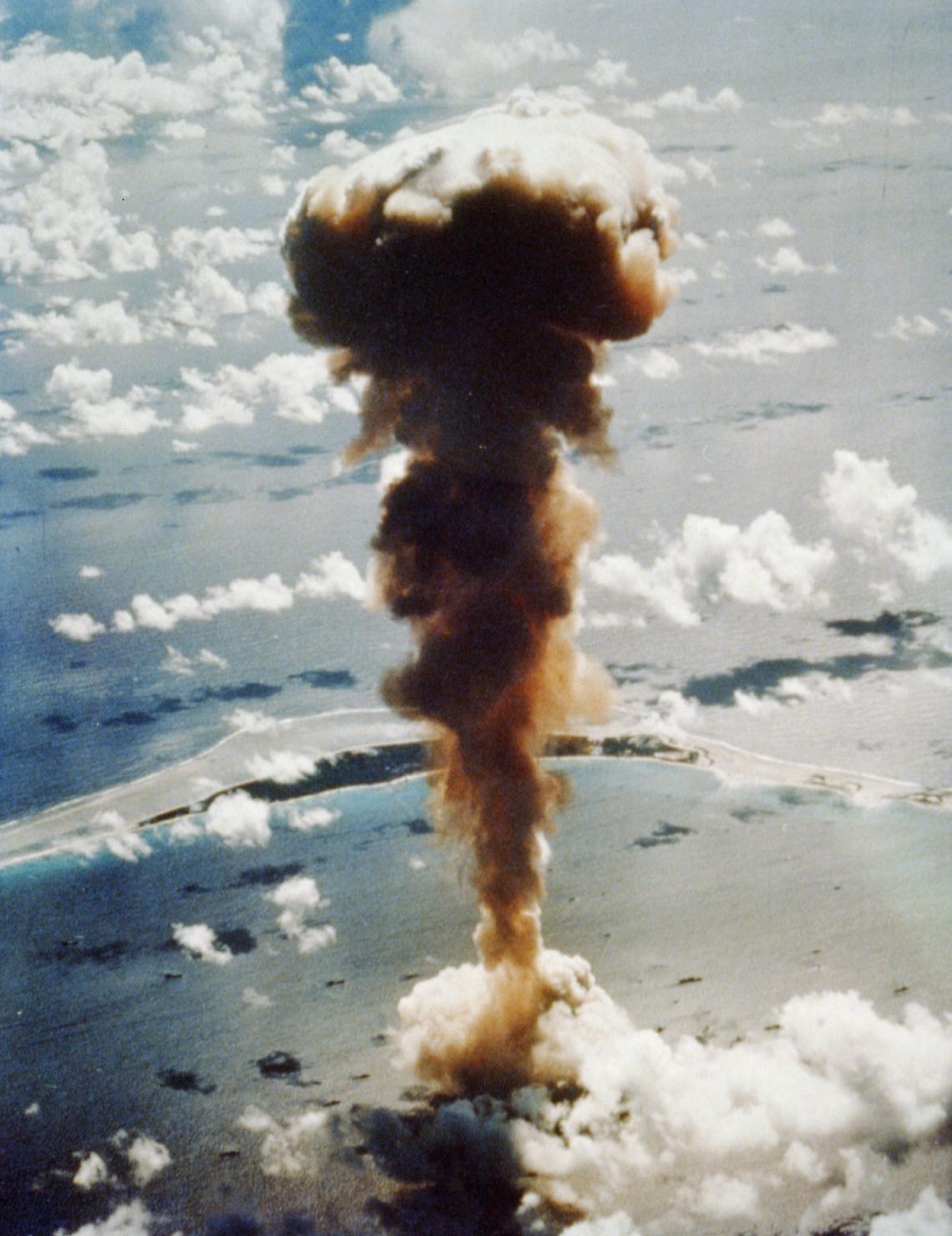
Bikini Atoll: When the World Almost Ended in 23 Nuclear Explosions. In 1946, the inhabitants of Bikini Atoll were relocated with the promise of returning soon for nuclear tests supposedly for the advancement of humanity. However, they never returned. Between 1946 and 1958, the United States detonated 23 nuclear bombs at the atoll, including an almost uncontrollable thermonuclear test. This article reveals the alarming moments when the world nearly collapsed due to human error and who the real heroes were who saved the situation.. The People of Bikini Were Relocated — They Never Returned
On the morning of 1946, the residents of Bikini Atoll in the Marshall Islands gathered at a small dock. They were 167 people living simply as fishermen and coconut farmers. Commodore Ben H. Wyatt, the military governor of the Marshall Islands, arrived on a warship. With a diplomatic tone, he asked them to relocate temporarily — only for a short period — to allow the United States to conduct nuclear tests "for the benefit of all mankind." The residents, who did not understand the true scale of the nuclear threat, reluctantly agreed. They left their homes, ancestral graves, and the beautiful blue lagoon. They did not know that this relocation was permanent. After 12 years of testing, the atoll became a radioactive desert. They never returned.
Heart-Stopping Moments: Operation Crossroads
Operation Crossroads in July 1946 was the first series. The first bomb, named Able, was dropped from a B-29 aircraft and detonated 520 feet 160 meters above the water. The explosion created a shockwave that destroyed the warships placed in the lagoon as targets. However, the second test, Baker, was the most shocking. Baker was an underwater explosion at a depth of 90 feet — it produced a large radioactive smoke cloud that contaminated the entire area. When the military entered the zone after the test, they found the seawater turned bright green due to radioactivity. No one realized how close the world came to disaster — if the bomb had been larger or the wind had changed direction, the radiation could have spread to other populated areas.
Thermonuclear Tests That Almost Destroyed the World
In the 1950s, the United States and the Soviet Union were caught in the Cold War nuclear arms race. Bikini Atoll became a stage for hydrogen bomb tests — weapons far more powerful than atomic bombs. On March 1, 1954, the Castle Bravo test was detonated at Bikini. The explosive power was expected to be 6 megatons of TNT, but it actually reached 15 megatons — twice as much. The explosion vaporized three small islands and created a crater two kilometers wide. The mushroom cloud rose 40 kilometers high. However, the most terrifying was the miscalculation: the wind changed direction and carried radioactive dust toward the Japanese fishing vessel Daigo Fukuryū Maru Fifth Lucky Dragon . All 23 crew members suffered from radiation sickness, and one died. If the wind had blown toward Honolulu or the west coast of America, thousands of lives might have been lost. The world nearly witnessed a large-scale radiation disaster.
The Uncelebrated Heroes: Scientists and Local Residents
Who were the heroes who saved the world? The answer is not one person, but a combination of brave scientists and local residents who sacrificed themselves. Dr. John C. G. Walker, a physicist at the Lawrence Livermore National Laboratory, was among those who gave early warnings about the risks of excessive explosions. Although ignored, his report became the basis for later safety procedures. More importantly, the Marshall Island residents themselves — although victims — acted as guardians of the radioactive area by unwillingly refusing to allow anyone to return to the atoll without protection. Unaware of it, they prevented further contamination. However, there was no award for them. Only poisoned wells and offspring with defects due to radiation remained.
Lessons Not Learned
After 23 explosions, Bikini Atoll became a symbol of human arrogance. In 1958, the tests were stopped, but the damage had already occurred. The land still contains dangerous strontium-90 and cesium-137. In 2010, UNESCO declared Bikini Atoll a World Heritage Site — as a reminder of the nuclear era. However, the question remains: have we learned? Today, nuclear weapons still exist, and these tests remind us how thin the line is between progress and destruction. The real heroes may not be those who prevented the explosions, but those who dared to say "enough" — like the people of Bikini, who, in their suffering, taught the world the meaning of sacrifice.
Rujukan: Nuclear testing at Bikini Atoll — Wikipedia https://en.wikipedia.org/wiki/Nuclear testing at Bikini Atoll