The First Sounds of a New Era
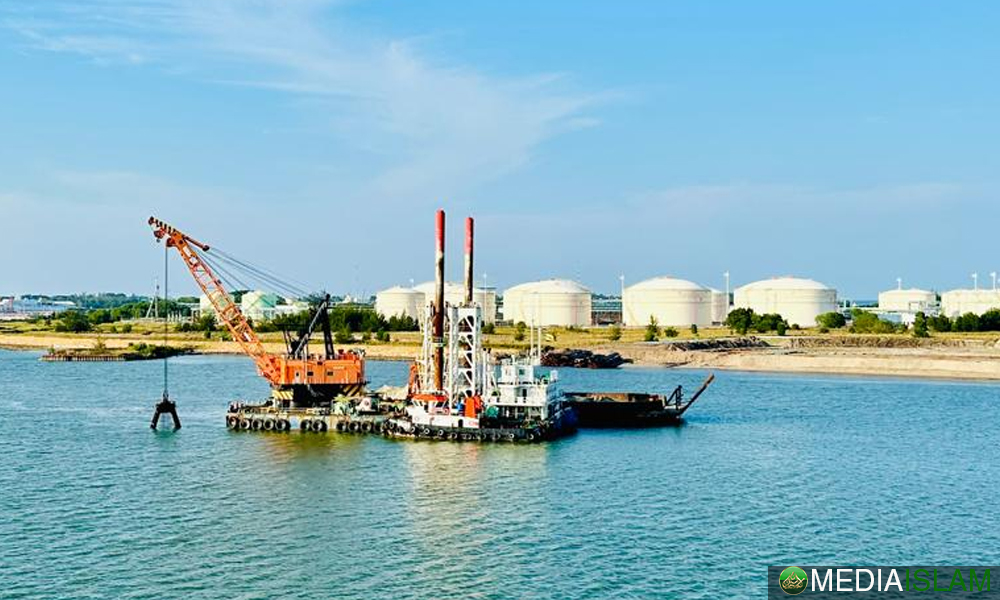
At Pelabuhan Muara (PMB), the sounds of metal welding and the roar of cranes are no longer just ordinary construction noises. They are the early signs of Brunei's industrial shipbuilding sector beginning to operate officially. Anson International Sdn Bhd, a local maritime services company with extensive experience, has started building its first ship at their integrated yard — the Hull 211 project, a 80-person crew transfer vessel (CTV) for Fast Offshore Services.
This step is not just a business expansion. It reflects a strategic shift by Brunei away from over-reliance on oil and gas. Global commodity price pressures and the need to generate high-skilled employment have driven the government and private sector to develop high-value industries such as shipbuilding — a field that was almost nonexistent in the local industrial landscape before.
Hull 211: A Vessel Setting New Standards
Hull 211 is specifically designed for offshore operations in Brunei waters: stable in challenging weather, energy-efficient, and meeting international safety standards. As the largest crew transfer vessel ever fully built in Brunei, it replaces the reliance on importing ships from Singapore, South Korea, or China.
Collaboration with Fast Offshore Services provides access to technical specifications, field operational experience, and an international certification network. According to analysis by maritime experts from Universiti Brunei Darussalam, the success of this project proves that local facilities, workforce, and project management can deliver world-class results. "This could be the starting point for Brunei as a regional shipbuilding hub — provided consistency and technical commitment are maintained," said the expert in an interview.
Direct Impact on Local Workforce and Economy
The PMB integrated yard has now become a practical training center for marine engineers, certified welders, marine system technicians, and local project managers. Anson has launched a tiered training program with support from the Department of Skills Training and the Ministry of Foreign Affairs and Trade. More than 65 percent of the Hull 211 project workers are Bruneian citizens — most of them retrained from other sectors or recent graduates.
Multiple impacts are already visible: local steel suppliers are increasing production capacity; logistics companies in Muara are expanding their specialized truck fleets; and small entrepreneurs around the port area are opening marine equipment stores and catering services for yard workers. All of this happens within the framework of the 12th National Development Plan, which sets shipbuilding as one of the main supporting industries for the economy.
Realities of Competition and Technology Transfer Needs
Brunei did not start from a blank slate — but it is also not in a strong position. The Southeast Asian shipbuilding market is dominated by shipyards in Singapore, South Korea, and Indonesia, which have long records, global customer networks, and well-organized supply chains. To compete, Anson not only needs to meet schedules and budgets — but also prove engineering accuracy, structural durability, and delivery reliability.
Critical components such as main engines, integrated navigation systems, and safety equipment are still imported. This emphasizes the importance of long-term technical collaboration with companies like Fast Offshore Services — not just as customers, but as knowledge transfer partners. Without a progressive local supply chain, construction costs will remain high, and profits will be distributed outside the country.
One Ship, A New Direction
The growing shadow of Hull 211 in the PMB yard is not just a shadow of iron and steel. It is the shadow of an intentional economic choice: to move from exporting raw resources to exporting skills, design, and added value. This project does not promise an immediate transformation — but it sets new parameters: that shipbuilding can be done in Brunei, by Bruneians, for the regional market. The completion of Hull 211 by the end of this year will be the first test — not only for Anson, but for Brunei's confidence in its own capabilities.