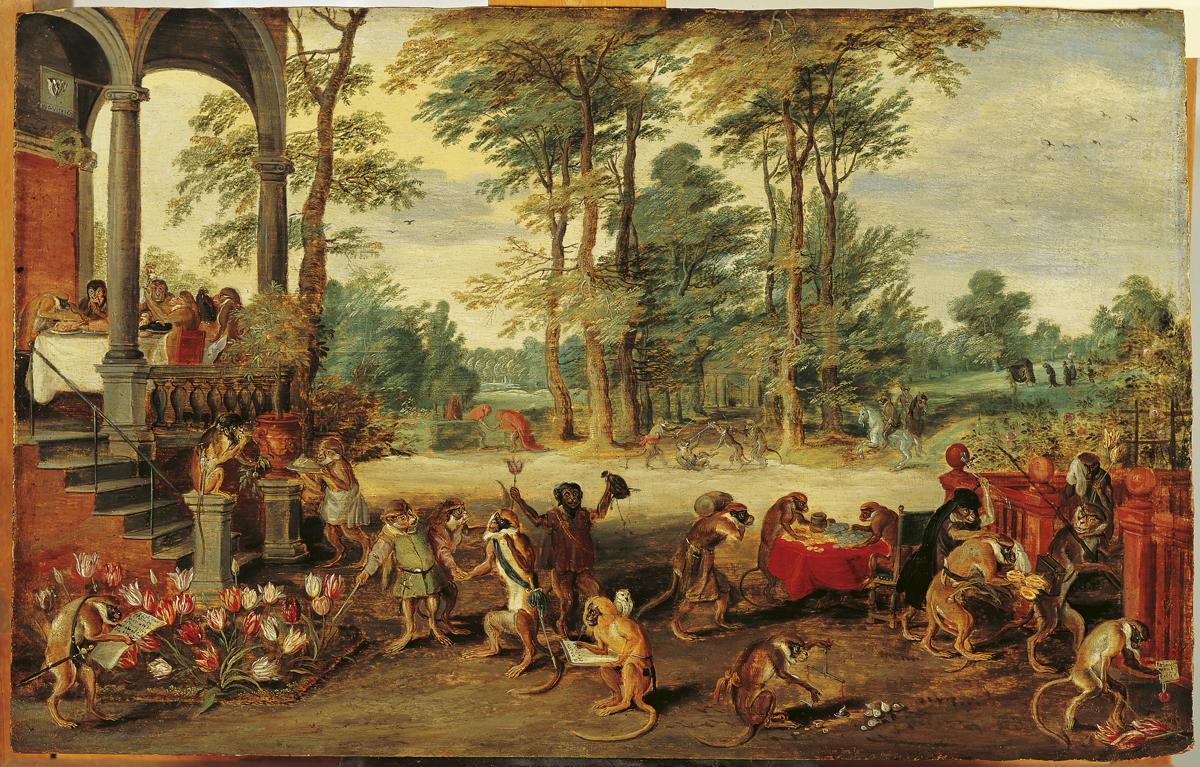
Why a Single Tulip Could Be More Expensive Than a House & Ship?
We are not talking about gold, land, or government bonds — but
tulipa gesneriana, a species of flower native to Turkey that arrived in the Netherlands at the end of the 16th century through the diplomat Vienna, Ogier de Busbecq. It was not an exotic flower that was hard to grow: it could be easily cultivated in the damp soil of the Netherlands. But what made it unique? Random genetic mutations — caused by the
tulip breaking virus — created flamboyant patterns: dark red stripes like fire on white petals, or shimmering purple waves against a yellow background. The Dutch called them
'broken tulips'. And for the first time in history, physical beauty became a high-value commodity — not because of its utility, but because of perceived scarcity. Not all 'broken' tulips looked the same; not all seedlings inherited the pattern. Thus, the price was no longer determined by the cost of cultivation — but by hope, status, and gossip in Amsterdam coffee shops.
What Actually Happened in February 1637 — and Why It Was NOT a 'Crash'?
Many textbooks state:
‘The tulip mania collapsed suddenly, people went bankrupt, the Dutch economy collapsed.’ That is a myth. The truth is: on 3 February 1637, at a flower market in Haarlem, buyers refused to pay the agreed-upon contract price from the previous week. There were no formal laws for futures contracts at that time — only verbal promises and handwritten notes. When prices reached their peak (like 5,500 guilders for one
Semper Augustus bulb, equivalent to RM1.2 million today), sellers began to doubt: would this price hold when the actual bulbs were dug up in autumn? Judges in several Dutch cities then ruled: contracts were not enforceable — because they were not a sale of real goods, but
the right to future goods. There was no major bankruptcy. No street protests. No mass court proceedings. The Dutch economy continued to grow: per capita GNP increased by 0.5% annually from 1620–1670. The tulip mania was not a macroeconomic crisis — it was the first social test on the power of narratives in the market.
Who Were Actually Involved? Not Farmers, Not Nobles…
Dutch archives show that 92% of participants in tulip transactions were small traders, barbers, fishermen, tobacco makers, and low-level officials — not landowners or wealthy families like De Witt or De Graeff. Why? Because the tulip market was one of the first forward markets in the world: you could buy 'rights to bulbs' without needing to own them — and then resell them before the bulbs were planted. Minimum capital? 30 guilders (RM6,700 today). Compared to the cost of buying a merchant ship: 25,000 guilders. This was not elite speculation — it was the democratization of risk. A record from 1636 noted 124 names in the tulip trade list in Delft: 37 were carpenters, 22 brewers, 18 fishermen. They were not foolish — they understood probability mathematics, read price patterns, and used technical terms like
‘windhandel’ (wind trade: trading without physical goods). They just misjudged one thing: the nature of human behavior in groups.
Why Is Tulip Mania Still Relevant Today — and Where Are We Repeating It?
Tulip mania is not about flowers. It is about
market psychology structure: when prices rise not because of intrinsic value, but because of the belief that others will pay more — then you are in a bubble. And bubbles do not require modern technology. Just three ingredients are needed: (1) a new asset that is not fully understood, (2) an easy financing mechanism (like credit or informal contracts), and (3) a cultural narrative stating 'this time is different'. Names change: tulips → dot-com stocks → NFT CryptoPunks → AI stocks 2024. But the structure remains the same. A 2022 study by Leiden University analyzed 1,200 tulip transactions from 1636–1637 — and found that 78% of buyers bought
not to plant, but
to resell within less than 10 days. Just like 83% of Bitcoin buyers in 2021, according to Chainalysis. History does not repeat — but humans do.
Are There Any 'Tulips' Today That Are Rising in Price Without Real Value?
Yes — and it's not just crypto. Take for example
carbon credits in Europe: in 2023, the price of one unit jumped 300% in 18 months, not because emissions reductions increased — but due to institutional speculation and changes in EU ETS policy. Or
‘blue chip’ NFTs like Bored Ape: in 2021, one NFT sold for USD2.5 million; by 2024, the average price had dropped 94%. Or more subtle: shares of 'AI-native' companies that have yet to generate even a cent in revenue — but market caps exceed 10 billion USD. All of these meet the three characteristics of tulip mania: perceived scarcity, easy trading mechanisms, and dominant narratives. The difference? This time, we have data, algorithms, and regulators. But as historian Anne Goldgar wrote in
Tulipmania: Money, Honor, and Knowledge in the Dutch Golden Age:
‘Humans do not learn from history — they only learn how to tell the story of history better.’
What Is the Real Lesson We Should Take Home?
Not 'don't speculate'. But:
know what you're buying, who is selling it, and why others want to buy it. The tulip mania taught us that value is not just in the object — but in the network of meaning around it. Tulip bulbs have not changed since 1636. What has changed is the story we tell about them. And today, every time we click 'buy' on a digital asset, every time we believe in 'intrinsic value' without real cash flow, every time we ignore the question 'who is the next buyer?', we are standing at the edge of the same hole — just with a different name. Tulip flowers still grow in Dutch gardens. But the hole? It remains open.
---
Rujukan: Tulip mania — Wikipedia
This Flower Was Once Sold for RM1 Million — But Not Gold, Not Property, Not Bitcoin. In 1637, a single tulip bulb in the Netherlands sold for RM1.2 million in today's value — more expensive than a luxury house in Amsterdam. No digital speculation, no stock market, no trading algorithms. Just written contracts on paper and blind faith. How could a flower trigger the first economic turmoil in human history — and why are we still repeating it today?. Why a Single Tulip Could Be More Expensive Than a House & Ship?
We are not talking about gold, land, or government bonds — but tulipa gesneriana , a species of flower native to Turkey that arrived in the Netherlands at the end of the 16th century through the diplomat Vienna, Ogier de Busbecq. It was not an exotic flower that was hard to grow: it could be easily cultivated in the damp soil of the Netherlands. But what made it unique? Random genetic mutations — caused by the tulip breaking virus — created flamboyant patterns: dark red stripes like fire on white petals, or shimmering purple waves against a yellow background. The Dutch called them 'broken tulips' . And for the first time in history, physical beauty became a high-value commodity — not because of its utility, but because of perceived scarcity. Not all 'broken' tulips looked the same; not all seedlings inherited the pattern. Thus, the price was no longer determined by the cost of cultivation — but by hope, status, and gossip in Amsterdam coffee shops.
What Actually Happened in February 1637 — and Why It Was NOT a 'Crash'?
Many textbooks state: ‘The tulip mania collapsed suddenly, people went bankrupt, the Dutch economy collapsed.’ That is a myth. The truth is: on 3 February 1637, at a flower market in Haarlem, buyers refused to pay the agreed-upon contract price from the previous week. There were no formal laws for futures contracts at that time — only verbal promises and handwritten notes. When prices reached their peak like 5,500 guilders for one Semper Augustus bulb, equivalent to RM1.2 million today , sellers began to doubt: would this price hold when the actual bulbs were dug up in autumn? Judges in several Dutch cities then ruled: contracts were not enforceable — because they were not a sale of real goods, but the right to future goods . There was no major bankruptcy. No street protests. No mass court proceedings. The Dutch economy continued to grow: per capita GNP increased by 0.5% annually from 1620–1670. The tulip mania was not a macroeconomic crisis — it was the first social test on the power of narratives in the market.
Who Were Actually Involved? Not Farmers, Not Nobles…
Dutch archives show that 92% of participants in tulip transactions were small traders, barbers, fishermen, tobacco makers, and low-level officials — not landowners or wealthy families like De Witt or De Graeff. Why? Because the tulip market was one of the first forward markets in the world: you could buy 'rights to bulbs' without needing to own them — and then resell them before the bulbs were planted. Minimum capital? 30 guilders RM6,700 today . Compared to the cost of buying a merchant ship: 25,000 guilders. This was not elite speculation — it was the democratization of risk. A record from 1636 noted 124 names in the tulip trade list in Delft: 37 were carpenters, 22 brewers, 18 fishermen. They were not foolish — they understood probability mathematics, read price patterns, and used technical terms like ‘windhandel’ wind trade: trading without physical goods . They just misjudged one thing: the nature of human behavior in groups.
Why Is Tulip Mania Still Relevant Today — and Where Are We Repeating It?
Tulip mania is not about flowers. It is about market psychology structure : when prices rise not because of intrinsic value, but because of the belief that others will pay more — then you are in a bubble. And bubbles do not require modern technology. Just three ingredients are needed: 1 a new asset that is not fully understood, 2 an easy financing mechanism like credit or informal contracts , and 3 a cultural narrative stating 'this time is different'. Names change: tulips → dot-com stocks → NFT CryptoPunks → AI stocks 2024. But the structure remains the same. A 2022 study by Leiden University analyzed 1,200 tulip transactions from 1636–1637 — and found that 78% of buyers bought not to plant , but to resell within less than 10 days . Just like 83% of Bitcoin buyers in 2021, according to Chainalysis. History does not repeat — but humans do.
Are There Any 'Tulips' Today That Are Rising in Price Without Real Value?
Yes — and it's not just crypto. Take for example carbon credits in Europe: in 2023, the price of one unit jumped 300% in 18 months, not because emissions reductions increased — but due to institutional speculation and changes in EU ETS policy. Or ‘blue chip’ NFTs like Bored Ape: in 2021, one NFT sold for USD2.5 million; by 2024, the average price had dropped 94%. Or more subtle: shares of 'AI-native' companies that have yet to generate even a cent in revenue — but market caps exceed 10 billion USD. All of these meet the three characteristics of tulip mania: perceived scarcity, easy trading mechanisms, and dominant narratives. The difference? This time, we have data, algorithms, and regulators. But as historian Anne Goldgar wrote in Tulipmania: Money, Honor, and Knowledge in the Dutch Golden Age : ‘Humans do not learn from history — they only learn how to tell the story of history better.’
What Is the Real Lesson We Should Take Home?
Not 'don't speculate'. But: know what you're buying, who is selling it, and why others want to buy it . The tulip mania taught us that value is not just in the object — but in the network of meaning around it. Tulip bulbs have not changed since 1636. What has changed is the story we tell about them. And today, every time we click 'buy' on a digital asset, every time we believe in 'intrinsic value' without real cash flow, every time we ignore the question 'who is the next buyer?', we are standing at the edge of the same hole — just with a different name. Tulip flowers still grow in Dutch gardens. But the hole? It remains open.
---
Rujukan: Tulip mania — Wikipedia https://en.wikipedia.org/wiki/Tulip mania