🌍 Global coverage 24/7 • 🏯 East Asia: China, Japan, Korea • 🛕 South Asia: India • 🏰 Europe • 🗽 Americas • 🌍 Africa • 🕌 Middle East • 🇵🇸 Palestine Solidarity •
This article is a translation from the original language.
📖 Today in History
A Divided World: The Cold War Between Capitalist and Communist Giants
The Cold War was a period of intense geopolitical rivalry between the United States and the Soviet Union that lasted from 1947 to 1991. Although there were no direct battles between the two superpowers, the conflict spanned ideology, economy, technology, and culture, sparking a nuclear arms race, the Space Race, and proxy wars across the world. This article explores the origins, key events, and legacy of the Cold War, which continues to shape contemporary international relations.
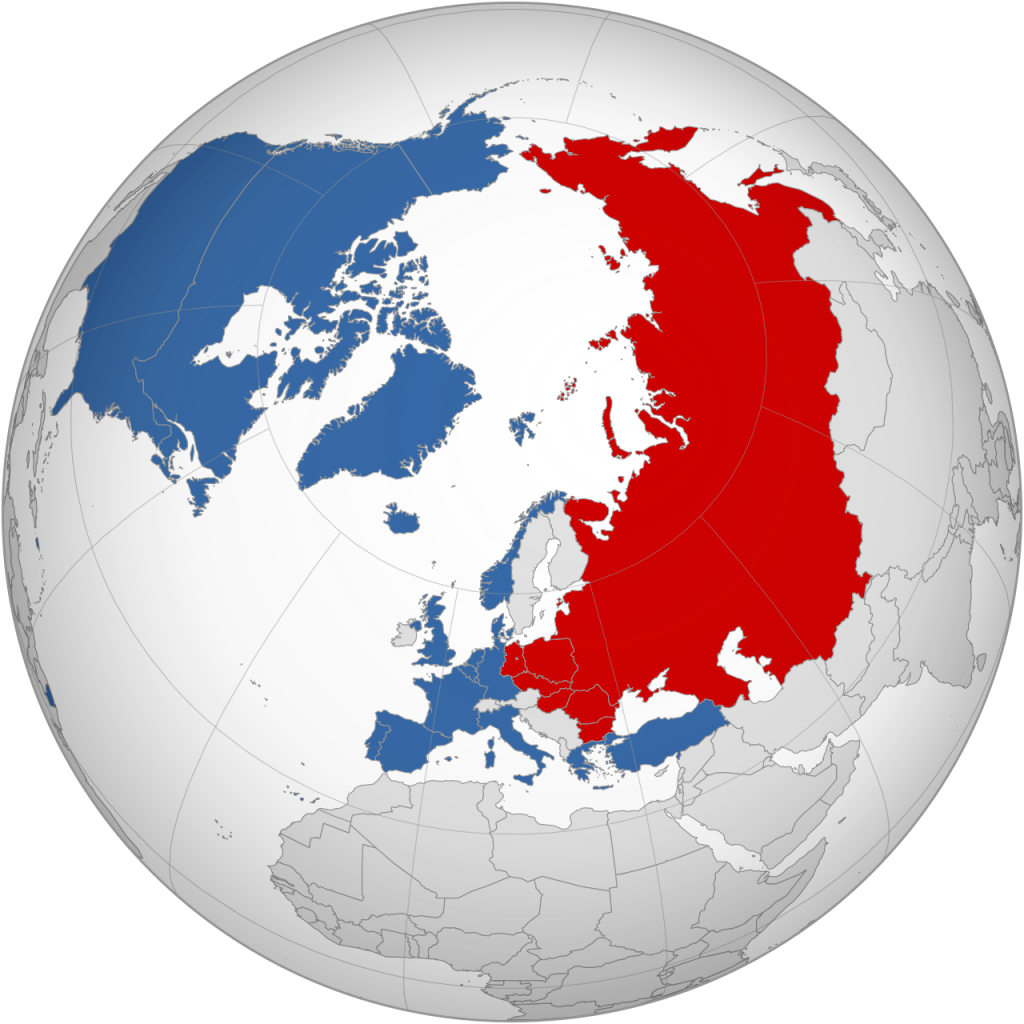
When World War II ended in 1945, the world did not expect another major conflict to come. However, this conflict was not an open war between two former allies—the United States (US) and the Soviet Union (USSR). Instead, it was a cold war, a term coined by writer George Orwell in 1945 and popularized by Bernard Baruch in 1947. For more than four decades, the planet was divided into two blocs: the Western capitalist bloc led by the US, and the Eastern communist bloc led by the USSR. There were no direct shots fired between American and Soviet forces, but ideological tensions, arms races, and interventions in other countries made this period one of the most dangerous in human history.
Origins: From Allies to Enemies
After the defeat of Nazi Germany in May 1945, the US and USSR emerged as global superpowers. However, fundamental ideological differences—American liberal democracy against Soviet totalitarian communism—quickly led to suspicion. At the Yalta Conference (February 1945) and Potsdam Conference (July 1945), allied leaders failed to agree on the future of Europe. Stalin began installing communist puppet governments in Eastern European countries liberated by the Red Army, such as Poland, Hungary, and Czechoslovakia. Churchill openly declared in 1946 that a 'Iron Curtain' had fallen across the continent, separating the free West from the Soviet-controlled East. The US responded by introducing the Truman Doctrine (1947) and the Marshall Plan (1948) to contain communist influence in Western Europe and aid economic recovery, while the USSR countered with the formation of COMINFORM and the Molotov Plan in the same year.
Nuclear Arms Race and the Threat of Annihilation
One of the most terrifying aspects of the Cold War was the nuclear arms race. The US was the first country to develop an atomic bomb, which it used against Hiroshima and Nagasaki in August 1945. However, the USSR shocked the world by testing its first atomic bomb in August 1949—only four years later. This sparked a new round of competition: hydrogen bombs (US in 1952, USSR in 1953), intercontinental ballistic missiles, and nuclear-armed submarines. By the 1960s, both superpowers had weapons capable of destroying the world multiple times over. The Cuban Missile Crisis in October 1962 brought the world to the brink of nuclear war when the US discovered the USSR had placed nuclear missiles in Cuba. For 13 days, the world held its breath before finally reaching an agreement: the USSR withdrew the missiles, and the US promised not to attack Cuba and to remove missiles from Turkey. This event showed how fragile global security was.
Space Race and Technological Competition
The Cold War also gave rise to a technological competition known as the Space Race. On October 4, 1957, the USSR launched Sputnik 1, the first artificial satellite, shocking the US and proving the superiority of Soviet rocket technology. The US responded by establishing NASA in 1958 and launching the Explorer 1 satellite in January 1958. However, the peak of this competition was the race to the moon. President John F. Kennedy vowed in 1961 to land a man on the moon before the end of the decade. On July 20, 1969, the Apollo 11 mission succeeded—Neil Armstrong took his first steps on the moon, a symbolic victory for the US. Nevertheless, the USSR also achieved early successes, such as sending the first animal into space (Laika, 1957) and the first human (Yuri Gagarin, 1961). The Space Race was not only about prestige but also drove innovation in communication, computers, and military technology.
Proxy Wars: Blood on Distant Fields
Although the US and USSR did not fight directly, they supported opposing sides in regional conflicts known as 'proxy wars.' The Korean War (1950–1953) saw North Korea, backed by the Soviet Union and China, attack South Korea, backed by the US, ending in a ceasefire and the division of the peninsula that remains to this day. The Vietnam War (1955–1975) was a bloody conflict between communist North Vietnam and US-backed South Vietnam, which ultimately ended in a communist victory and a humiliating US withdrawal. In Afghanistan, the USSR intervened in 1979 to support a communist government, but faced a rebellion by mujahideen funded by the US, Pakistan, and Saudi Arabia. This war weakened the USSR and became one of the factors in its collapse. Proxy wars cost millions of lives and left deep scars on the countries involved.
Fall of the Berlin Wall and Dissolution of the USSR
By the 1980s, economic pressure, public dissatisfaction, and reforms introduced by Mikhail Gorbachev—glasnost (openness) and perestroika (restructuring)—began to change the Soviet political landscape. People in Eastern European satellite states began demanding change. On November 9, 1989, the Berlin Wall, which had symbolized the division of the world for 28 years, finally fell, followed by peaceful revolutions in Czechoslovakia, Hungary, Poland, and Romania. The Soviet Union itself began to break apart as Baltic states and other republics declared independence. In December 1991, the Soviet Union was officially dissolved, marking the end of the Cold War. The world now witnessed the US as the sole superpower, but the legacy of the Cold War is still felt: the competition between liberal democracies and authoritarianism, the modern arms race, and tensions in Ukraine and East Asia are shadows of the conflict that once divided the planet.
Reflection: What Lessons Did the Cold War Teach Us?
The Cold War taught us that conflicting ideologies can bring the world to the brink of destruction. However, it also proved that diplomacy, even in the most tense situations, can prevent disaster. The Cuban Missile Crisis, for example, showed how important continuous communication between leaders is. In addition, the competition in science and technology—such as the Space Race—advanced human knowledge. However, the cost was enormous: trillions of dollars were spent on weapons, and millions of lives were lost in proxy wars. The question we must reflect on is: Is the world today safer? Or are we merely witnessing a new face of the Cold War—this time between the US and China? The history of the Cold War reminds us that peace is not something given, but something that must be fought for every day.
A Divided World: The Cold War Between Capitalist and Communist Giants. The Cold War was a period of intense geopolitical rivalry between the United States and the Soviet Union that lasted from 1947 to 1991. Although there were no direct battles between the two superpowers, the conflict spanned ideology, economy, technology, and culture, sparking a nuclear arms race, the Space Race, and proxy wars across the world. This article explores the origins, key events, and legacy of the Cold War, which continues to shape contemporary international relations.. Introduction: When the World Changed Its Face
When World War II ended in 1945, the world did not expect another major conflict to come. However, this conflict was not an open war between two former allies—the United States US and the Soviet Union USSR . Instead, it was a cold war, a term coined by writer George Orwell in 1945 and popularized by Bernard Baruch in 1947. For more than four decades, the planet was divided into two blocs: the Western capitalist bloc led by the US, and the Eastern communist bloc led by the USSR. There were no direct shots fired between American and Soviet forces, but ideological tensions, arms races, and interventions in other countries made this period one of the most dangerous in human history.
Origins: From Allies to Enemies
After the defeat of Nazi Germany in May 1945, the US and USSR emerged as global superpowers. However, fundamental ideological differences—American liberal democracy against Soviet totalitarian communism—quickly led to suspicion. At the Yalta Conference February 1945 and Potsdam Conference July 1945 , allied leaders failed to agree on the future of Europe. Stalin began installing communist puppet governments in Eastern European countries liberated by the Red Army, such as Poland, Hungary, and Czechoslovakia. Churchill openly declared in 1946 that a 'Iron Curtain' had fallen across the continent, separating the free West from the Soviet-controlled East. The US responded by introducing the Truman Doctrine 1947 and the Marshall Plan 1948 to contain communist influence in Western Europe and aid economic recovery, while the USSR countered with the formation of COMINFORM and the Molotov Plan in the same year.
Nuclear Arms Race and the Threat of Annihilation
One of the most terrifying aspects of the Cold War was the nuclear arms race. The US was the first country to develop an atomic bomb, which it used against Hiroshima and Nagasaki in August 1945. However, the USSR shocked the world by testing its first atomic bomb in August 1949—only four years later. This sparked a new round of competition: hydrogen bombs US in 1952, USSR in 1953 , intercontinental ballistic missiles, and nuclear-armed submarines. By the 1960s, both superpowers had weapons capable of destroying the world multiple times over. The Cuban Missile Crisis in October 1962 brought the world to the brink of nuclear war when the US discovered the USSR had placed nuclear missiles in Cuba. For 13 days, the world held its breath before finally reaching an agreement: the USSR withdrew the missiles, and the US promised not to attack Cuba and to remove missiles from Turkey. This event showed how fragile global security was.
Space Race and Technological Competition
The Cold War also gave rise to a technological competition known as the Space Race. On October 4, 1957, the USSR launched Sputnik 1, the first artificial satellite, shocking the US and proving the superiority of Soviet rocket technology. The US responded by establishing NASA in 1958 and launching the Explorer 1 satellite in January 1958. However, the peak of this competition was the race to the moon. President John F. Kennedy vowed in 1961 to land a man on the moon before the end of the decade. On July 20, 1969, the Apollo 11 mission succeeded—Neil Armstrong took his first steps on the moon, a symbolic victory for the US. Nevertheless, the USSR also achieved early successes, such as sending the first animal into space Laika, 1957 and the first human Yuri Gagarin, 1961 . The Space Race was not only about prestige but also drove innovation in communication, computers, and military technology.
Proxy Wars: Blood on Distant Fields
Although the US and USSR did not fight directly, they supported opposing sides in regional conflicts known as 'proxy wars.' The Korean War 1950–1953 saw North Korea, backed by the Soviet Union and China, attack South Korea, backed by the US, ending in a ceasefire and the division of the peninsula that remains to this day. The Vietnam War 1955–1975 was a bloody conflict between communist North Vietnam and US-backed South Vietnam, which ultimately ended in a communist victory and a humiliating US withdrawal. In Afghanistan, the USSR intervened in 1979 to support a communist government, but faced a rebellion by mujahideen funded by the US, Pakistan, and Saudi Arabia. This war weakened the USSR and became one of the factors in its collapse. Proxy wars cost millions of lives and left deep scars on the countries involved.
Fall of the Berlin Wall and Dissolution of the USSR
By the 1980s, economic pressure, public dissatisfaction, and reforms introduced by Mikhail Gorbachev—glasnost openness and perestroika restructuring —began to change the Soviet political landscape. People in Eastern European satellite states began demanding change. On November 9, 1989, the Berlin Wall, which had symbolized the division of the world for 28 years, finally fell, followed by peaceful revolutions in Czechoslovakia, Hungary, Poland, and Romania. The Soviet Union itself began to break apart as Baltic states and other republics declared independence. In December 1991, the Soviet Union was officially dissolved, marking the end of the Cold War. The world now witnessed the US as the sole superpower, but the legacy of the Cold War is still felt: the competition between liberal democracies and authoritarianism, the modern arms race, and tensions in Ukraine and East Asia are shadows of the conflict that once divided the planet.
Reflection: What Lessons Did the Cold War Teach Us?
The Cold War taught us that conflicting ideologies can bring the world to the brink of destruction. However, it also proved that diplomacy, even in the most tense situations, can prevent disaster. The Cuban Missile Crisis, for example, showed how important continuous communication between leaders is. In addition, the competition in science and technology—such as the Space Race—advanced human knowledge. However, the cost was enormous: trillions of dollars were spent on weapons, and millions of lives were lost in proxy wars. The question we must reflect on is: Is the world today safer? Or are we merely witnessing a new face of the Cold War—this time between the US and China? The history of the Cold War reminds us that peace is not something given, but something that must be fought for every day.
Reference: Cold War — Wikipedia https://en.wikipedia.org/wiki/Cold War