Introduction: Numbers That Never Sleep
Have you ever wondered why the arrangement of flower petals, snail shell spirals, and even galaxies follow the same pattern? The answer may lie in a simple yet fascinating sequence of numbers:
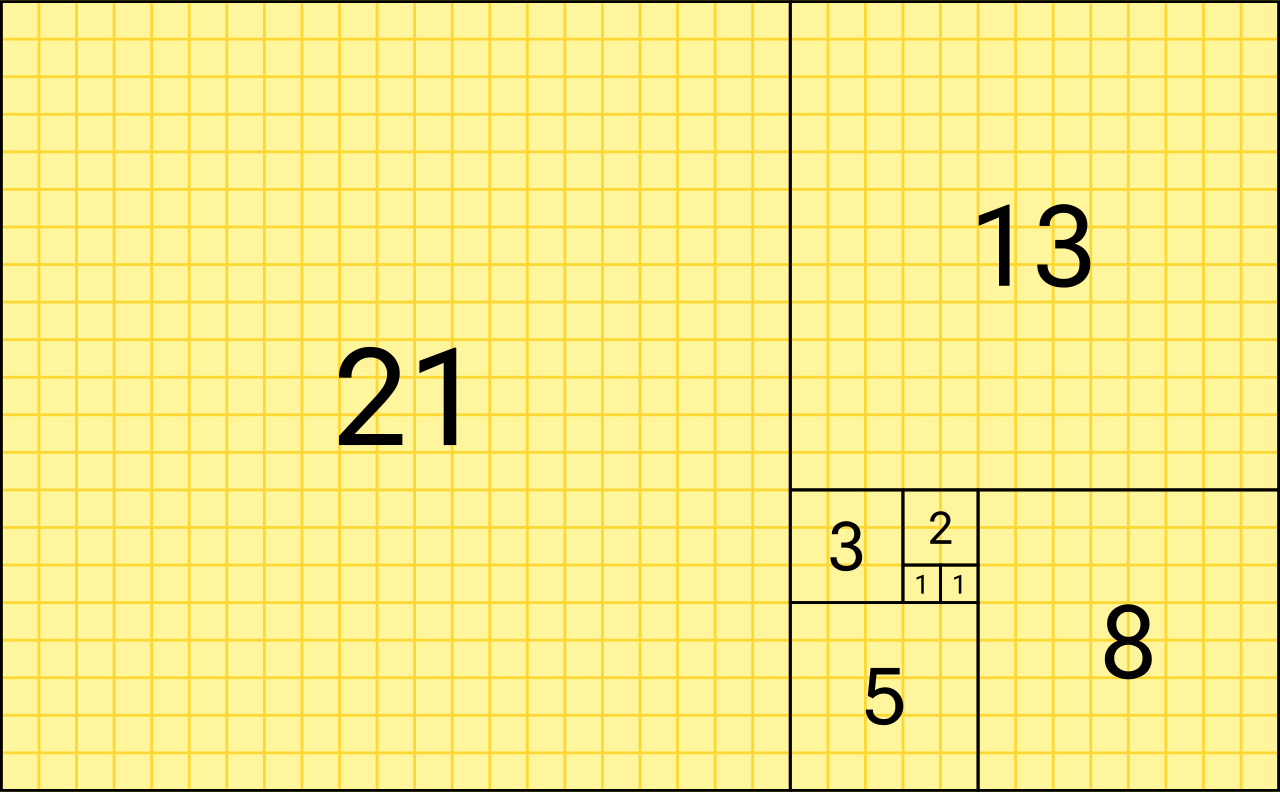
Fibonacci sequence. This sequence starts with 0 and 1, and each subsequent number is the sum of the two previous numbers: 0, 1, 1, 2, 3, 5, 8, 13, 21, 34, 55, 89, 144, and so on. Although it seems like a mathematical game, its magic lies in how frequently it appears in nature, architecture, and even financial markets.
History: From Ancient India to Medieval Europe
Although this sequence is named after the Italian mathematician Leonardo Fibonacci (who introduced it in his book
Liber Abaci in 1202), its history goes back further. In India, around 200 BC, a scholar named Pingala used a similar pattern to calculate the possibilities of Sanskrit poetry based on short and long syllables. Fibonacci discovered this sequence when studying rabbit populations: he assumed that a pair of mature rabbits produces a pair of offspring every month, and the offspring become mature in one month. This breeding pattern gave rise to the sequence 1, 1, 2, 3, 5, 8, 13, ...
The Wonder of the Golden Ratio: When Mathematics Meets Aesthetics
One of the most fascinating aspects of Fibonacci is the
Golden Ratio, which is approximately 1.618. When you divide a Fibonacci number by the previous number (for example: 8/5 = 1.6, 13/8 = 1.625, 21/13 ≈ 1.615), the result gets closer and closer to 1.618. This ratio is considered very harmonious from an aesthetic perspective and has been used in ancient Greek architecture (Parthenon), Renaissance paintings (Mona Lisa), and modern logo designs (Apple, Twitter).
Fibonacci in Nature: The Hidden Art of Flora and Fauna
Nature is full of Fibonacci surprises. Sunflowers have seed circles that follow the Fibonacci pattern (usually 55 in one direction and 89 in the other). Leaves on plant stems are often arranged in Fibonacci patterns to maximize sunlight exposure. The Nautilus shell forms a logarithmic spiral closely related to the golden ratio. Even the arrangement of tree branches and the number of flower petals (e.g., lilies with 3 petals, roses with 5, daisies with 21) often follow this sequence. Why? Because nature tends towards efficiency: the Fibonacci arrangement ensures that each part gets optimal space and resources.
Human Applications: From Art to Financial Technology
Humans have utilized Fibonacci in various fields. In art and architecture, the golden ratio is used to create appealing compositions, such as the Great Pyramid of Giza and the Notre-Dame Cathedral. In photography, the "Fibonacci spiral" helps photographers direct the viewer's eye to the focal point. In technology, Fibonacci algorithms are used in programming to organize data and in user interface (UI) design to determine font sizes and spacing. In finance, technical analysts use
Fibonacci retracement to predict support and resistance levels in stock markets.
Life Implications: What Does It Mean for Us?
Fibonacci teaches us that beauty and order can arise from simplicity. This sequence shows that the most basic patterns can produce extraordinary complexity. In life, we can reflect: do our decisions also follow certain patterns? Do we need to seek the "golden ratio" in work-life balance, relationships, or health? Although imperfect, Fibonacci reminds us that the universe is full of patterns waiting to be discovered.
Reflection Questions
- If nature uses Fibonacci to achieve maximum efficiency, what areas in our lives could we "optimize" with similar patterns?
- Are there other examples in daily life that follow the Fibonacci pattern without us realizing it?
- How can knowledge about Fibonacci help you in education, career, or hobbies?
Fibonacci is not just numbers—it is the language of nature, a hidden code that connects mathematics, beauty, and life. By understanding it, we not only learn about the world, but also about how to think systematically and appreciate the order that exists around us.
---
Reference: Fibonacci sequence — Wikipedia
Fibonacci: The Secret of the Magic Numbers That Govern the Universe. The Fibonacci sequence or Fibonacci series is a sequence of numbers where each number is the sum of the two preceding ones. This sequence is not just an abstract mathematical concept, but appears in various aspects of nature, art, and technology. This article will uncover the history, uniqueness, and practical applications of the Fibonacci sequence in daily life.. Introduction: Numbers That Never Sleep
Have you ever wondered why the arrangement of flower petals, snail shell spirals, and even galaxies follow the same pattern? The answer may lie in a simple yet fascinating sequence of numbers: Fibonacci sequence . This sequence starts with 0 and 1, and each subsequent number is the sum of the two previous numbers: 0, 1, 1, 2, 3, 5, 8, 13, 21, 34, 55, 89, 144, and so on. Although it seems like a mathematical game, its magic lies in how frequently it appears in nature, architecture, and even financial markets.
History: From Ancient India to Medieval Europe
Although this sequence is named after the Italian mathematician Leonardo Fibonacci who introduced it in his book Liber Abaci in 1202 , its history goes back further. In India, around 200 BC, a scholar named Pingala used a similar pattern to calculate the possibilities of Sanskrit poetry based on short and long syllables. Fibonacci discovered this sequence when studying rabbit populations: he assumed that a pair of mature rabbits produces a pair of offspring every month, and the offspring become mature in one month. This breeding pattern gave rise to the sequence 1, 1, 2, 3, 5, 8, 13, ...
The Wonder of the Golden Ratio: When Mathematics Meets Aesthetics
One of the most fascinating aspects of Fibonacci is the Golden Ratio , which is approximately 1.618. When you divide a Fibonacci number by the previous number for example: 8/5 = 1.6, 13/8 = 1.625, 21/13 ≈ 1.615 , the result gets closer and closer to 1.618. This ratio is considered very harmonious from an aesthetic perspective and has been used in ancient Greek architecture Parthenon , Renaissance paintings Mona Lisa , and modern logo designs Apple, Twitter .
Fibonacci in Nature: The Hidden Art of Flora and Fauna
Nature is full of Fibonacci surprises. Sunflowers have seed circles that follow the Fibonacci pattern usually 55 in one direction and 89 in the other . Leaves on plant stems are often arranged in Fibonacci patterns to maximize sunlight exposure. The Nautilus shell forms a logarithmic spiral closely related to the golden ratio. Even the arrangement of tree branches and the number of flower petals e.g., lilies with 3 petals, roses with 5, daisies with 21 often follow this sequence. Why? Because nature tends towards efficiency: the Fibonacci arrangement ensures that each part gets optimal space and resources.
Human Applications: From Art to Financial Technology
Humans have utilized Fibonacci in various fields. In art and architecture, the golden ratio is used to create appealing compositions, such as the Great Pyramid of Giza and the Notre-Dame Cathedral. In photography, the "Fibonacci spiral" helps photographers direct the viewer's eye to the focal point. In technology, Fibonacci algorithms are used in programming to organize data and in user interface UI design to determine font sizes and spacing. In finance, technical analysts use Fibonacci retracement to predict support and resistance levels in stock markets.
Life Implications: What Does It Mean for Us?
Fibonacci teaches us that beauty and order can arise from simplicity. This sequence shows that the most basic patterns can produce extraordinary complexity. In life, we can reflect: do our decisions also follow certain patterns? Do we need to seek the "golden ratio" in work-life balance, relationships, or health? Although imperfect, Fibonacci reminds us that the universe is full of patterns waiting to be discovered.
Reflection Questions
1. If nature uses Fibonacci to achieve maximum efficiency, what areas in our lives could we "optimize" with similar patterns?
2. Are there other examples in daily life that follow the Fibonacci pattern without us realizing it?
3. How can knowledge about Fibonacci help you in education, career, or hobbies?
Fibonacci is not just numbers—it is the language of nature, a hidden code that connects mathematics, beauty, and life. By understanding it, we not only learn about the world, but also about how to think systematically and appreciate the order that exists around us.
---
Reference: Fibonacci sequence — Wikipedia https://en.wikipedia.org/wiki/Fibonacci sequence