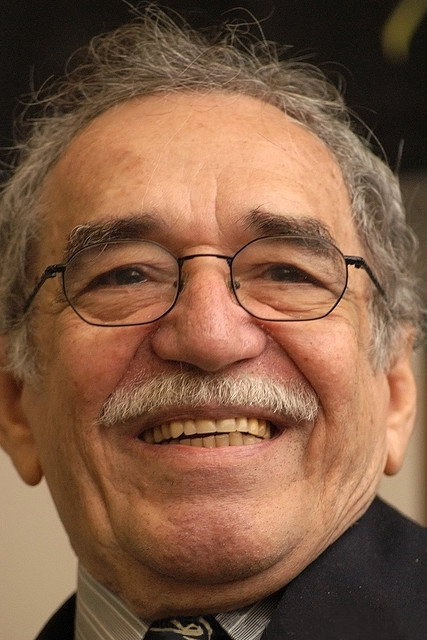
Birth in Aracataca: Where Magical Realism Began to Take Root
Gabriel José García Márquez was born on March 6, 1927, in Aracataca, a small town in the Magdalena region of Colombia—a warm, humid Caribbean coastal area rich in oral narratives. Here, time does not flow linearly: time spins like desert wind, recurring in ancestral tales, in the songs of birds on wooden house walls, in rain that falls for fourteen years without end—as in the novel
One Hundred Years of Solitude. Aracataca is not just a geographical setting; it was Gabo's first
narrative laboratory. His grandfather's house, Colonel Nicolás Ricardo Márquez Mejía—a real figure who became the main inspiration for the colonel in
No One Writes to the Colonel—was a space where history, myth, and politics blended in casual post-dinner conversations. It was here that Gabo learned that truth does not always take the form of statistical facts, but also in the belief of a grandmother who knows when someone will die from the way a butterfly lands on the window.
From Dropout Law Student to Journalist Who Shook Power
Gabo began studying law at the National University of Colombia in 1947 but left in 1948—not due to academic failure, but because of the
Bogotazo, the popular uprising following the assassination of populist leader Jorge Eliécer Gaitán. That event changed his view of institutions and power. He turned to journalism, working for newspapers such as
El Espectador, where his writings—like the investigative report on a Colombian navy ship that sank due to illegal cargo—proved that fiction and reality often lie within a single paragraph. Unlike conventional journalists, Gabo brought fictional narrative techniques into journalism: the use of first-person point of view, poetic prose rhythm, and deep character development—as seen in
Chronicle of a Death Foretold (1981), a non-fiction work crafted like a novel yet based on a real murder case in Sucre in 1951.
Magical Realism: Not Magic, But an Alternative Epistemology
The term 'magical realism' is often misunderstood as fantasy or fairy tale. But for Gabo, it was an epistemological strategy—a way of understanding the world where Western logic is insufficient to explain colonial trauma, the brutality of civil war (
La Violencia), or the wonders of everyday life in the tropics. In
One Hundred Years of Solitude, when Remedios the Beauty ascends to heaven while folding laundry, that event is not an escape from reality—rather, it is a metaphor for the loss of women from Colombian historical narrative, or a feminine power so pure that it cannot be held by the gravity of patriarchal power. Compare this with the works of Brazilian writer Clarice Lispector, who uses psychological interiority to achieve a similar effect: both reject naturalist realism as the sole path to narrative truth.
Global Legacy and Local Relevance in the Archipelago
Gabo's influence crosses continents: Malaysian writers like Ruhaini Matdarin and Indonesian writers like Eka Kurniawan explicitly acknowledge his influence—especially in the use of cyclical time and characters that become symbols of history. In the Nusantara, where oral traditions like
pantun,
hikayat, and folklore organically blend fact and imagination, Gabo's magical realism is not a foreign concept—rather, it is a resonance between two narrative traditions that both reject the dichotomy between 'real' and 'unreal'. When
One Hundred Years of Solitude was published in Malay by Dewan Bahasa dan Pustaka in the 1990s, readers in Kuala Lumpur and Jakarta found themselves in the fate of Macondo: a city built on hope, destroyed by economic imperialism, and finally forgotten—similar to the fate of many post-colonial port cities in the archipelago.
Reflection Questions: Does Our Reality Still Need Magic?
In the era of algorithms and big data, where everything is measured, quantified, and predicted, is there still room for 'the immeasurable'—memory, dreams, belief, loss? Gabo reminds us: 'Fiction is the only way to tell the truth without being sued.' If we read
No One Writes to the Colonel today—with its protagonist waiting for a pension for fifty-six years—do we not see a reflection of ongoing systemic injustice: the pensions of honorary teachers, unfulfilled promises of village development, or birth certificates lost for three generations? Gabo does not offer answers; he provides a lens. And that lens—which allows glowing butterflies, rain that lasts for years, and corpses floating in rivers without decomposing—remains sharp, still needed, still alive. As he himself wrote: 'Life is not worth living if it is not remembered beautifully.'
Conclusion: Gabo Is Not Just a Name, But a Way of Seeing
Gabriel García Márquez died on April 17, 2014, in Mexico City, but Macondo has not vanished. It continues to be rebuilt in every novel that dares to blend history with dreams, in every journalistic essay written with heart, in every folktale still passed down by word of mouth in the villages of the Nusantara. Gabo taught us that the power of narrative lies not in chronological accuracy—but in emotional sincerity, sharpness of observation, and the courage to name those forgotten by official archives. He was not just a literary writer; he was an archaeologist of memory—and his legacy is not a collection of books on a shelf, but our ability to see the world with eyes that are softer, sharper, and more meaningful.
---
Reference: Gabriel García Márquez — Wikipedia
Gabo and the World Created from Memories: The Magical Literary Legacy of Gabriel García Márquez. Gabriel García Márquez, the legendary Colombian writer, transformed world literature through magical realism rooted in the soil of Aracataca and the collective memory of Latin America. His 1982 Nobel Prize was not merely an aesthetic recognition but a validation that narratives rooted in marginalized history can touch the universality of humanity. His works—especially *One Hundred Years of Solitude*—remain relevant as a mirror of cultural resilience amid the rapid currents of globalization.. Birth in Aracataca: Where Magical Realism Began to Take Root
Gabriel José García Márquez was born on March 6, 1927, in Aracataca, a small town in the Magdalena region of Colombia—a warm, humid Caribbean coastal area rich in oral narratives. Here, time does not flow linearly: time spins like desert wind, recurring in ancestral tales, in the songs of birds on wooden house walls, in rain that falls for fourteen years without end—as in the novel One Hundred Years of Solitude . Aracataca is not just a geographical setting; it was Gabo's first narrative laboratory . His grandfather's house, Colonel Nicolás Ricardo Márquez Mejía—a real figure who became the main inspiration for the colonel in No One Writes to the Colonel —was a space where history, myth, and politics blended in casual post-dinner conversations. It was here that Gabo learned that truth does not always take the form of statistical facts, but also in the belief of a grandmother who knows when someone will die from the way a butterfly lands on the window.
From Dropout Law Student to Journalist Who Shook Power
Gabo began studying law at the National University of Colombia in 1947 but left in 1948—not due to academic failure, but because of the Bogotazo , the popular uprising following the assassination of populist leader Jorge Eliécer Gaitán. That event changed his view of institutions and power. He turned to journalism, working for newspapers such as El Espectador , where his writings—like the investigative report on a Colombian navy ship that sank due to illegal cargo—proved that fiction and reality often lie within a single paragraph. Unlike conventional journalists, Gabo brought fictional narrative techniques into journalism: the use of first-person point of view, poetic prose rhythm, and deep character development—as seen in Chronicle of a Death Foretold 1981 , a non-fiction work crafted like a novel yet based on a real murder case in Sucre in 1951.
Magical Realism: Not Magic, But an Alternative Epistemology
The term 'magical realism' is often misunderstood as fantasy or fairy tale. But for Gabo, it was an epistemological strategy—a way of understanding the world where Western logic is insufficient to explain colonial trauma, the brutality of civil war La Violencia , or the wonders of everyday life in the tropics. In One Hundred Years of Solitude , when Remedios the Beauty ascends to heaven while folding laundry, that event is not an escape from reality—rather, it is a metaphor for the loss of women from Colombian historical narrative, or a feminine power so pure that it cannot be held by the gravity of patriarchal power. Compare this with the works of Brazilian writer Clarice Lispector, who uses psychological interiority to achieve a similar effect: both reject naturalist realism as the sole path to narrative truth.
Global Legacy and Local Relevance in the Archipelago
Gabo's influence crosses continents: Malaysian writers like Ruhaini Matdarin and Indonesian writers like Eka Kurniawan explicitly acknowledge his influence—especially in the use of cyclical time and characters that become symbols of history. In the Nusantara, where oral traditions like pantun , hikayat , and folklore organically blend fact and imagination, Gabo's magical realism is not a foreign concept—rather, it is a resonance between two narrative traditions that both reject the dichotomy between 'real' and 'unreal'. When One Hundred Years of Solitude was published in Malay by Dewan Bahasa dan Pustaka in the 1990s, readers in Kuala Lumpur and Jakarta found themselves in the fate of Macondo: a city built on hope, destroyed by economic imperialism, and finally forgotten—similar to the fate of many post-colonial port cities in the archipelago.
Reflection Questions: Does Our Reality Still Need Magic?
In the era of algorithms and big data, where everything is measured, quantified, and predicted, is there still room for 'the immeasurable'—memory, dreams, belief, loss? Gabo reminds us: 'Fiction is the only way to tell the truth without being sued.' If we read No One Writes to the Colonel today—with its protagonist waiting for a pension for fifty-six years—do we not see a reflection of ongoing systemic injustice: the pensions of honorary teachers, unfulfilled promises of village development, or birth certificates lost for three generations? Gabo does not offer answers; he provides a lens. And that lens—which allows glowing butterflies, rain that lasts for years, and corpses floating in rivers without decomposing—remains sharp, still needed, still alive. As he himself wrote: 'Life is not worth living if it is not remembered beautifully.'
Conclusion: Gabo Is Not Just a Name, But a Way of Seeing
Gabriel García Márquez died on April 17, 2014, in Mexico City, but Macondo has not vanished. It continues to be rebuilt in every novel that dares to blend history with dreams, in every journalistic essay written with heart, in every folktale still passed down by word of mouth in the villages of the Nusantara. Gabo taught us that the power of narrative lies not in chronological accuracy—but in emotional sincerity, sharpness of observation, and the courage to name those forgotten by official archives. He was not just a literary writer; he was an archaeologist of memory—and his legacy is not a collection of books on a shelf, but our ability to see the world with eyes that are softer, sharper, and more meaningful.
---
Reference: Gabriel García Márquez — Wikipedia https://en.wikipedia.org/wiki/Gabriel Garc%C3%ADa M%C3%A1rquez