The Shocking Silent Moments
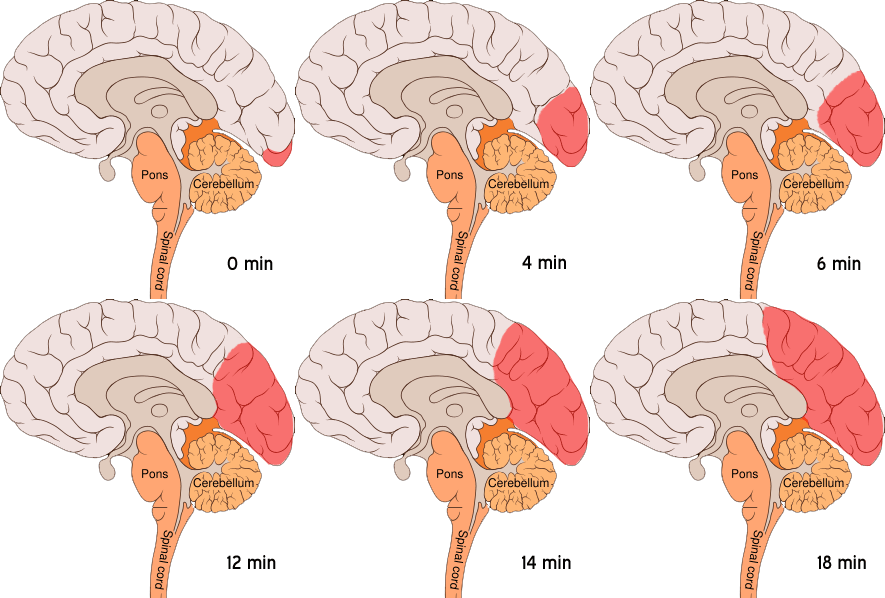
In the complex labyrinth of the human brain, there is an event that resembles a whisper before a storm—it begins with a rapid electrical surge, followed by a deep silence. This phenomenon is known as *cortical spreading depression* (CSD), or cortical spreading depression. Imagine if an entire city suddenly plunged into darkness due to a short circuit, but this time, it happens within your neural network. This wave slowly spreads across the surface of the brain, at a speed of only 1.5 to 9.5 millimeters per minute—slower than a snail's pace. Although slow, its effects can shake a person's life.
CSD is not just a minor phenomenon. It has been the focus of researchers for decades because it is closely linked to migraine aura—unusual visual sensations such as flashes of light or blind spots that precede a headache. In some cases, CSD can be an early indicator of stroke, especially if the brain tissue is already under energy stress. But even more alarming, this wave can spread to the brainstem, disrupting essential functions like breathing and heart rate, thus causing sudden death among epileptic patients.
The Hidden Mechanism Behind the Wave
To understand CSD, we need to consider how neurons communicate. Neurons typically transmit electrical signals by controlling the flow of ions across their cell membranes. However, when CSD occurs, millions of neurons and glial cells suddenly undergo depolarization—that is, the electric charge inside the cells collapses, like a volcano erupting without warning. This eruption is followed by an inhibitory wave that temporarily paralyzes neural activity. Imagine a full movie theater suddenly going silent when the lights are turned off; that is the atmosphere in the brain during CSD.
This process can be triggered by various factors, including oxygen deprivation (hypoxia), head injury, or chemical changes in the brain. In energy-deprived tissue, this wave can be fatal—it causes cell swelling, excessive release of glutamate, and ultimately neuronal death. However, in migraine aura, CSD usually occurs in healthy and nutrient-rich tissue; it is temporary and does not cause damage, although it can leave long-term effects, such as an increased risk of stroke.
Migraine Aura: A Sign or a Threat?
For those who have experienced migraine aura, the experience is often described like watching a horror movie—colorful flashes, zigzag lines, or blind spots that appear suddenly in vision. This aura typically lasts between 5 to 60 minutes, followed by a pulsating headache. Scientists believe that this aura is a direct manifestation of CSD spreading across the visual cortex. Although most cases of migraine aura are benign—meaning they do not cause permanent damage—they can serve as a warning that your brain is more susceptible to stroke.
Studies have shown that people with migraine aura have a higher risk of ischemic stroke, especially if they smoke or use birth control pills. This is because CSD can drastically alter blood flow in the brain—it causes sudden narrowing of blood vessels, followed by excessive dilation. In fragile tissue, these changes can trigger blood clots or vascular damage. Therefore, although migraine aura may seem like a minor disturbance, it can actually be a wake-up call to take care of your cardiovascular health.
Sudden Unexpected Death in Epilepsy: A Terrifying Connection
One of the most mysterious and frightening aspects of CSD is its role in sudden unexpected death in epilepsy (SUDEP). SUDEP is a condition where a previously healthy epileptic patient suddenly dies without a clear cause, often while sleeping. In recent years, research has found that CSD can spread to the brainstem, the area that controls vital functions such as breathing and heart rate. When this wave attacks this region, it can cause respiratory failure or cardiac arrhythmia leading to death.
This condition is more common in patients with specific ion channel mutations, as seen in Dravet syndrome—a severe form of childhood epilepsy. These mutations make neurons more easily stimulated and more vulnerable to CSD. Imagine your brain like a house with faulty wiring; every time there is an electrical surge, the entire system can collapse. In SUDEP, CSD acts like a malfunctioning circuit breaker, causing rapid and silent systemic failure.
Beyond the Boundaries: Implications for the Future
Although CSD has been studied for over 70 years, much remains to be understood. Researchers are now investigating how to detect CSD early—possibly through brain imaging or wearable electrical sensors—to prevent damage before it occurs. In the context of migraines, medications such as CGRP antagonists have shown promise in reducing the frequency of auras. For epilepsy, genetic treatments or ion channel blocker therapies may one day protect patients from SUDEP.
These silent waves teach us an important lesson: sometimes, the most dangerous things in our brains are not the loud or dramatic ones, but the ones that creep in slowly without us realizing. By understanding CSD, we may not only treat migraines and epilepsy better, but also protect invaluable lives. And in the future, perhaps we can shut down this short circuit before it damages the entire system.
Conclusion: The Secrets of the Brain That Continue to Unfold
*Cortical spreading depression* is a biological wonder that combines beauty and danger in one wave. It reminds us that the human brain is a fragile and complex organ, where a subtle ion balance can determine the difference between health and disaster. From the strange migraine aura to the tragic sudden death, CSD is a key player that cannot be ignored. May research continue to unravel the secrets of this wave, bringing us closer to better treatments and, ultimately, a safer life.
---
*Reference: [Cortical spreading depression — Wikipedia](https://en.wikipedia.org/wiki/Cortical_spreading_depression)*
Silent Wave in the Brain: Can It Explain Migraine Pain and Sudden Death?. Imagine a silent wave spreading through your brain at a speed of several millimeters per minute, drastically altering neural activity. This phenomenon, known as cortical spreading depression (CSD), may be more common than you think—it is associated with the mysterious migraine aura, and in certain cases, can be a life-threatening danger. This article reveals the secrets behind this silent wave, how it can cause strokes, and its connection to sudden unexpected death syndrome in epilepsy.. The Shocking Silent Moments
In the complex labyrinth of the human brain, there is an event that resembles a whisper before a storm—it begins with a rapid electrical surge, followed by a deep silence. This phenomenon is known as cortical spreading depression CSD , or cortical spreading depression. Imagine if an entire city suddenly plunged into darkness due to a short circuit, but this time, it happens within your neural network. This wave slowly spreads across the surface of the brain, at a speed of only 1.5 to 9.5 millimeters per minute—slower than a snail's pace. Although slow, its effects can shake a person's life.
CSD is not just a minor phenomenon. It has been the focus of researchers for decades because it is closely linked to migraine aura—unusual visual sensations such as flashes of light or blind spots that precede a headache. In some cases, CSD can be an early indicator of stroke, especially if the brain tissue is already under energy stress. But even more alarming, this wave can spread to the brainstem, disrupting essential functions like breathing and heart rate, thus causing sudden death among epileptic patients.
The Hidden Mechanism Behind the Wave
To understand CSD, we need to consider how neurons communicate. Neurons typically transmit electrical signals by controlling the flow of ions across their cell membranes. However, when CSD occurs, millions of neurons and glial cells suddenly undergo depolarization—that is, the electric charge inside the cells collapses, like a volcano erupting without warning. This eruption is followed by an inhibitory wave that temporarily paralyzes neural activity. Imagine a full movie theater suddenly going silent when the lights are turned off; that is the atmosphere in the brain during CSD.
This process can be triggered by various factors, including oxygen deprivation hypoxia , head injury, or chemical changes in the brain. In energy-deprived tissue, this wave can be fatal—it causes cell swelling, excessive release of glutamate, and ultimately neuronal death. However, in migraine aura, CSD usually occurs in healthy and nutrient-rich tissue; it is temporary and does not cause damage, although it can leave long-term effects, such as an increased risk of stroke.
Migraine Aura: A Sign or a Threat?
For those who have experienced migraine aura, the experience is often described like watching a horror movie—colorful flashes, zigzag lines, or blind spots that appear suddenly in vision. This aura typically lasts between 5 to 60 minutes, followed by a pulsating headache. Scientists believe that this aura is a direct manifestation of CSD spreading across the visual cortex. Although most cases of migraine aura are benign—meaning they do not cause permanent damage—they can serve as a warning that your brain is more susceptible to stroke.
Studies have shown that people with migraine aura have a higher risk of ischemic stroke, especially if they smoke or use birth control pills. This is because CSD can drastically alter blood flow in the brain—it causes sudden narrowing of blood vessels, followed by excessive dilation. In fragile tissue, these changes can trigger blood clots or vascular damage. Therefore, although migraine aura may seem like a minor disturbance, it can actually be a wake-up call to take care of your cardiovascular health.
Sudden Unexpected Death in Epilepsy: A Terrifying Connection
One of the most mysterious and frightening aspects of CSD is its role in sudden unexpected death in epilepsy SUDEP . SUDEP is a condition where a previously healthy epileptic patient suddenly dies without a clear cause, often while sleeping. In recent years, research has found that CSD can spread to the brainstem, the area that controls vital functions such as breathing and heart rate. When this wave attacks this region, it can cause respiratory failure or cardiac arrhythmia leading to death.
This condition is more common in patients with specific ion channel mutations, as seen in Dravet syndrome—a severe form of childhood epilepsy. These mutations make neurons more easily stimulated and more vulnerable to CSD. Imagine your brain like a house with faulty wiring; every time there is an electrical surge, the entire system can collapse. In SUDEP, CSD acts like a malfunctioning circuit breaker, causing rapid and silent systemic failure.
Beyond the Boundaries: Implications for the Future
Although CSD has been studied for over 70 years, much remains to be understood. Researchers are now investigating how to detect CSD early—possibly through brain imaging or wearable electrical sensors—to prevent damage before it occurs. In the context of migraines, medications such as CGRP antagonists have shown promise in reducing the frequency of auras. For epilepsy, genetic treatments or ion channel blocker therapies may one day protect patients from SUDEP.
These silent waves teach us an important lesson: sometimes, the most dangerous things in our brains are not the loud or dramatic ones, but the ones that creep in slowly without us realizing. By understanding CSD, we may not only treat migraines and epilepsy better, but also protect invaluable lives. And in the future, perhaps we can shut down this short circuit before it damages the entire system.
Conclusion: The Secrets of the Brain That Continue to Unfold
Cortical spreading depression is a biological wonder that combines beauty and danger in one wave. It reminds us that the human brain is a fragile and complex organ, where a subtle ion balance can determine the difference between health and disaster. From the strange migraine aura to the tragic sudden death, CSD is a key player that cannot be ignored. May research continue to unravel the secrets of this wave, bringing us closer to better treatments and, ultimately, a safer life.
---
Reference: Cortical spreading depression — Wikipedia https://en.wikipedia.org/wiki/Cortical spreading depression