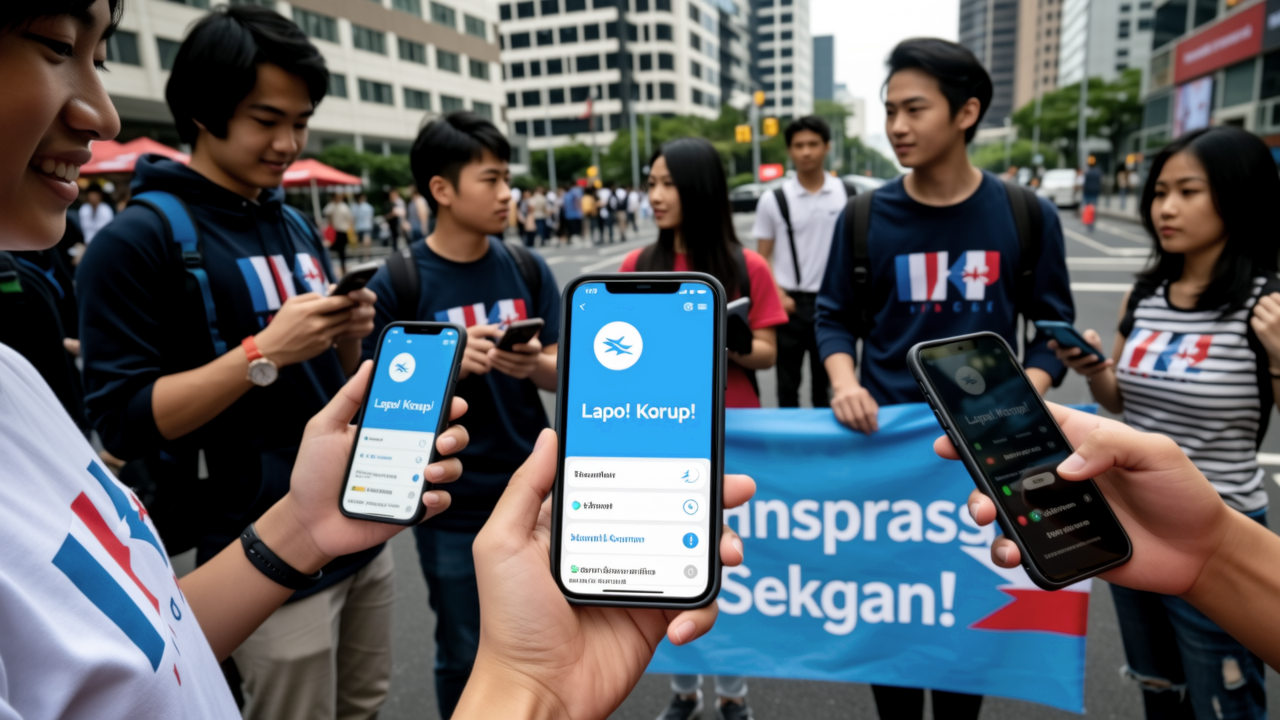
Jakarta, June 24 — The anti-corruption fight in Indonesia is entering a promising new dimension as the nation's youth harness the power of digital technology to become the eyes and ears of society in detecting and reporting corruption. A corruption reporting application managed by the Corruption Eradication Commission (KPK) has recorded a 300 percent increase in reports over the last two years, driven primarily by users from Gen Z, aged 18 to 25.
This simplified and streamlined digital reporting platform allows anyone to instantly report cases of corruption or abuse of power, using photos, videos, documents, and location geotags as evidence. Reports can be made anonymously, removing the fear that has long been a major barrier for citizens to come forward.
Notably, it's not just large-scale corruption cases at the central government level being reported. These young people are also very active in reporting smaller corruption cases that occur in daily life — from "coffee money" collections by officials in local government offices to the need to pay unofficial "facilitation fees" to obtain business permits and licenses.
The KPK has allocated a special team comprising digital investigators and data analysts to process incoming reports. AI systems are used to categorize reports, identify patterns and connections between different cases, and prioritize reports requiring immediate action based on the severity and quality of the evidence submitted.
Several major cases have been exposed and prosecuted, partly based on digital evidence gathered through this platform. These successes provide a significant boost to other reporters and demonstrate that public reports truly have a tangible impact.
This digital anti-corruption movement also receives support from civil society organizations and educational institutions that conduct awareness campaigns to educate the public about their rights and the correct way to report corruption through legitimate and effective channels.
Indonesia's Gen Z Leads Digital Anti-Corruption Movement: Corruption Reports Via App Surge 300%. Indonesia's youth are leveraging digital technology to combat corruption, with reports via an anti-corruption app dramatically increasing and several major cases successfully prosecuted based on cyber reports.. Jakarta, June 24 — The anti-corruption fight in Indonesia is entering a promising new dimension as the nation's youth harness the power of digital technology to become the eyes and ears of society in detecting and reporting corruption. A corruption reporting application managed by the Corruption Eradication Commission KPK has recorded a 300 percent increase in reports over the last two years, driven primarily by users from Gen Z, aged 18 to 25.
This simplified and streamlined digital reporting platform allows anyone to instantly report cases of corruption or abuse of power, using photos, videos, documents, and location geotags as evidence. Reports can be made anonymously, removing the fear that has long been a major barrier for citizens to come forward.
Notably, it's not just large-scale corruption cases at the central government level being reported. These young people are also very active in reporting smaller corruption cases that occur in daily life — from "coffee money" collections by officials in local government offices to the need to pay unofficial "facilitation fees" to obtain business permits and licenses.
The KPK has allocated a special team comprising digital investigators and data analysts to process incoming reports. AI systems are used to categorize reports, identify patterns and connections between different cases, and prioritize reports requiring immediate action based on the severity and quality of the evidence submitted.
Several major cases have been exposed and prosecuted, partly based on digital evidence gathered through this platform. These successes provide a significant boost to other reporters and demonstrate that public reports truly have a tangible impact.
This digital anti-corruption movement also receives support from civil society organizations and educational institutions that conduct awareness campaigns to educate the public about their rights and the correct way to report corruption through legitimate and effective channels.