Introduction: Understanding the Cave Phenomenon
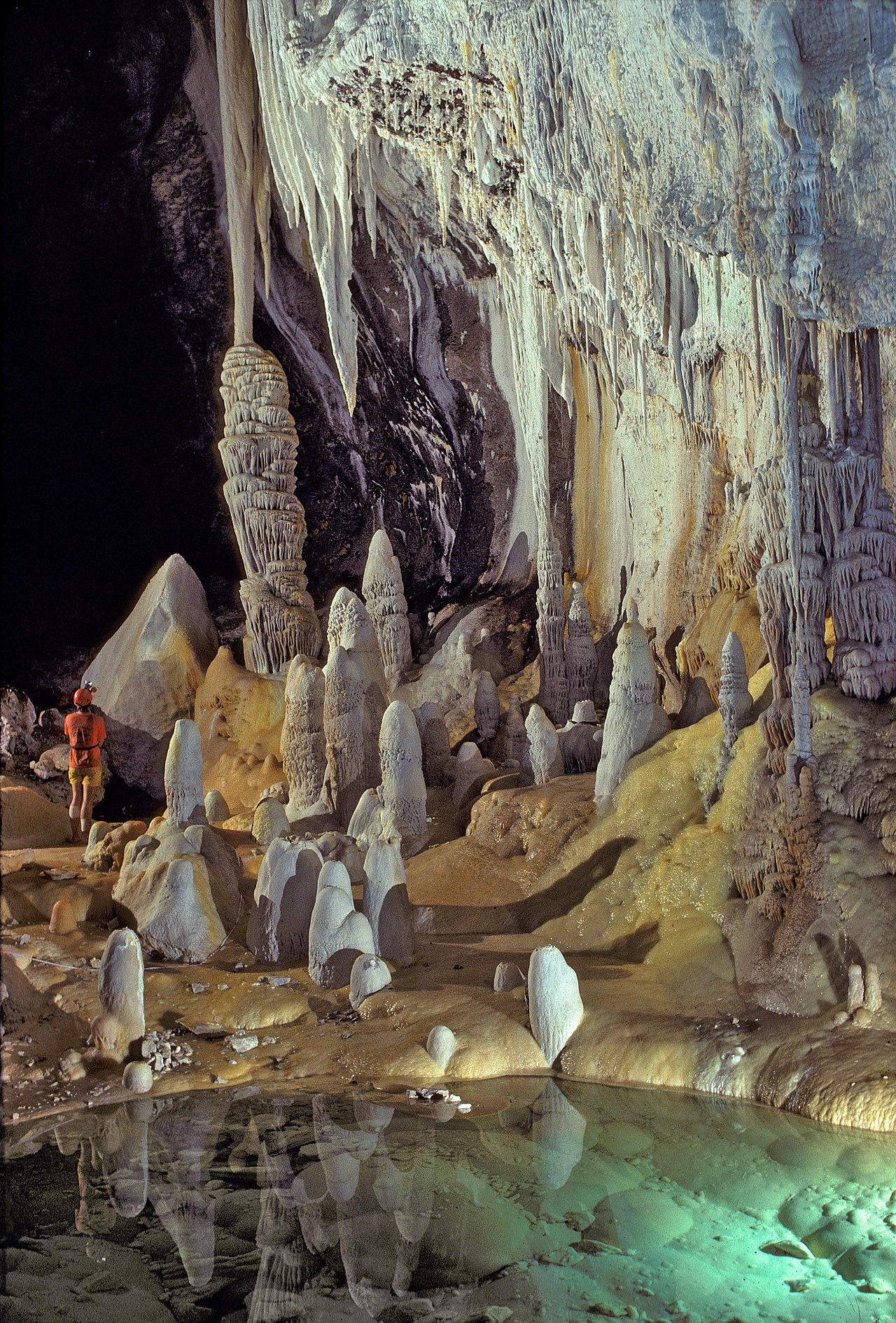
When talking about caves, many imagine dark and damp spaces filled with stalactites and stalagmites. However, caves are much more than that — they are complex underground worlds, formed through geological processes that take hundreds of thousands of years. Caves are not only found on Earth but have also been detected on other rocky planets like Mars, indicating that this phenomenon is universal in our solar system.
How Are Caves Formed?
The process of cave formation begins with rock weathering, especially carbonate rocks such as limestone and dolomite. Rainwater that absorbs carbon dioxide from the atmosphere and soil produces weak carbonic acid. This slightly acidic water seeps through rock fractures, slowly dissolving carbonate minerals. Over thousands of years, small cracks widen into water channels, then into tunnels, and finally into large underground spaces. This process is called karstification, and it creates karst landscapes filled with caves, underground rivers, and sinkholes.
Types of Caves: Exogen vs Endogen
Speleologists — scientists who study caves — classify caves into two main categories based on how they form and their relationship to the surface. Exogenous caves are small openings that do not extend far into the earth, such as rock shelters that were often used by ancient humans as places of shelter. In contrast, endogenous caves extend deeper than their opening, forming complex tunnel systems and often reaching depths of hundreds of meters. It is these endogenous caves that are the main focus of exploration and scientific research.
Life in Eternal Darkness
Caves provide a unique environment for life. Without sunlight, the food chain within caves depends entirely on organic material brought in by water or wind. Species that have adapted to cave life — called troglobites — often lose pigmentation and eyesight, but develop other heightened senses, such as antennae and chemoreceptors. Famous examples include blind cave shrimp, cave crickets, and cave fish that live in dark pools. This unique evolution makes caves a natural laboratory for studying adaptation and speciation.
Caves as Climate Archives
One of the most significant importance of caves in science is their ability to store records of ancient climates. Stalagmites and stalactites that form slowly contain layers that can be analyzed to determine past temperatures, humidity, and rainfall patterns. Oxygen isotopes and trace elements in these calcite layers provide insight into climate changes that occurred tens of thousands of years ago. Data from caves around the world have helped scientists understand Earth's climate cycles more accurately.
Exploration and Recreation: Caving and Speleology
Exploring caves is not just a recreational activity — it is a science called speleology. Speleologists use special equipment such as ropes, helmet lights, and rugged clothing to navigate narrow passages and hard-to-reach spaces. This activity, known as caving or potholing, requires high physical and mental skills. However, risks such as cave-ins, flash floods, and hypothermia make cave exploration an activity that requires careful preparation and expertise.
Caves and Human Heritage
Since prehistoric times, caves have served as shelters, religious sites, and sources of water. Cave paintings in Lascaux, France, and Altamira, Spain, are some of the earliest evidence of human artistic expression. In Southeast Asia, caves such as Niah Cave in Sarawak and Gunung Rapat Cave in Perak have provided important archaeological discoveries about early human migration. Caves have also been sites of hominid fossil discoveries, including Homo floresiensis on Flores, Indonesia.
Reflection: Why Are Caves Important?
Caves are not only fascinating from a geological and biological perspective, but they also remind us that the Earth still holds many mysteries yet to be uncovered. Every new tunnel discovered may contain new species, ancient fossils, or unknown climate information. When we step into the darkness of a cave, we are actually traveling back in time to our planet's past. The question we need to reflect on is: Have we appreciated and protected this underground heritage from the threats of development and pollution? Or will we lose this treasure before we fully understand it?
---
Reference: Cave — Wikipedia
Caves: The Subterranean Mysteries Holding a Million Years of Secrets. Caves are natural spaces beneath the Earth's surface formed through the process of rock weathering and can reach great depths. This article explores the types of caves, their formation processes, unique ecological roles, and the scientific importance of caves as archives of ancient climates and habitats for endemic species.. Introduction: Understanding the Cave Phenomenon
When talking about caves, many imagine dark and damp spaces filled with stalactites and stalagmites. However, caves are much more than that — they are complex underground worlds, formed through geological processes that take hundreds of thousands of years. Caves are not only found on Earth but have also been detected on other rocky planets like Mars, indicating that this phenomenon is universal in our solar system.
How Are Caves Formed?
The process of cave formation begins with rock weathering, especially carbonate rocks such as limestone and dolomite. Rainwater that absorbs carbon dioxide from the atmosphere and soil produces weak carbonic acid. This slightly acidic water seeps through rock fractures, slowly dissolving carbonate minerals. Over thousands of years, small cracks widen into water channels, then into tunnels, and finally into large underground spaces. This process is called karstification, and it creates karst landscapes filled with caves, underground rivers, and sinkholes.
Types of Caves: Exogen vs Endogen
Speleologists — scientists who study caves — classify caves into two main categories based on how they form and their relationship to the surface. Exogenous caves are small openings that do not extend far into the earth, such as rock shelters that were often used by ancient humans as places of shelter. In contrast, endogenous caves extend deeper than their opening, forming complex tunnel systems and often reaching depths of hundreds of meters. It is these endogenous caves that are the main focus of exploration and scientific research.
Life in Eternal Darkness
Caves provide a unique environment for life. Without sunlight, the food chain within caves depends entirely on organic material brought in by water or wind. Species that have adapted to cave life — called troglobites — often lose pigmentation and eyesight, but develop other heightened senses, such as antennae and chemoreceptors. Famous examples include blind cave shrimp, cave crickets, and cave fish that live in dark pools. This unique evolution makes caves a natural laboratory for studying adaptation and speciation.
Caves as Climate Archives
One of the most significant importance of caves in science is their ability to store records of ancient climates. Stalagmites and stalactites that form slowly contain layers that can be analyzed to determine past temperatures, humidity, and rainfall patterns. Oxygen isotopes and trace elements in these calcite layers provide insight into climate changes that occurred tens of thousands of years ago. Data from caves around the world have helped scientists understand Earth's climate cycles more accurately.
Exploration and Recreation: Caving and Speleology
Exploring caves is not just a recreational activity — it is a science called speleology. Speleologists use special equipment such as ropes, helmet lights, and rugged clothing to navigate narrow passages and hard-to-reach spaces. This activity, known as caving or potholing, requires high physical and mental skills. However, risks such as cave-ins, flash floods, and hypothermia make cave exploration an activity that requires careful preparation and expertise.
Caves and Human Heritage
Since prehistoric times, caves have served as shelters, religious sites, and sources of water. Cave paintings in Lascaux, France, and Altamira, Spain, are some of the earliest evidence of human artistic expression. In Southeast Asia, caves such as Niah Cave in Sarawak and Gunung Rapat Cave in Perak have provided important archaeological discoveries about early human migration. Caves have also been sites of hominid fossil discoveries, including Homo floresiensis on Flores, Indonesia.
Reflection: Why Are Caves Important?
Caves are not only fascinating from a geological and biological perspective, but they also remind us that the Earth still holds many mysteries yet to be uncovered. Every new tunnel discovered may contain new species, ancient fossils, or unknown climate information. When we step into the darkness of a cave, we are actually traveling back in time to our planet's past. The question we need to reflect on is: Have we appreciated and protected this underground heritage from the threats of development and pollution? Or will we lose this treasure before we fully understand it?
---
Reference: Cave — Wikipedia https://en.wikipedia.org/wiki/Cave