Introduction: The Ocean as a Bridge of Civilizations
When we mention 'Silk', most of us might imagine camels walking through the deserts of Central Asia. However, there is another route that is older and wider—the Maritime Silk Road. It is a maritime network connecting ports from China to Venice, and interestingly, Islamic civilization was the main driving force that enlivened this route for over a thousand years.
Imagine: in the 9th century CE, an Islamic merchant from Basra sailed to Canton on a dhow laden with perfumes, glass, and the Quran. Along the ports, he met Hindu, Buddhist, Christian, and Confucian traders. They traded, exchanged ideas, and spread knowledge. This is the greatness of Islamic civilization—not only as a religion, but as a civilization that opened the doors of the world.
The Golden Age of Islamic Navigation
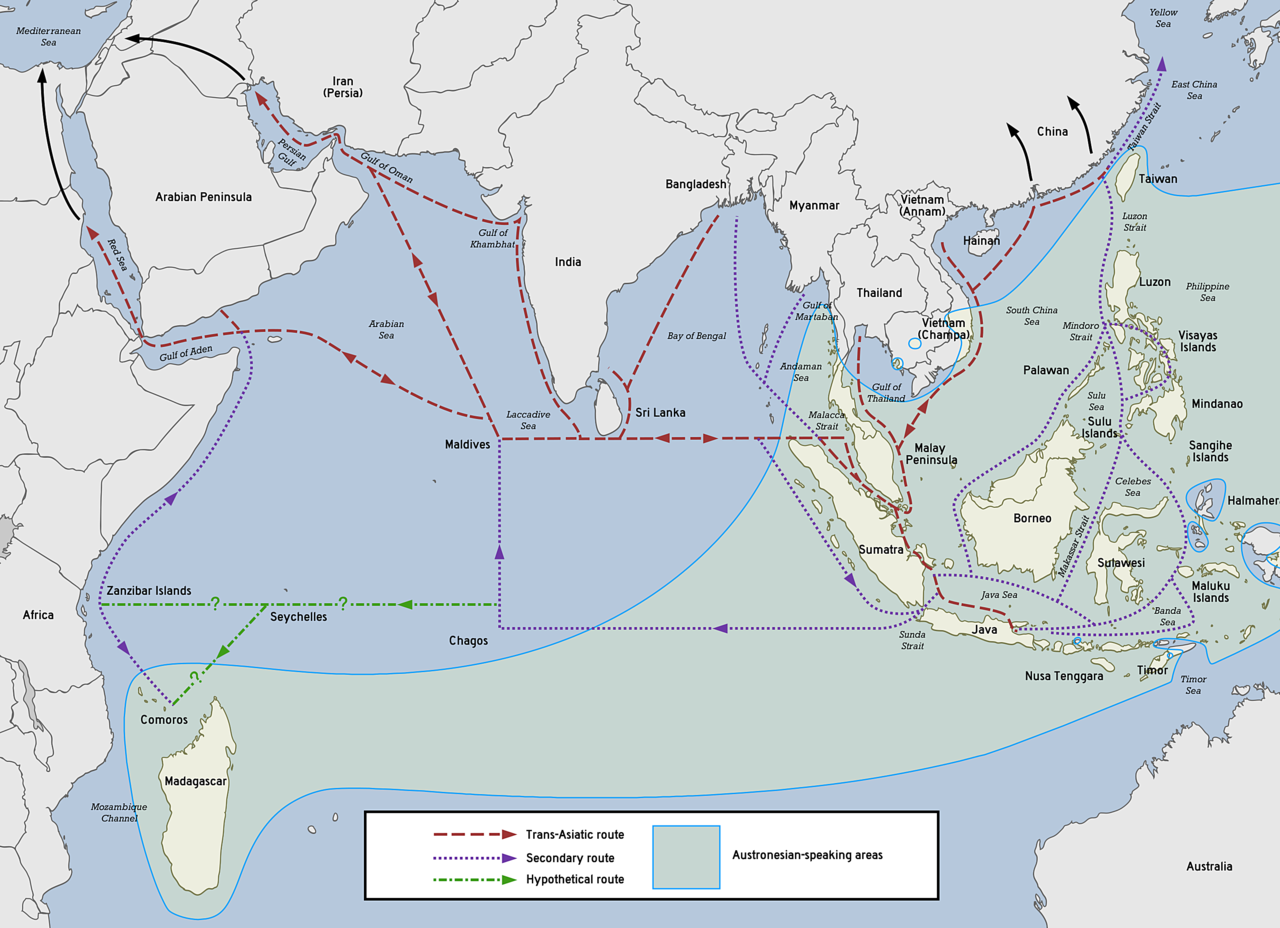
The Maritime Silk Road was not an Islamic creation, but Islamic civilization transformed it into a global highway. Before the advent of Islam, this route was dominated by skilled Austronesian sailors, such as those from the Srivijaya Empire in Sumatra. However, after the Islamic conquests of Persia and Egypt in the 7th century, Arab and Persian merchants began to dominate the Indian Ocean.
They brought new technology: the dhow, sewn with coconut fiber ropes, without iron nails. These ships were light, easy to repair, and capable of sailing against the monsoon winds. Islamic sailors also developed astronomy for navigation. They used the North Star, magnetic compasses from China, and sea charts known as 'navigation guides'. All this made safe voyages from Zanzibar to Guangzhou possible.
One important figure is Ahmad ibn Majid, a 15th-century Arab navigator who wrote famous navigation books. He was known as the 'Lion of the Sea' and is mentioned in Portuguese records as Vasco da Gama's guide to India. This proves the technical mastery of Islamic civilization in navigation.
Glorious Islamic Trade Centers
Along the Maritime Silk Road, Islamic port cities flourished. In the Middle East, Basra and Siraf were gateways to the Persian Gulf. In the Red Sea, Jeddah and Aden connected East Africa with Asia. In India, Calicut and Kozhikode became centers where Islamic merchants from Hadramaut met Kerala traders.
In Southeast Asia, Melaka and Aceh became centers for the spread of Islam. According to the records of Ibn Battuta, the 14th-century Moroccan traveler, Melaka was a very busy port with a large Muslim community. He wrote: 'We anchored at the port of Melaka, a meeting place for ships from China, India, and the Middle East. Here, a Muslim could perform Friday prayers in a beautiful mosque.'
These cities not only served as transit points for goods but also as centers for the exchange of knowledge. In port libraries, Islamic scholars discussed mathematics with Hindu scholars, and philosophy with Buddhist monks. This is evidence that Islamic civilization never closed its doors to other cultures.
Goods That Changed the World
The Maritime Silk Road carried more than just silk. Spices like cinnamon from Ceylon, black pepper from India, and cloves from Maluku flowed into Islamic ports. From there, they were taken to Venice and Genoa, and then throughout Europe. Spices were not just flavorings—they were used for food preservation, medicine, and perfumes. High demand made Islamic cities immensely wealthy.
Besides spices, Islamic civilization also exported manufactured goods. Syrian glass, Egyptian textiles, and Damascus steel weapons were highly sought after. But the most valuable were knowledge. Through this route, Arabic numerals (which actually originated from India) were introduced to the world. Islamic banking systems, such as checks (sakk) and letters of credit, facilitated international trade.
One interesting example is Chinese porcelain. Although the Chinese produced porcelain, Islamic merchants marketed it to Europe. In Islamic ports, porcelain was decorated with Islamic patterns and resold. This shows how Islamic civilization acted as a cultural connector.
Lasting Islamic Traces
Although the Maritime Silk Road declined after the 15th century due to European exploration, the impact of Islamic civilization is still felt. In old ports like Zanzibar, Melaka, and Surat, we can see historic mosques, irrigation systems, and maritime laws inspired by Islam.
In East Africa, the Swahili language still contains many Arabic words. In Southeast Asia, words like 'kapal' (ship), 'pelabuhan' (port), and 'musim' (season) originate from Arabic. This is proof that Islamic civilization left not only monuments but also cultural DNA.
Conclusion: The Ocean That United the Ummah
The Maritime Silk Road is a symbol of the greatness of Islamic civilization. It shows that Islam is not an isolated religion, but a religion that opened doors to the world. Through navigation, trade, and diplomacy, Islamic civilization connected Asia, Africa, and Europe in a harmonious network.
This story reminds us that during its golden age, Islam was not only a spreader of religion but also a disseminator of knowledge, technology, and culture. It was a civilization that was not afraid to learn from others and give back to the world. This is the legacy we must appreciate and continue.
---
This article is written based on information from Wikipedia and recognized historical sources.
---
Reference: Maritime Silk Road — Wikipedia
Maritime Silk Road: The Islamic Sea Route Connecting the World. The Maritime Silk Road was an ancient maritime trade network linking Southeast Asia, South Asia, the Middle East, East Africa, and Europe. Islamic civilization played a key role in developing this route through Arab and Persian sailors and merchants using dhows. This network carried not only goods like spices and silk, but also knowledge, technology, and Islam across the world. The greatness of Islamic civilization is evident in its mastery of navigation technology, astronomy, and diplomacy, which enabled intercontinental relations to flourish.. Introduction: The Ocean as a Bridge of Civilizations
When we mention 'Silk', most of us might imagine camels walking through the deserts of Central Asia. However, there is another route that is older and wider—the Maritime Silk Road. It is a maritime network connecting ports from China to Venice, and interestingly, Islamic civilization was the main driving force that enlivened this route for over a thousand years.
Imagine: in the 9th century CE, an Islamic merchant from Basra sailed to Canton on a dhow laden with perfumes, glass, and the Quran. Along the ports, he met Hindu, Buddhist, Christian, and Confucian traders. They traded, exchanged ideas, and spread knowledge. This is the greatness of Islamic civilization—not only as a religion, but as a civilization that opened the doors of the world.
The Golden Age of Islamic Navigation
The Maritime Silk Road was not an Islamic creation, but Islamic civilization transformed it into a global highway. Before the advent of Islam, this route was dominated by skilled Austronesian sailors, such as those from the Srivijaya Empire in Sumatra. However, after the Islamic conquests of Persia and Egypt in the 7th century, Arab and Persian merchants began to dominate the Indian Ocean.
They brought new technology: the dhow, sewn with coconut fiber ropes, without iron nails. These ships were light, easy to repair, and capable of sailing against the monsoon winds. Islamic sailors also developed astronomy for navigation. They used the North Star, magnetic compasses from China, and sea charts known as 'navigation guides'. All this made safe voyages from Zanzibar to Guangzhou possible.
One important figure is Ahmad ibn Majid, a 15th-century Arab navigator who wrote famous navigation books. He was known as the 'Lion of the Sea' and is mentioned in Portuguese records as Vasco da Gama's guide to India. This proves the technical mastery of Islamic civilization in navigation.
Glorious Islamic Trade Centers
Along the Maritime Silk Road, Islamic port cities flourished. In the Middle East, Basra and Siraf were gateways to the Persian Gulf. In the Red Sea, Jeddah and Aden connected East Africa with Asia. In India, Calicut and Kozhikode became centers where Islamic merchants from Hadramaut met Kerala traders.
In Southeast Asia, Melaka and Aceh became centers for the spread of Islam. According to the records of Ibn Battuta, the 14th-century Moroccan traveler, Melaka was a very busy port with a large Muslim community. He wrote: 'We anchored at the port of Melaka, a meeting place for ships from China, India, and the Middle East. Here, a Muslim could perform Friday prayers in a beautiful mosque.'
These cities not only served as transit points for goods but also as centers for the exchange of knowledge. In port libraries, Islamic scholars discussed mathematics with Hindu scholars, and philosophy with Buddhist monks. This is evidence that Islamic civilization never closed its doors to other cultures.
Goods That Changed the World
The Maritime Silk Road carried more than just silk. Spices like cinnamon from Ceylon, black pepper from India, and cloves from Maluku flowed into Islamic ports. From there, they were taken to Venice and Genoa, and then throughout Europe. Spices were not just flavorings—they were used for food preservation, medicine, and perfumes. High demand made Islamic cities immensely wealthy.
Besides spices, Islamic civilization also exported manufactured goods. Syrian glass, Egyptian textiles, and Damascus steel weapons were highly sought after. But the most valuable were knowledge. Through this route, Arabic numerals which actually originated from India were introduced to the world. Islamic banking systems, such as checks sakk and letters of credit, facilitated international trade.
One interesting example is Chinese porcelain. Although the Chinese produced porcelain, Islamic merchants marketed it to Europe. In Islamic ports, porcelain was decorated with Islamic patterns and resold. This shows how Islamic civilization acted as a cultural connector.
Lasting Islamic Traces
Although the Maritime Silk Road declined after the 15th century due to European exploration, the impact of Islamic civilization is still felt. In old ports like Zanzibar, Melaka, and Surat, we can see historic mosques, irrigation systems, and maritime laws inspired by Islam.
In East Africa, the Swahili language still contains many Arabic words. In Southeast Asia, words like 'kapal' ship , 'pelabuhan' port , and 'musim' season originate from Arabic. This is proof that Islamic civilization left not only monuments but also cultural DNA.
Conclusion: The Ocean That United the Ummah
The Maritime Silk Road is a symbol of the greatness of Islamic civilization. It shows that Islam is not an isolated religion, but a religion that opened doors to the world. Through navigation, trade, and diplomacy, Islamic civilization connected Asia, Africa, and Europe in a harmonious network.
This story reminds us that during its golden age, Islam was not only a spreader of religion but also a disseminator of knowledge, technology, and culture. It was a civilization that was not afraid to learn from others and give back to the world. This is the legacy we must appreciate and continue.
---
This article is written based on information from Wikipedia and recognized historical sources.
---
Reference: Maritime Silk Road — Wikipedia https://en.wikipedia.org/wiki/Maritime Silk Road