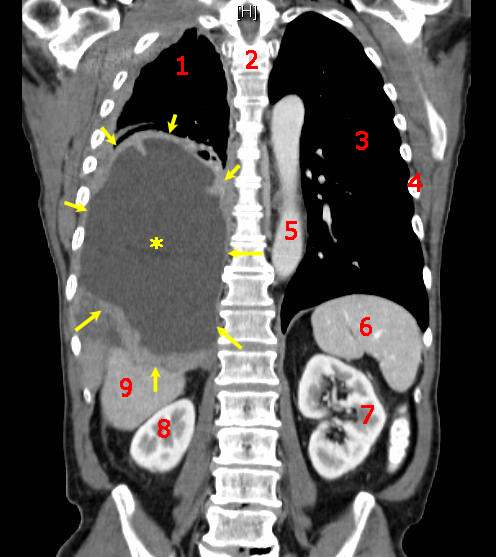
What Is Cancer? Not Just 'Tumor,' But a Cellular Genetic Disorder
Cancer is often misunderstood as just a 'tumor' — yet a tumor is only one physical manifestation. Scientifically, cancer is a group of diseases that begin when cells in the body undergo genetic mutations that disrupt normal mechanisms: proliferation (cell division), differentiation (cell maturation), and apoptosis (programmed cell death). These mutations allow cells to multiply endlessly, evade the immune system, and form masses — known as tumors. Malignant (cancerous) tumors differ from benign (non-cancerous) tumors not only in terms of growth, but also in their
invasiveness (ability to attack surrounding tissues) and
metastasis (ability to spread to distant organs through the lymphatic or blood systems). For example, colon cancer cells that have metastasized to the liver or lungs are no longer classified as 'late-stage colon cancer,' but as 'metastatic colon carcinoma' — a diagnosis that requires a completely different treatment approach.
Risk Factors: Between Personal Choices and Unavoidable Exposures
Data from the Global Cancer Observatory (GLOBOCAN 2022) show that about 47% of cancer cases in middle- and low-income countries are related to primary prevention factors. In Malaysia, the Ministry of Health reported that 33% of cancer-related deaths are directly linked to four main factors: tobacco use (including e-cigarettes), excessive alcohol consumption, obesity, and low-fiber and fruit diets. These are not just statistics — they reflect daily choices: one pack of cigarettes per day increases the risk of lung cancer by 25 times; consuming 30 grams of alcohol per day (equivalent to two glasses of wine) increases the risk of mouth and throat cancer by 2–3 times. However, not all risks are under individual control. Exposure to ionizing radiation (such as repeated X-rays without clinical indication), urban air pollution (PM2.5), and industrial chemicals like asbestos or benzene also play an important role — especially among factory workers or communities near toxic waste disposal sites.
Microbes Disguised as Causes: When Viruses and Bacteria 'Trigger' Cancer
Surprisingly, almost 16–18% of cancer cases worldwide originate from infections. This does not mean all infections carry a cancer risk — but certain species have unique molecular mechanisms to disrupt tumor suppressor genes (such as p53 or Rb). For example,
Helicobacter pylori — a bacterium causing chronic gastritis — produces the CagA protein that disrupts gastric cell signaling; over 3% of those with chronic infections eventually develop stomach cancer. Similarly, human papillomavirus (HPV) types 16 and 18 integrate their DNA into cervical cell genomes, suppressing p53 function and triggering pre-cancerous transformation. In Malaysia, a study by the Institute for Public Health (2021) found the prevalence of HPV among high-risk women reached 19.4%, while HPV vaccination rates remain below 40% — a gap that allows cervical cancer to become one of the top gynecological cancers.
Prevention Is Not a Myth: What Can Be Done Today?
Cancer prevention is not about fate, but layered strategies. Primary prevention (preventing early mutations) includes vaccination (HBV and HPV), quitting smoking, and plant-based diets — such as the Mediterranean Diet rich in leafy vegetables, whole grains, and unsaturated fats. Secondary prevention (early detection) involves screening based on age and risk: mammograms for women aged 50–74, colonoscopies every 10 years starting at age 50, and Pap smears every three years for sexually active women. In Malaysia, the Early Cancer Screening (SAKS) program by the Ministry of Health has reduced deaths by 32% between 2010–2020 — a clear proof that early detection saves lives. The important reflection question: If you are 45 years old and have never had a colonoscopy, do you consider the risk 'too far away' — or are you delaying an action that could change your fate in the next 10 years?
Beyond the Hospital: Cancer as a Social and Economic Issue
The burden of cancer goes beyond the biomedical dimension. Long-term treatment costs — including chemotherapy, immunotherapy, and supportive care — often exceed family financial capabilities, especially outside government insurance schemes. In Sabah and Sarawak, access to reference oncology centers remains limited, causing average screening wait times to exceed eight weeks. These are not just numbers — they are days during which pre-cancerous lesions may develop into invasive ones. On the other hand, social stigma also hinders early detection: many breast cancer patients in rural areas avoid mastectomy due to fear of 'losing femininity,' or view diagnosis as a 'punishment.' True transformation requires integration: continuous health education, expansion of community-based screening access, and systematic psychosocial support — not just advanced technology, but wisdom in conveying the meaning of 'cancer' in a human way.
A Brighter Future: From Genomics to Personalized Prevention
Now, cancer science is moving into an era of
precision prevention. Through genetic sequencing, we can identify high-risk individuals — such as carriers of BRCA1/2 mutations — and offer early interventions like annual breast MRIs or pharmacological prophylaxis. In Singapore and Thailand, 'Cancer Risk Stratification' projects use algorithms based on genetic data, family history, and lifestyle to produce 'personal risk profiles.' In Malaysia, initiatives like MyHealthDNA are in the clinical trial phase for local adaptation. However, this progress does not replace collective responsibility: every food choice, every cigarette not smoked, every vaccine dose received — are small steps that, on a population scale, have the potential to reduce the cancer burden by tens of thousands of cases each year. Cancer may be silent, but our response does not have to be.
---
Reference: Cancer — Wikipedia
Cancer: A Silent Enemy Rooted in Our Lifestyle and Environment. Cancer is not a single disease, but a group of more than 100 cellular disorders characterized by uncontrolled growth and the ability to spread to other tissues. About a third of cancer deaths can be prevented by reducing risk factors such as smoking, alcohol, obesity, and lack of physical activity. Infections from certain microorganisms — such as HPV, hepatitis B/C, and Helicobacter pylori — contribute to nearly one-fifth of global cancer cases. Vaccination and lifestyle changes are effective in significantly reducing the burden of cancer.. What Is Cancer? Not Just 'Tumor,' But a Cellular Genetic Disorder
Cancer is often misunderstood as just a 'tumor' — yet a tumor is only one physical manifestation. Scientifically, cancer is a group of diseases that begin when cells in the body undergo genetic mutations that disrupt normal mechanisms: proliferation cell division , differentiation cell maturation , and apoptosis programmed cell death . These mutations allow cells to multiply endlessly, evade the immune system, and form masses — known as tumors. Malignant cancerous tumors differ from benign non-cancerous tumors not only in terms of growth, but also in their invasiveness ability to attack surrounding tissues and metastasis ability to spread to distant organs through the lymphatic or blood systems . For example, colon cancer cells that have metastasized to the liver or lungs are no longer classified as 'late-stage colon cancer,' but as 'metastatic colon carcinoma' — a diagnosis that requires a completely different treatment approach.
Risk Factors: Between Personal Choices and Unavoidable Exposures
Data from the Global Cancer Observatory GLOBOCAN 2022 show that about 47% of cancer cases in middle- and low-income countries are related to primary prevention factors. In Malaysia, the Ministry of Health reported that 33% of cancer-related deaths are directly linked to four main factors: tobacco use including e-cigarettes , excessive alcohol consumption, obesity, and low-fiber and fruit diets. These are not just statistics — they reflect daily choices: one pack of cigarettes per day increases the risk of lung cancer by 25 times; consuming 30 grams of alcohol per day equivalent to two glasses of wine increases the risk of mouth and throat cancer by 2–3 times. However, not all risks are under individual control. Exposure to ionizing radiation such as repeated X-rays without clinical indication , urban air pollution PM2.5 , and industrial chemicals like asbestos or benzene also play an important role — especially among factory workers or communities near toxic waste disposal sites.
Microbes Disguised as Causes: When Viruses and Bacteria 'Trigger' Cancer
Surprisingly, almost 16–18% of cancer cases worldwide originate from infections. This does not mean all infections carry a cancer risk — but certain species have unique molecular mechanisms to disrupt tumor suppressor genes such as p53 or Rb . For example, Helicobacter pylori — a bacterium causing chronic gastritis — produces the CagA protein that disrupts gastric cell signaling; over 3% of those with chronic infections eventually develop stomach cancer. Similarly, human papillomavirus HPV types 16 and 18 integrate their DNA into cervical cell genomes, suppressing p53 function and triggering pre-cancerous transformation. In Malaysia, a study by the Institute for Public Health 2021 found the prevalence of HPV among high-risk women reached 19.4%, while HPV vaccination rates remain below 40% — a gap that allows cervical cancer to become one of the top gynecological cancers.
Prevention Is Not a Myth: What Can Be Done Today?
Cancer prevention is not about fate, but layered strategies. Primary prevention preventing early mutations includes vaccination HBV and HPV , quitting smoking, and plant-based diets — such as the Mediterranean Diet rich in leafy vegetables, whole grains, and unsaturated fats. Secondary prevention early detection involves screening based on age and risk: mammograms for women aged 50–74, colonoscopies every 10 years starting at age 50, and Pap smears every three years for sexually active women. In Malaysia, the Early Cancer Screening SAKS program by the Ministry of Health has reduced deaths by 32% between 2010–2020 — a clear proof that early detection saves lives. The important reflection question: If you are 45 years old and have never had a colonoscopy, do you consider the risk 'too far away' — or are you delaying an action that could change your fate in the next 10 years?
Beyond the Hospital: Cancer as a Social and Economic Issue
The burden of cancer goes beyond the biomedical dimension. Long-term treatment costs — including chemotherapy, immunotherapy, and supportive care — often exceed family financial capabilities, especially outside government insurance schemes. In Sabah and Sarawak, access to reference oncology centers remains limited, causing average screening wait times to exceed eight weeks. These are not just numbers — they are days during which pre-cancerous lesions may develop into invasive ones. On the other hand, social stigma also hinders early detection: many breast cancer patients in rural areas avoid mastectomy due to fear of 'losing femininity,' or view diagnosis as a 'punishment.' True transformation requires integration: continuous health education, expansion of community-based screening access, and systematic psychosocial support — not just advanced technology, but wisdom in conveying the meaning of 'cancer' in a human way.
A Brighter Future: From Genomics to Personalized Prevention
Now, cancer science is moving into an era of precision prevention . Through genetic sequencing, we can identify high-risk individuals — such as carriers of BRCA1/2 mutations — and offer early interventions like annual breast MRIs or pharmacological prophylaxis. In Singapore and Thailand, 'Cancer Risk Stratification' projects use algorithms based on genetic data, family history, and lifestyle to produce 'personal risk profiles.' In Malaysia, initiatives like MyHealthDNA are in the clinical trial phase for local adaptation. However, this progress does not replace collective responsibility: every food choice, every cigarette not smoked, every vaccine dose received — are small steps that, on a population scale, have the potential to reduce the cancer burden by tens of thousands of cases each year. Cancer may be silent, but our response does not have to be.
---
Reference: Cancer — Wikipedia https://en.wikipedia.org/wiki/Cancer