A Steel Sharper Than You Imagine
Imagine a sword that can cut through stone, bend without breaking, and remain sharp for centuries. Sounds like magic? But that is the reality of Damascus steel swords, legendary weapons made in the Middle East from around 900 to 1750 AD. Even more surprising: this technology was completely lost in the 18th century and only rediscovered in the 21st century. How could an ancient civilization produce steel superior to modern iron? The answer lies in a microscopic structure that can only be seen with today's electron microscopes.
The Secret in Indian Iron Ore
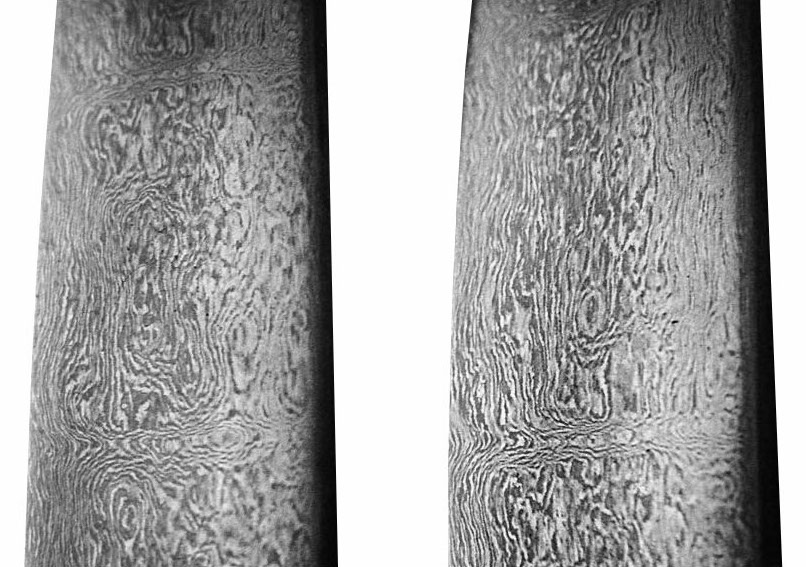
The origin of Damascus steel is not in Syria, as its name suggests, but in India and Sri Lanka. Arab traders brought special iron ore from that region to Damascus for forging. This ore, known as wootz steel, contains a mixture of trace elements such as vanadium, manganese, and tungsten not found in ordinary iron. When heated to a specific temperature (about 1200°C) and slowly forged, the carbon in the ore forms very hard carbides — microscopic particles arranged in river-like patterns. This pattern gives the sword its extraordinary strength and flexibility.
The Lost Forging Process
For centuries, blacksmiths in Damascus kept this secret tightly. They used a repeated forging technique: heat, hammer, fold, and repeat. This process produced about 200 layers of steel in each blade. Each layer contained carbides of different sizes, making the blade hard on the surface but flexible inside. Unfortunately, after 1750, wootz ore from India began to decline due to disrupted trade, and local blacksmiths switched to simpler European techniques. Knowledge of the exact temperature and forging time vanished. For 250 years, no one could reproduce this steel.
The Surprising Rediscovery
In 1998, a German researcher named Dr. Hans-Rainer Dahm decided to study an original sword from the Topkapi Museum in Istanbul. Using a scanning electron microscope, he discovered carbon nanotube structures inside the steel — technology only created by humans in 1991! Even more surprising, these nanotubes formed naturally during the forging process. This means ancient blacksmiths accidentally created the world's most advanced composite material, 800 years before modern science acknowledged it.
Why It Is Superior to Modern Iron?
Modern iron is usually either hard but brittle, or flexible but soft. Damascus steel overcomes both because of its carbide and nanotube structure. The carbides provide hardness for cutting, while the nanotubes distribute stress, preventing cracks. Tests in 2006 showed that a Damascus blade could bend 15 degrees without breaking, while a regular carbon steel blade cracked at 8 degrees. More impressively, the blade could maintain sharpness after 1,000 cuts — performance comparable to modern ceramic knives.
A Living Legacy
Although the original formula has been rediscovered, production of Damascus steel remains limited due to the cost of ore and complex techniques. However, some modern blacksmiths, like Alfred Pendray in the United States, have succeeded in producing replicas using wootz ore from India. These new swords sell for tens of thousands of ringgit, becoming symbols of unmatched ancient technological prowess. As one historian said: "We may consider ourselves advanced, but our ancestors created materials we are only now understanding again."
Conclusion: A Challenge to History
The rediscovery of Damascus steel proves that ancient civilizations were not merely primitive. They possessed deep metallurgical knowledge, based on observation and experimentation over generations. This raises the question: how many more ancient technologies have we yet to discover? Perhaps the pyramids, the Antikythera mechanism, or Roman roads are not exceptions, but evidence that humans long ago achieved levels of sophistication we thought belonged only to modern times. Damascus steel is a reminder that history may not be entirely as taught in schools.
---
Reference: Damascus steel — Wikipedia
Damascus Steel: Ancient Technology More Advanced Than Modern Iron. Damascus steel is famous for its durability and unique patterns, but its manufacturing technology was lost for centuries. This article reveals how this steel was made, why it was superior to modern iron, and how scientists rediscovered its secret formula. Discover the secrets behind swords said to cut through stone without dulling.. A Steel Sharper Than You Imagine
Imagine a sword that can cut through stone, bend without breaking, and remain sharp for centuries. Sounds like magic? But that is the reality of Damascus steel swords, legendary weapons made in the Middle East from around 900 to 1750 AD. Even more surprising: this technology was completely lost in the 18th century and only rediscovered in the 21st century. How could an ancient civilization produce steel superior to modern iron? The answer lies in a microscopic structure that can only be seen with today's electron microscopes.
The Secret in Indian Iron Ore
The origin of Damascus steel is not in Syria, as its name suggests, but in India and Sri Lanka. Arab traders brought special iron ore from that region to Damascus for forging. This ore, known as wootz steel, contains a mixture of trace elements such as vanadium, manganese, and tungsten not found in ordinary iron. When heated to a specific temperature about 1200°C and slowly forged, the carbon in the ore forms very hard carbides — microscopic particles arranged in river-like patterns. This pattern gives the sword its extraordinary strength and flexibility.
The Lost Forging Process
For centuries, blacksmiths in Damascus kept this secret tightly. They used a repeated forging technique: heat, hammer, fold, and repeat. This process produced about 200 layers of steel in each blade. Each layer contained carbides of different sizes, making the blade hard on the surface but flexible inside. Unfortunately, after 1750, wootz ore from India began to decline due to disrupted trade, and local blacksmiths switched to simpler European techniques. Knowledge of the exact temperature and forging time vanished. For 250 years, no one could reproduce this steel.
The Surprising Rediscovery
In 1998, a German researcher named Dr. Hans-Rainer Dahm decided to study an original sword from the Topkapi Museum in Istanbul. Using a scanning electron microscope, he discovered carbon nanotube structures inside the steel — technology only created by humans in 1991! Even more surprising, these nanotubes formed naturally during the forging process. This means ancient blacksmiths accidentally created the world's most advanced composite material, 800 years before modern science acknowledged it.
Why It Is Superior to Modern Iron?
Modern iron is usually either hard but brittle, or flexible but soft. Damascus steel overcomes both because of its carbide and nanotube structure. The carbides provide hardness for cutting, while the nanotubes distribute stress, preventing cracks. Tests in 2006 showed that a Damascus blade could bend 15 degrees without breaking, while a regular carbon steel blade cracked at 8 degrees. More impressively, the blade could maintain sharpness after 1,000 cuts — performance comparable to modern ceramic knives.
A Living Legacy
Although the original formula has been rediscovered, production of Damascus steel remains limited due to the cost of ore and complex techniques. However, some modern blacksmiths, like Alfred Pendray in the United States, have succeeded in producing replicas using wootz ore from India. These new swords sell for tens of thousands of ringgit, becoming symbols of unmatched ancient technological prowess. As one historian said: "We may consider ourselves advanced, but our ancestors created materials we are only now understanding again."
Conclusion: A Challenge to History
The rediscovery of Damascus steel proves that ancient civilizations were not merely primitive. They possessed deep metallurgical knowledge, based on observation and experimentation over generations. This raises the question: how many more ancient technologies have we yet to discover? Perhaps the pyramids, the Antikythera mechanism, or Roman roads are not exceptions, but evidence that humans long ago achieved levels of sophistication we thought belonged only to modern times. Damascus steel is a reminder that history may not be entirely as taught in schools.
---
Reference: Damascus steel — Wikipedia https://en.wikipedia.org/wiki/Damascus steel