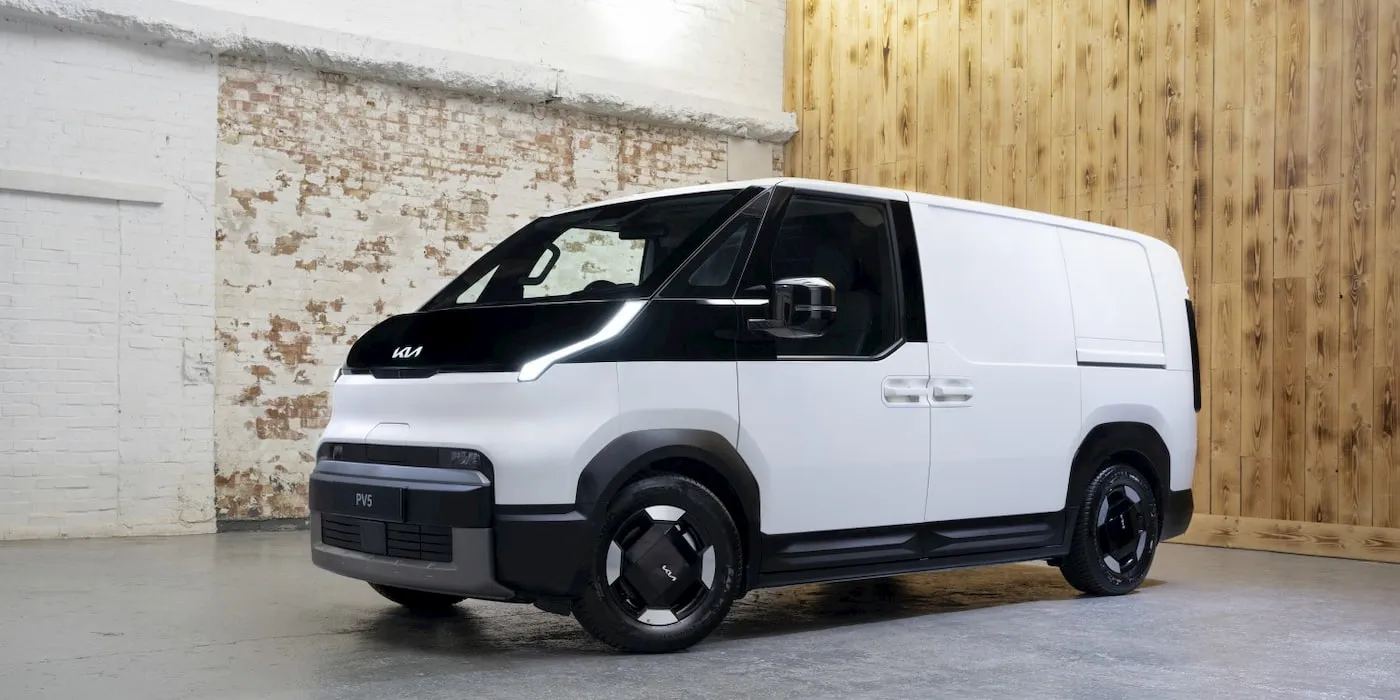
Imagine an electric van so popular that the manufacturer has to limit its exports. That's what is happening with the Kia PV5: its commercial van model is now experiencing supply shortages in the international market due to an unexpected surge in domestic demand in South Korea.
Domestic Demand Exceeds Factory Capacity
Kia initially planned the PV5 as a solution for urban logistics and local delivery services. However, the response from logistics companies, micro-entrepreneurs, and government agencies far exceeded expectations. The factory in Gwangmyeong is operating at maximum capacity, yet it still fails to meet domestic orders — let alone international demands. As a response, Kia introduced an export quota system based on country, with priority given to the South Korean market.
This move is not just an operational step; it is a clear sign that demand for commercial electric vans is shifting from concept to reality — and South Korea is leading the way.
Specifications Meeting Real Needs
The PV5 is built on Kia's dedicated electric platform (E-GMP.S), the same platform used by other EVs in its portfolio. It features an electric motor with 160 kW (215 hp) power and immediate torque of 350 Nm, allowing acceleration from 0–100 km/h in 8.5 seconds — an unusual performance for a commercial van.
A 77.4 kWh lithium-ion battery provides a range of up to 330 km according to the WLTP cycle. Fast charging support of 350 kW allows charging from 10% to 80% in just 20 minutes. A spacious cargo area with a maximum load of 1.2 tons makes it suitable for various business segments — from retail stores to e-commerce distributors.
The unique 'Passenger & Cargo Versatile' feature allows quick switching between passenger and cargo configurations without requiring special tools or long installation time. This offers real added value to operators who need to switch between goods transportation and daily staff transport within a single day.
Direct Impact on the Nusantara Market
For Malaysia, Indonesia, and Thailand, the PV5 emerges as one of the most practical commercial electric vans in the market — with an estimated price of RM180,000 to RM220,000 (CBU), low operating costs, and increasingly developing charging infrastructure.
However, supply restrictions mean official dealers in the region are now facing unit shortages. Orders already placed may experience delays of three to six months, depending on the monthly quotas allocated by Kia Global.
This situation also accelerates Kia's considerations regarding local assembly — particularly in Thailand, where Kia's EV factory is already operational and has excess capacity. In Malaysia, although government incentives such as import duty and road tax exemptions are still in effect, the PV5 is currently only available in CBU (Completely Built-Up) form, making it vulnerable to exchange rate volatility and supply shortages.
What Comes After the PV5?
Kia is developing the PV7 — a larger version with a range of up to 400 km and increased cargo capacity. But for now, the main focus is fulfilling existing demand without compromising quality or delivery timelines.
The decision to restrict supply to foreign markets is not just a sign of capacity limitations; it reflects the company's commitment to its promises to domestic customers — and also acknowledges that popularity, if not controlled, can harm long-term reputation.
For the logistics industry in Nusantara, the PV5 is not just a new van — it is an early signal that the era of commercial electric vans is no longer a question of 'if', but 'when and how'. Infrastructure preparation, technical training, and operational adjustments must start now — not when the first units arrive.
Kia PV5 Electric Van Sparks Demand: International Supply Restricted. The Kia PV5 electric van has received an extraordinary response in South Korea, forcing the company to restrict deliveries to international markets — including Nusantara — to prioritize domestic orders. This article examines technical specifications, factors driving demand, and practical implications for users and the logistics industry in Malaysia, Indonesia, and Thailand.. Imagine an electric van so popular that the manufacturer has to limit its exports. That's what is happening with the Kia PV5: its commercial van model is now experiencing supply shortages in the international market due to an unexpected surge in domestic demand in South Korea.
Domestic Demand Exceeds Factory Capacity
Kia initially planned the PV5 as a solution for urban logistics and local delivery services. However, the response from logistics companies, micro-entrepreneurs, and government agencies far exceeded expectations. The factory in Gwangmyeong is operating at maximum capacity, yet it still fails to meet domestic orders — let alone international demands. As a response, Kia introduced an export quota system based on country, with priority given to the South Korean market.
This move is not just an operational step; it is a clear sign that demand for commercial electric vans is shifting from concept to reality — and South Korea is leading the way.
Specifications Meeting Real Needs
The PV5 is built on Kia's dedicated electric platform E-GMP.S , the same platform used by other EVs in its portfolio. It features an electric motor with 160 kW 215 hp power and immediate torque of 350 Nm, allowing acceleration from 0–100 km/h in 8.5 seconds — an unusual performance for a commercial van.
A 77.4 kWh lithium-ion battery provides a range of up to 330 km according to the WLTP cycle. Fast charging support of 350 kW allows charging from 10% to 80% in just 20 minutes. A spacious cargo area with a maximum load of 1.2 tons makes it suitable for various business segments — from retail stores to e-commerce distributors.
The unique 'Passenger & Cargo Versatile' feature allows quick switching between passenger and cargo configurations without requiring special tools or long installation time. This offers real added value to operators who need to switch between goods transportation and daily staff transport within a single day.
Direct Impact on the Nusantara Market
For Malaysia, Indonesia, and Thailand, the PV5 emerges as one of the most practical commercial electric vans in the market — with an estimated price of RM180,000 to RM220,000 CBU , low operating costs, and increasingly developing charging infrastructure.
However, supply restrictions mean official dealers in the region are now facing unit shortages. Orders already placed may experience delays of three to six months, depending on the monthly quotas allocated by Kia Global.
This situation also accelerates Kia's considerations regarding local assembly — particularly in Thailand, where Kia's EV factory is already operational and has excess capacity. In Malaysia, although government incentives such as import duty and road tax exemptions are still in effect, the PV5 is currently only available in CBU Completely Built-Up form, making it vulnerable to exchange rate volatility and supply shortages.
What Comes After the PV5?
Kia is developing the PV7 — a larger version with a range of up to 400 km and increased cargo capacity. But for now, the main focus is fulfilling existing demand without compromising quality or delivery timelines.
The decision to restrict supply to foreign markets is not just a sign of capacity limitations; it reflects the company's commitment to its promises to domestic customers — and also acknowledges that popularity, if not controlled, can harm long-term reputation.
For the logistics industry in Nusantara, the PV5 is not just a new van — it is an early signal that the era of commercial electric vans is no longer a question of 'if', but 'when and how'. Infrastructure preparation, technical training, and operational adjustments must start now — not when the first units arrive.