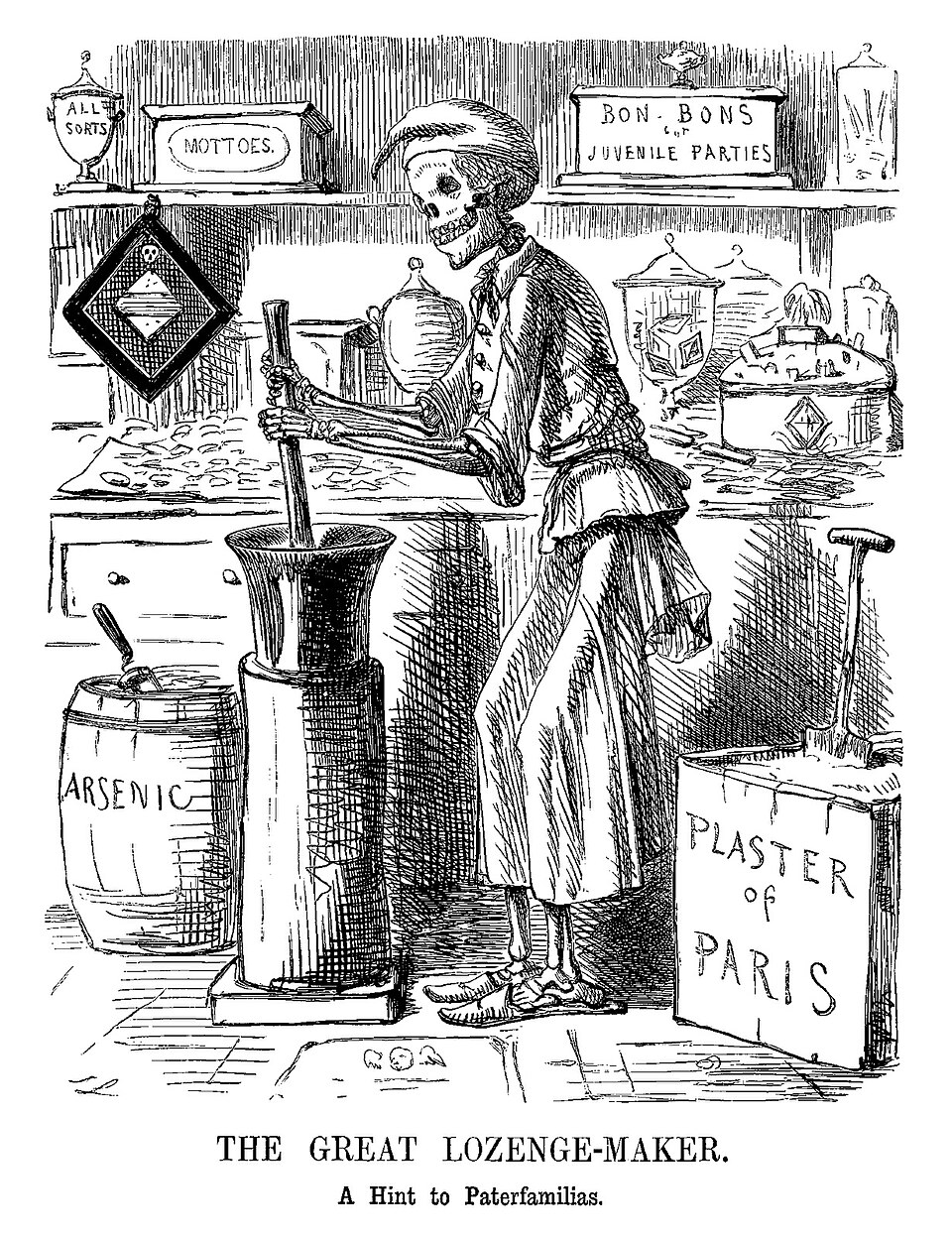
BRADFORD — A minor error at a confectionery factory on October 30, 1858, turned sweet treats into deadly poison, claiming 20 lives and sickening hundreds more within days.
Arsenic: The Cheap Killer Chemical
In the 19th century, arsenic trioxide — known as "inheritance powder" — was freely sold in pharmacies and chemical stores. Its low cost and white appearance resembling sugar made it a popular pest control agent, but also a hidden threat in factory kitchens. There were no laws requiring warning labels or separate storage; a simple mistake in transferring containers was enough to trigger disaster.
A Sales Night That Became a Night of Death
On that day, factory worker William Hardaker purchased 40 pounds of mixed sweets from a supplier. Unbeknownst to him, 12 pounds of it had been mixed with arsenic trioxide by an apprentice who mistakenly used a rat poison container as "daft" (sugar filler). Hardaker sold five pounds of the contaminated sweets to regular customers — mostly children and poor families — before symptoms began appearing that same night.
Uncontrolled Symptoms and Chain of Deaths
Victims experienced severe vomiting, cutting stomach pain, bloody diarrhea, and convulsions. Local doctor Dr. John Bell identified arsenic poisoning through the Reinsch test. Within a week, 20 people had died; the youngest was two years old. More than 200 others suffered long-term effects: kidney damage, peripheral neuropathy, and cognitive disorders.
Public Outrage Gives Birth to New Laws
Public anger forced the government to form a Commission of Inquiry. As a result, the Food and Pharmacy Act 1860 was enacted — the first law to prohibit food adulteration, mandate chemical analysis, and appoint official inspectors. This act became the template for food safety laws in Europe and the United States to this day.
Scientific Legacy: From Tragedy to Safety Protocols
The Bradford case prompted scientists such as Robert Christison to study arsenic metabolism in the human body, leading to early detection protocols and chelation treatment methods that remain relevant. It also taught the industry that "no intent to harm" is not an excuse — oversight systems must prevent human error, not merely punish it.
Current Relevance: Oversight Cannot Be Compromised
Today, food supply chains span across borders. The Bradford incident reminds us: a single labeling error, one contaminated container, or one missed inspection can sacrifice lives on a large scale. Strict oversight, traceability, and education for food handlers are not optional — they are the shield between a meal and poison.
Source: Wikipedia — https://en.wikipedia.org/wiki/1858_Bradford_sweets_poisoning | License: CC BY-SA 4.0
The Sweet Tragedy of Bradford 1858: Arsenic Took 20 Lives. In 1858, a batch of sweets in Bradford was contaminated with arsenic trioxide due to a chemical labeling error. Five pounds of poisoned sweets were sold, resulting in 20 deaths and over 200 people suffering from poisoning. This tragedy forced the British Parliament to pass the Food and Pharmacy Act 1860, the foundation of modern food safety regulation.. BRADFORD — A minor error at a confectionery factory on October 30, 1858, turned sweet treats into deadly poison, claiming 20 lives and sickening hundreds more within days.
Arsenic: The Cheap Killer Chemical
In the 19th century, arsenic trioxide — known as "inheritance powder" — was freely sold in pharmacies and chemical stores. Its low cost and white appearance resembling sugar made it a popular pest control agent, but also a hidden threat in factory kitchens. There were no laws requiring warning labels or separate storage; a simple mistake in transferring containers was enough to trigger disaster.
A Sales Night That Became a Night of Death
On that day, factory worker William Hardaker purchased 40 pounds of mixed sweets from a supplier. Unbeknownst to him, 12 pounds of it had been mixed with arsenic trioxide by an apprentice who mistakenly used a rat poison container as "daft" sugar filler . Hardaker sold five pounds of the contaminated sweets to regular customers — mostly children and poor families — before symptoms began appearing that same night.
Uncontrolled Symptoms and Chain of Deaths
Victims experienced severe vomiting, cutting stomach pain, bloody diarrhea, and convulsions. Local doctor Dr. John Bell identified arsenic poisoning through the Reinsch test. Within a week, 20 people had died; the youngest was two years old. More than 200 others suffered long-term effects: kidney damage, peripheral neuropathy, and cognitive disorders.
Public Outrage Gives Birth to New Laws
Public anger forced the government to form a Commission of Inquiry. As a result, the Food and Pharmacy Act 1860 was enacted — the first law to prohibit food adulteration, mandate chemical analysis, and appoint official inspectors. This act became the template for food safety laws in Europe and the United States to this day.
Scientific Legacy: From Tragedy to Safety Protocols
The Bradford case prompted scientists such as Robert Christison to study arsenic metabolism in the human body, leading to early detection protocols and chelation treatment methods that remain relevant. It also taught the industry that "no intent to harm" is not an excuse — oversight systems must prevent human error, not merely punish it.
Current Relevance: Oversight Cannot Be Compromised
Today, food supply chains span across borders. The Bradford incident reminds us: a single labeling error, one contaminated container, or one missed inspection can sacrifice lives on a large scale. Strict oversight, traceability, and education for food handlers are not optional — they are the shield between a meal and poison.
Source: Wikipedia — https://en.wikipedia.org/wiki/1858 Bradford sweets poisoning License: CC BY-SA 4.0