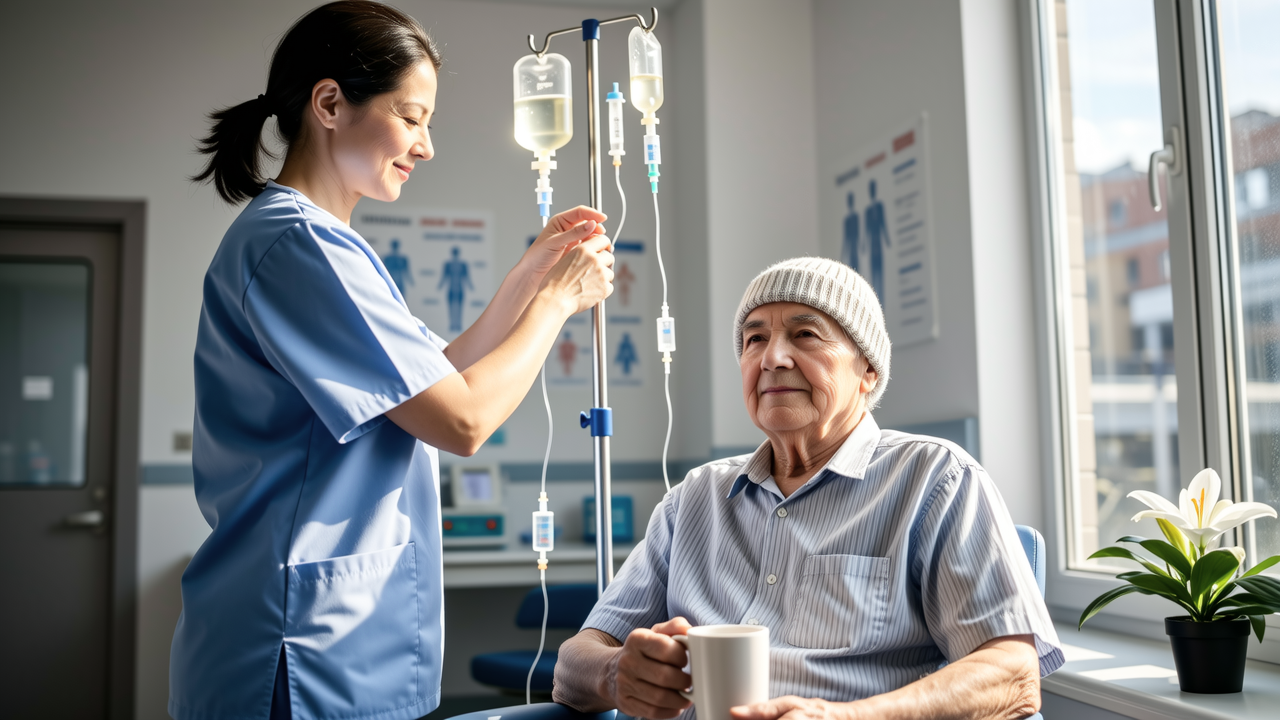
What Exactly Is Chemotherapy? Not Just 'Strong Medicine'
The term 'chemotherapy' is often misunderstood as a synonym for all cancer treatments—yet it refers specifically to the use of
cytotoxic chemical agents designed to interfere with the cell division process (mitosis) or damage the DNA of cancer cells. The origin of this term began in the early 20th century when scientists like Paul Ehrlich introduced the concept of the 'magic bullet'—the idea that drugs could be precisely targeted at pathogens without damaging normal tissue. However, modern chemotherapy is actually
non-specific: it attacks all actively dividing cells—including blood cells, hair follicles, and intestinal epithelial cells. This explains why nausea, alopecia, and neutropenia are classic side effects. Unlike molecular-targeted therapy (such as trastuzumab for HER2-positive breast cancer) or immunotherapy (such as pembrolizumab), chemotherapy operates at a basic biochemical level: inhibition of DNA synthesis, DNA cross-linking, or disruption of microtubules. For example,
cisplatin forms cross-links on DNA strands, while
paclitaxel prevents microtubule disassembly—both leading to cell cycle arrest and apoptosis.
From Cure to Palliation: The Spectrum of Clinical Objectives
Chemotherapy is not a single approach—it is categorized based on its therapeutic purpose.
Neoadjuvant is given before surgery to shrink tumors;
adjuvant after surgery to eliminate residual cells; while
palliative is used when cancer has metastasized—not to cure, but to extend survival and improve quality of life. A longitudinal study by the National Cancer Institute (2021) showed that the combination of
doxorubicin + cyclophosphamide + paclitaxel increased five-year survival by 28% in patients with stage III breast cancer compared to monotherapy. However, in metastatic pancreatic cancer, palliative chemotherapy only extends median survival by about 6–11 months—highlighting realistic treatment expectations. In Malaysia, the KKM Cancer Treatment Protocol (2023 edition) states that decisions to start chemotherapy must go through a
multidisciplinary team meeting (MDT), considering the patient's performance status (ECOG score), organ function, and individual preferences—not just histopathological diagnosis.
Regimens and Chains: Why Medications Are Never Used Alone?
Chemotherapy is rarely given as monotherapy because the risk of cancer cell resistance increases sharply if only one mechanism of action is used. Instead, combination regimens—such as CHOP (cyclophosphamide, doxorubicin, vincristine, prednisone) for non-Hodgkin lymphoma—leverage pharmacodynamic synergy: each drug attacks different phases of the cell cycle or different biochemical pathways. It is like locking three doors to a building simultaneously—it is harder for an intruder (cancer cell) to escape. However, these combinations also increase toxic burden: doxorubicin can cause cardiomyopathy, vincristine causes peripheral neuropathy, and prednisone triggers hyperglycemia. Therefore, doses and schedules are strictly administered—for example, paclitaxel is given as an infusion over three hours every week for 12 weeks, not just once—to allow bone marrow time to recover blood cell production.
Daily Reality: Between Treatment and Normal Life
Patients often view chemotherapy as 'total sick leave'. However, many patients—especially those with early-stage colorectal cancer or lymphoma—undergo treatment while working part-time or taking care of children. The key is proactive symptom management: third-generation antiemetics such as
netupitant/palonosetron reduce acute nausea by up to 92%, while vitamin B12 and folate supplements (under doctor supervision) can reduce fatigue. At the University of Malaya Medical Centre, the
Chemotherapy Support Navigation program shows that patients who receive pre-treatment education on oral care, temperature monitoring, and signs of febrile neutropenia (fever >38°C) experience 40% fewer hospitalizations due to infections. Chemotherapy is not an absolute barrier to life—but it requires smart adjustments.
Questions Rarely Asked: What If Chemotherapy Is No Longer Effective?
When a tumor shows progression during or after chemotherapy, a critical question arises: is this a sign of treatment failure—or an indication that cancer cells have 'learned' to survive? Resistance is not accidental: it can stem from increased expression of drug-excreting proteins (such as P-glycoprotein), more efficient DNA repair, or changes in the tumor microenvironment. Here, it is important to distinguish between 'therapy failure' and 'communication failure': does the patient truly understand the meaning of 'disease stabilization' versus 'complete remission'? A study at Sultanah Nur Zahirah Hospital (2022) found that 63% of patients were unaware that palliative chemotherapy is not aimed at curing, but at controlling growth. This emphasizes the need for
shared decision-making, not just information provision. Chemotherapy is a powerful weapon—but this weapon is only effective when used with knowledge, empathy, and full transparency.
---
References: Chemotherapy — Wikipedia
Chemotherapy: A Dangerous Weapon That Saves Lives in the War Against Cancer. Chemotherapy is not just 'cancer medicine'—it is a complex pharmacological strategy that targets cell division non-specifically, often causing severe side effects but still remaining a cornerstone of oncology treatment. This article explains its mechanism of action, evolution of clinical definitions, regimen variations, the reality of patient life, and hidden ethical questions surrounding its use. Facts are verified according to modern oncology literature and guidelines from KKM and the American Society of Clinical Oncology (ASCO).. What Exactly Is Chemotherapy? Not Just 'Strong Medicine'
The term 'chemotherapy' is often misunderstood as a synonym for all cancer treatments—yet it refers specifically to the use of cytotoxic chemical agents designed to interfere with the cell division process mitosis or damage the DNA of cancer cells. The origin of this term began in the early 20th century when scientists like Paul Ehrlich introduced the concept of the 'magic bullet'—the idea that drugs could be precisely targeted at pathogens without damaging normal tissue. However, modern chemotherapy is actually non-specific : it attacks all actively dividing cells—including blood cells, hair follicles, and intestinal epithelial cells. This explains why nausea, alopecia, and neutropenia are classic side effects. Unlike molecular-targeted therapy such as trastuzumab for HER2-positive breast cancer or immunotherapy such as pembrolizumab , chemotherapy operates at a basic biochemical level: inhibition of DNA synthesis, DNA cross-linking, or disruption of microtubules. For example, cisplatin forms cross-links on DNA strands, while paclitaxel prevents microtubule disassembly—both leading to cell cycle arrest and apoptosis.
From Cure to Palliation: The Spectrum of Clinical Objectives
Chemotherapy is not a single approach—it is categorized based on its therapeutic purpose. Neoadjuvant is given before surgery to shrink tumors; adjuvant after surgery to eliminate residual cells; while palliative is used when cancer has metastasized—not to cure, but to extend survival and improve quality of life. A longitudinal study by the National Cancer Institute 2021 showed that the combination of doxorubicin + cyclophosphamide + paclitaxel increased five-year survival by 28% in patients with stage III breast cancer compared to monotherapy. However, in metastatic pancreatic cancer, palliative chemotherapy only extends median survival by about 6–11 months—highlighting realistic treatment expectations. In Malaysia, the KKM Cancer Treatment Protocol 2023 edition states that decisions to start chemotherapy must go through a multidisciplinary team meeting MDT , considering the patient's performance status ECOG score , organ function, and individual preferences—not just histopathological diagnosis.
Regimens and Chains: Why Medications Are Never Used Alone?
Chemotherapy is rarely given as monotherapy because the risk of cancer cell resistance increases sharply if only one mechanism of action is used. Instead, combination regimens—such as CHOP cyclophosphamide, doxorubicin, vincristine, prednisone for non-Hodgkin lymphoma—leverage pharmacodynamic synergy: each drug attacks different phases of the cell cycle or different biochemical pathways. It is like locking three doors to a building simultaneously—it is harder for an intruder cancer cell to escape. However, these combinations also increase toxic burden: doxorubicin can cause cardiomyopathy, vincristine causes peripheral neuropathy, and prednisone triggers hyperglycemia. Therefore, doses and schedules are strictly administered—for example, paclitaxel is given as an infusion over three hours every week for 12 weeks, not just once—to allow bone marrow time to recover blood cell production.
Daily Reality: Between Treatment and Normal Life
Patients often view chemotherapy as 'total sick leave'. However, many patients—especially those with early-stage colorectal cancer or lymphoma—undergo treatment while working part-time or taking care of children. The key is proactive symptom management: third-generation antiemetics such as netupitant/palonosetron reduce acute nausea by up to 92%, while vitamin B12 and folate supplements under doctor supervision can reduce fatigue. At the University of Malaya Medical Centre, the Chemotherapy Support Navigation program shows that patients who receive pre-treatment education on oral care, temperature monitoring, and signs of febrile neutropenia fever 38°C experience 40% fewer hospitalizations due to infections. Chemotherapy is not an absolute barrier to life—but it requires smart adjustments.
Questions Rarely Asked: What If Chemotherapy Is No Longer Effective?
When a tumor shows progression during or after chemotherapy, a critical question arises: is this a sign of treatment failure—or an indication that cancer cells have 'learned' to survive? Resistance is not accidental: it can stem from increased expression of drug-excreting proteins such as P-glycoprotein , more efficient DNA repair, or changes in the tumor microenvironment. Here, it is important to distinguish between 'therapy failure' and 'communication failure': does the patient truly understand the meaning of 'disease stabilization' versus 'complete remission'? A study at Sultanah Nur Zahirah Hospital 2022 found that 63% of patients were unaware that palliative chemotherapy is not aimed at curing, but at controlling growth. This emphasizes the need for shared decision-making , not just information provision. Chemotherapy is a powerful weapon—but this weapon is only effective when used with knowledge, empathy, and full transparency.
---
References: Chemotherapy — Wikipedia https://en.wikipedia.org/wiki/Chemotherapy