Introduction: Mystery and Grandeur at the Holy City
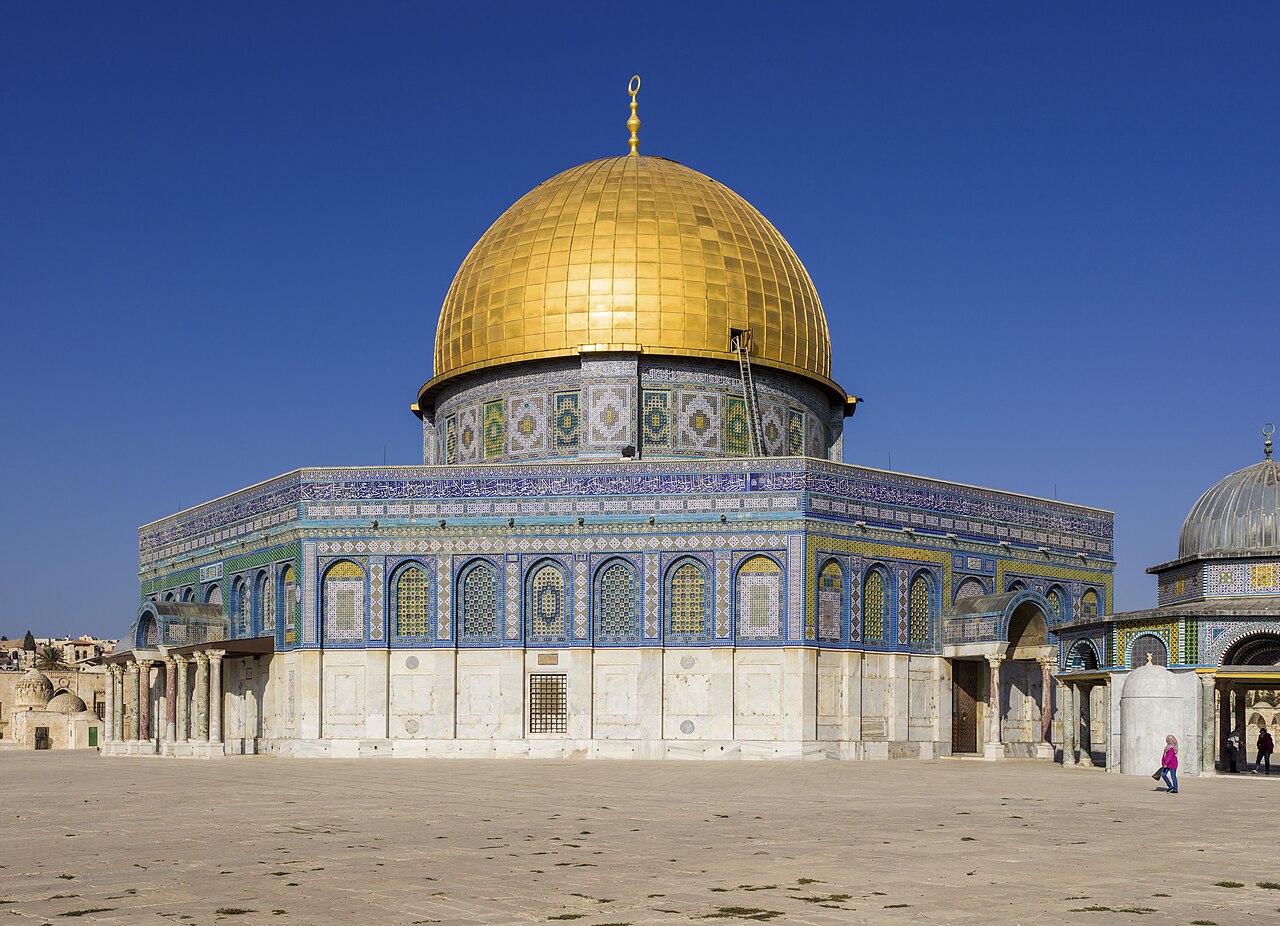
In the heart of old Jerusalem, on a hill known as the Temple Mount or Haram al-Sharif, stands a structure that captivates the eye: the Dome of the Rock (Qubbat al-Sakhra). With its gleaming golden dome and beautifully decorated octagonal walls, it is not only an architectural landmark but also the first surviving Islamic monument to this day. Built in the late 7th century, the Dome of the Rock has witnessed the glorious journey of Islamic civilization, combining religious, political, and architectural values in a remarkable composition.
Construction History: When the Second Fitnah Broke Out
The Dome of the Rock was built on the orders of Caliph Abdul Malik bin Marwan (685–705 CE), the fifth caliph of the Umayyad Dynasty, in 691–692 CE. At that time, the Islamic world was experiencing internal turmoil known as the Second Fitnah. A civil war between the Umayyads in Damascus and the followers of Abdullah bin al-Zubair in Mecca caused instability in control over the holy cities of Mecca and Medina. In this situation, Caliph Abdul Malik took a wise step: building a strong religious and political center in Jerusalem to divert the attention of Muslims and strengthen his authority.
The choice of location on the Temple Mount was no coincidence. This site has a long history respected by three Abrahamic religions: Judaism, Christianity, and Islam. According to Jewish and Christian traditions, it was here that Prophet Abraham AS almost sacrificed his son Prophet Ismail AS (or Isaac AS according to the Bible version). For Muslims, the stone at the center of the structure is believed to be the starting point of the Prophet Muhammad SAW's Night Journey (Isra' and Mi'raj) to heaven. Therefore, the Dome of the Rock was built as a symbol of unity among people and a declaration of the superiority of Islam on this sacred land.
Amazing Architecture: Octagon and Golden Dome
The Dome of the Rock is designed in an octagonal shape with a dome diameter of about 20 meters, rising 30 meters above ground level. The outer walls are covered with marble and glass mosaics depicting geometric patterns and calligraphy of verses from the Quran. The colors blue, green, gold, and silver blend together to create a breathtaking panorama, reflecting the influence of Byzantine and Persian architecture adapted by Muslim artists.
What is most fascinating are the early Islamic inscriptions carved on the inner and outer walls. Among them are the Shahada and verses that reject the concept of the Christian Trinity, in line with the mission of Islamic preaching at that time. These inscriptions are the earliest archaeological evidence that clearly mentions the name of the Prophet Muhammad SAW, making the Dome of the Rock an invaluable epigraphic treasure.
Function and Meaning: More Than Just a Place of Worship
Although often misunderstood as a mosque, the Dome of the Rock is actually a 'shrine' or sacred place that protects the Foundation Stone in its center. This stone is believed to be the 'center of the world' in Jewish tradition, while in Islam, it is the starting point of the Prophet's Night Journey. The structure also serves as a pilgrimage and educational center, where scholars and students gather to discuss religious knowledge.
From a political perspective, the Dome of the Rock became a symbol of the power of the Umayyad dynasty, successfully rivaling the influence of the Byzantines and Christians in Jerusalem. At that time, the Church of the Holy Sepulchre (Holy Sepulchre Church) built by Emperor Constantine was the focus of Christians. By constructing a more magnificent and glittering Dome of the Rock, Caliph Abdul Malik wanted to show that Islam was also capable of producing monuments that could match, even surpass, those of others.
Restoration and Legacy: Surviving for 13 Centuries
The Dome of the Rock has gone through various eras and events: from the Abbasid, Fatimid, Ayyubid, Mamluk, to the Ottoman periods. Each dynasty contributed to the restoration and beautification of this structure. During the Ottoman era, Sultan Suleiman the Magnificent ordered a major restoration in the 16th century, including replacing the original wooden dome with a lead-covered golden dome.
In modern times, the Dome of the Rock has become a focal point of the Israeli-Palestinian conflict, yet it remains standing as a testament to the grandeur of Islamic civilization. In 1994, King Hussein of Jordan donated 8.1 kilograms of gold to restore the dome, ensuring it continues to shine in the sky over Jerusalem.
Conclusion: A Symbol of Faith and Unity
The Dome of the Rock in Jerusalem is not just stone and cement; it is a living narrative about the glory of Islam in its early days. It reminds us that Islamic civilization was not only capable of building magnificent physical structures but also sowing values of faith, tolerance, and knowledge. For Muslims today, the Dome of the Rock is an inspiration to continue preserving heritage and honoring the religion.
Like its enduringly gleaming dome under the sunlight, the spirit of Islamic civilization should continue to shine in the hearts of every generation. Let us appreciate this monument as a precious gift from history, which teaches us about the strength of faith and the perseverance of humanity.
---
Reference: Dome of the Rock — Wikipedia
Jerusalem's Rock Dome: The First Remaining Islamic Monument, a Symbol of Civilization. The Dome of the Rock in Jerusalem is the oldest surviving Islamic monument. Built in 691–692 CE by Caliph Abdul Malik bin Marwan from the Umayyad Dynasty, this octagonal structure is not only a religious center but also a symbol of the glory of early Islamic civilization. Believed to be the starting point of the Prophet Muhammad's Night Journey, the Dome of the Rock is also revered by Christians and Jews as an important site in the history of Prophet Abraham AS.. Introduction: Mystery and Grandeur at the Holy City
In the heart of old Jerusalem, on a hill known as the Temple Mount or Haram al-Sharif, stands a structure that captivates the eye: the Dome of the Rock Qubbat al-Sakhra . With its gleaming golden dome and beautifully decorated octagonal walls, it is not only an architectural landmark but also the first surviving Islamic monument to this day. Built in the late 7th century, the Dome of the Rock has witnessed the glorious journey of Islamic civilization, combining religious, political, and architectural values in a remarkable composition.
Construction History: When the Second Fitnah Broke Out
The Dome of the Rock was built on the orders of Caliph Abdul Malik bin Marwan 685–705 CE , the fifth caliph of the Umayyad Dynasty, in 691–692 CE. At that time, the Islamic world was experiencing internal turmoil known as the Second Fitnah. A civil war between the Umayyads in Damascus and the followers of Abdullah bin al-Zubair in Mecca caused instability in control over the holy cities of Mecca and Medina. In this situation, Caliph Abdul Malik took a wise step: building a strong religious and political center in Jerusalem to divert the attention of Muslims and strengthen his authority.
The choice of location on the Temple Mount was no coincidence. This site has a long history respected by three Abrahamic religions: Judaism, Christianity, and Islam. According to Jewish and Christian traditions, it was here that Prophet Abraham AS almost sacrificed his son Prophet Ismail AS or Isaac AS according to the Bible version . For Muslims, the stone at the center of the structure is believed to be the starting point of the Prophet Muhammad SAW's Night Journey Isra' and Mi'raj to heaven. Therefore, the Dome of the Rock was built as a symbol of unity among people and a declaration of the superiority of Islam on this sacred land.
Amazing Architecture: Octagon and Golden Dome
The Dome of the Rock is designed in an octagonal shape with a dome diameter of about 20 meters, rising 30 meters above ground level. The outer walls are covered with marble and glass mosaics depicting geometric patterns and calligraphy of verses from the Quran. The colors blue, green, gold, and silver blend together to create a breathtaking panorama, reflecting the influence of Byzantine and Persian architecture adapted by Muslim artists.
What is most fascinating are the early Islamic inscriptions carved on the inner and outer walls. Among them are the Shahada and verses that reject the concept of the Christian Trinity, in line with the mission of Islamic preaching at that time. These inscriptions are the earliest archaeological evidence that clearly mentions the name of the Prophet Muhammad SAW, making the Dome of the Rock an invaluable epigraphic treasure.
Function and Meaning: More Than Just a Place of Worship
Although often misunderstood as a mosque, the Dome of the Rock is actually a 'shrine' or sacred place that protects the Foundation Stone in its center. This stone is believed to be the 'center of the world' in Jewish tradition, while in Islam, it is the starting point of the Prophet's Night Journey. The structure also serves as a pilgrimage and educational center, where scholars and students gather to discuss religious knowledge.
From a political perspective, the Dome of the Rock became a symbol of the power of the Umayyad dynasty, successfully rivaling the influence of the Byzantines and Christians in Jerusalem. At that time, the Church of the Holy Sepulchre Holy Sepulchre Church built by Emperor Constantine was the focus of Christians. By constructing a more magnificent and glittering Dome of the Rock, Caliph Abdul Malik wanted to show that Islam was also capable of producing monuments that could match, even surpass, those of others.
Restoration and Legacy: Surviving for 13 Centuries
The Dome of the Rock has gone through various eras and events: from the Abbasid, Fatimid, Ayyubid, Mamluk, to the Ottoman periods. Each dynasty contributed to the restoration and beautification of this structure. During the Ottoman era, Sultan Suleiman the Magnificent ordered a major restoration in the 16th century, including replacing the original wooden dome with a lead-covered golden dome.
In modern times, the Dome of the Rock has become a focal point of the Israeli-Palestinian conflict, yet it remains standing as a testament to the grandeur of Islamic civilization. In 1994, King Hussein of Jordan donated 8.1 kilograms of gold to restore the dome, ensuring it continues to shine in the sky over Jerusalem.
Conclusion: A Symbol of Faith and Unity
The Dome of the Rock in Jerusalem is not just stone and cement; it is a living narrative about the glory of Islam in its early days. It reminds us that Islamic civilization was not only capable of building magnificent physical structures but also sowing values of faith, tolerance, and knowledge. For Muslims today, the Dome of the Rock is an inspiration to continue preserving heritage and honoring the religion.
Like its enduringly gleaming dome under the sunlight, the spirit of Islamic civilization should continue to shine in the hearts of every generation. Let us appreciate this monument as a precious gift from history, which teaches us about the strength of faith and the perseverance of humanity.
---
Reference: Dome of the Rock — Wikipedia https://en.wikipedia.org/wiki/Dome of the Rock