🌍 Global coverage 24/7 • 🏯 East Asia: China, Japan, Korea • 🛕 South Asia: India • 🏰 Europe • 🗽 Americas • 🌍 Africa • 🕌 Middle East • 🇵🇸 Palestine Solidarity •
This article is a translation from the original language.
🕌 Stories & Lessons
Jerusalem's Rock Dome: The Oldest Islamic Monument Standing Majestically in Al-Aqsa
The Dome of the Rock (Kubah Batu) in Jerusalem is the oldest surviving Islamic monument, built between 691–692 CE on the orders of Caliph Abdul Malik bin Marwan. Located atop Al-Aqsa Mosque, this octagonal structure is not only a symbol of the grandeur of early Islamic civilization but also houses the Foundation Stone, believed to be the starting point of the Prophet Muhammad SAW's Isra' and Mi'raj journey. This article explores the history of its construction, its breathtaking architecture, and the eternal legacy left by this sacred monument.
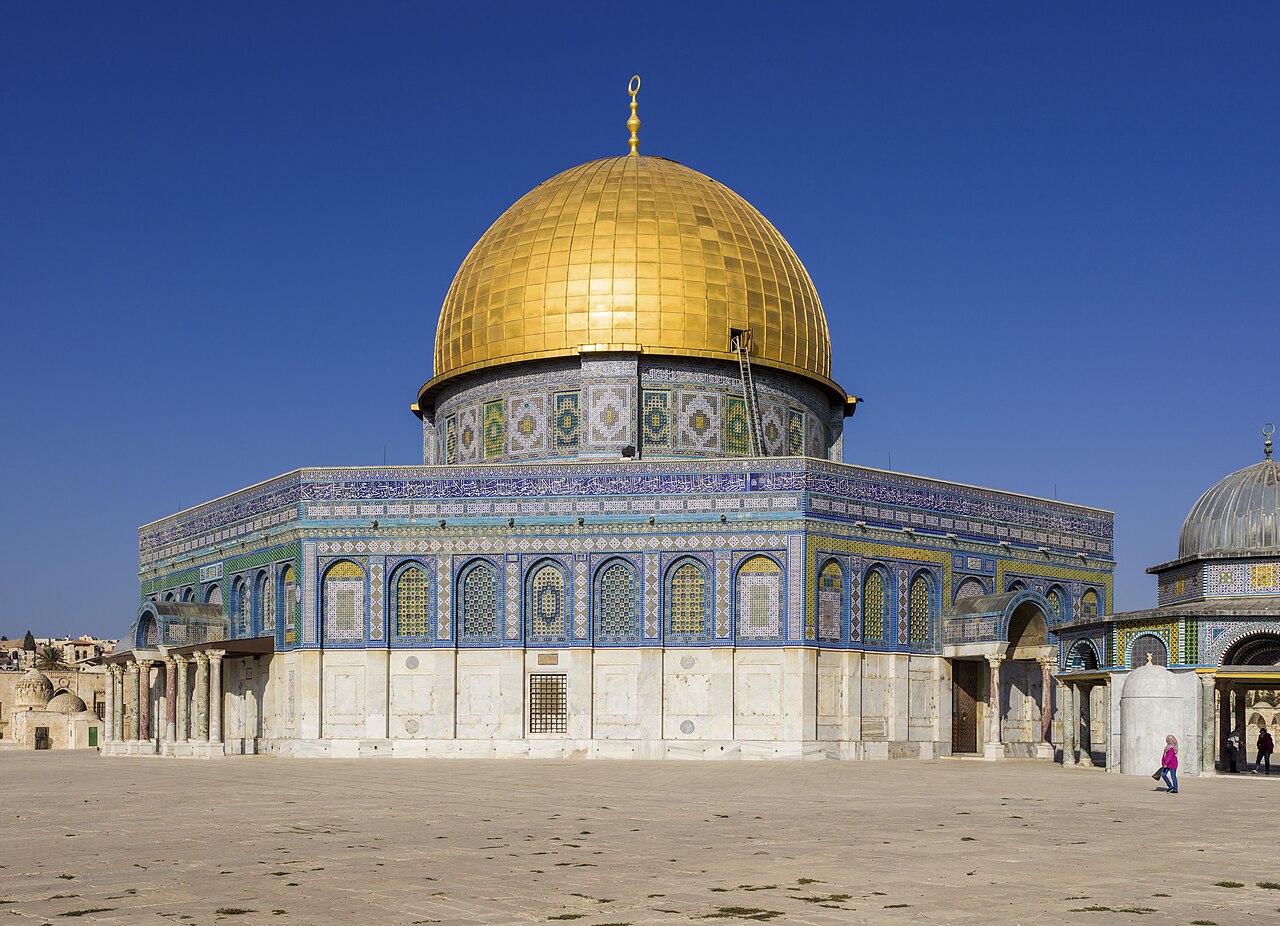
Image: Foto: Wikipedia — Dome of the Rock (CC BY-SA 4.0)
AI
A Golden Jewel in the Heart of Jerusalem: A Wonder That Has Endured for Centuries
Imagine standing in the heart of Jerusalem, on a hill that once was the site of Solomon's Temple and the Second Jewish Temple. Before your eyes, a golden dome rises, reflecting sunlight like a giant torch. Beneath the dome lies a large stone, which, according to tradition, witnessed the great journey of the Prophet Muhammad SAW to heaven. This is the Dome of the Rock, or Qubbat al-Sakhra in Arabic — the oldest surviving Islamic monument in the world, a masterpiece of architecture that has become a landmark of Jerusalem for over 1,300 years. Built during a time of political challenges, it is not just a sacred building, but also a statement of power, faith, and the brilliance of early Islamic civilization.
When the Second Fitnah Shook: The Background of the Construction of the Dome of the Rock
At the end of the seventh century, the Islamic world was shaken by political turmoil known as the Second Fitnah. The Umayyad caliphate in Damascus was plagued by rebellions and divisions. Amidst this chaos, Caliph Abdul Malik bin Marwan (reigned 685–705 CE) made a bold decision: to build a monument that would not only serve as a religious center but also as a symbol of unity among Muslims. In 691–692 CE, the construction of the Dome of the Rock began on the summit of Mount Moriah, a site sanctified by three major religions. This decision was strategic — at that time, the holy city of Mecca was still under the control of the opposing faction, Abdullah ibn Zubayr. By building the Dome of the Rock, Abdul Malik wanted to show that Jerusalem was also an important center for Islam, in addition to Mecca. However, more than that, this monument became a visual statement that Islam now stood majestically on a sacred site that had once been the center of Jewish and Christian worship.
The Stone That Became a Witness: The Sacred Importance Behind the Structure
In the center of the Dome of the Rock lies the Foundation Stone (Noble Rock), a natural limestone formation measuring approximately 18 meters long and 13 meters wide. According to Islamic belief, from this stone, the Prophet Muhammad SAW began his Isra' and Mi'raj journey — the night journey from the Masjid al-Haram in Mecca to the Al-Aqsa Mosque in Jerusalem, then ascending to heaven to receive the commandment of prayer. This stone is also revered in Jewish and Christian traditions as the place where Prophet Abraham was ready to sacrifice his son. By combining these elements, the Dome of the Rock becomes a symbol of unity among the three religions, while affirming the unique identity of Islam. The early Kufic inscriptions on the inner walls of the monument contain verses from the Quran emphasizing the oneness of God and the prophethood of Muhammad, making it one of the oldest surviving Islamic inscriptions.
Breathtaking Architecture: Technical and Aesthetic Excellence
The Dome of the Rock is a marvel of architecture that combines Byzantine, Persian, and Arab influences. Its octagonal structure consists of two circular rows of columns supporting a wooden dome sheathed in gold. Its diameter is about 20 meters, and it rises to a height of 20 meters. The outer walls are adorned with blue, white, and gold ceramic tiles featuring intricate geometric patterns and calligraphy — most of which were added during the Ottoman period in the 16th century. Inside, colorful glass mosaics decorate the walls, depicting plant motifs, trees, and crowns, symbolizing paradise. The lower part of the dome is decorated with beautiful stucco carvings and calligraphy. All of this is not just decoration; it is a statement of the glory of God and the caliphate. The construction used advanced Byzantine techniques, including the use of a lightweight yet sturdy wooden dome, as well as a column support system that allows for an open interior space without obstructions. This is evidence of the ability of Muslim engineers and artists of that time to create beauty that has endured until today.
From Abdul Malik to Saladin: An Enduring Historical Legacy
After completion, the Dome of the Rock became a center of pilgrimage and worship. During the Abbasid era, it underwent several renovations, including the addition of a new dome after an earthquake. However, the most significant event occurred in 1187 CE, when Saladin al-Ayyubi captured Jerusalem from the Crusaders. Saladin respectfully cleaned and restored the Dome of the Rock, which had been turned into a church by the Crusaders. He added a new mihrab and restored the original calligraphy. For centuries, the Dome of the Rock continued to be respected by Muslims, even under the rule of the Mamluks, Ottomans, and later the British. In 1993, after the Oslo Accords, the Dome of the Rock came under Jordanian administration, and it continues to be a symbol of Palestinian and Islamic identity. Today, it is not only a pilgrimage destination but also a major tourist attraction, visited by millions each year.
A Timeless Symbol: The Meaning of the Dome of the Rock for Our Time
The Dome of the Rock is not just a historical building; it is a living symbol of the grandeur of Islamic civilization. In a world often shadowed by conflict, this monument stands as a reminder of humanity's ability to create beauty and peace amidst differences. It teaches us that architecture is not just stone and mortar, but also a vessel for conveying faith, identity, and aspirations. The Dome of the Rock continues to inspire architects, historians, and Muslims around the world. It proves that early Islamic civilization was capable of producing great works that rival those of any other great civilization. More than that, it is a bridge between past and present, reminding us that heritage built with faith and knowledge will remain eternal. As historian Oleg Grabar wrote, the Dome of the Rock is "the most beautiful and complex in meaning of all Islamic architectural monuments" — and it continues to shine atop Jerusalem, a silent witness to the long journey of human history.
Eternal Legacy: Why the Dome of the Rock Remains Relevant Today
Behind its physical beauty, the Dome of the Rock holds deep lessons about endurance and vision. Caliph Abdul Malik, amid a political crisis, chose to build a monument that was not only a center of worship but also a symbol of unity. The inscriptions within it reject the concept of the Christian Trinity and emphasize Islamic monotheism, making it an important early theological document. Today, the Dome of the Rock remains a site of political controversy, but at the same time, it is also a place of peace — where followers of different religions can gather and honor shared sanctity. Its legacy is not only in stone and gold, but in the spirit of scholarship and art produced by Islamic civilization. It reminds us that true greatness is not in temporary power, but in works that leave a lasting impact on the human soul. The Dome of the Rock will continue to stand, not as a dead monument, but as a living landmark for faith, beauty, and resilience.
Jerusalem's Rock Dome: The Oldest Islamic Monument Standing Majestically in Al-Aqsa. The Dome of the Rock (Kubah Batu) in Jerusalem is the oldest surviving Islamic monument, built between 691–692 CE on the orders of Caliph Abdul Malik bin Marwan. Located atop Al-Aqsa Mosque, this octagonal structure is not only a symbol of the grandeur of early Islamic civilization but also houses the Foundation Stone, believed to be the starting point of the Prophet Muhammad SAW's Isra' and Mi'raj journey. This article explores the history of its construction, its breathtaking architecture, and the eternal legacy left by this sacred monument.. A Golden Jewel in the Heart of Jerusalem: A Wonder That Has Endured for Centuries
Imagine standing in the heart of Jerusalem, on a hill that once was the site of Solomon's Temple and the Second Jewish Temple. Before your eyes, a golden dome rises, reflecting sunlight like a giant torch. Beneath the dome lies a large stone, which, according to tradition, witnessed the great journey of the Prophet Muhammad SAW to heaven. This is the Dome of the Rock, or Qubbat al-Sakhra in Arabic — the oldest surviving Islamic monument in the world, a masterpiece of architecture that has become a landmark of Jerusalem for over 1,300 years. Built during a time of political challenges, it is not just a sacred building, but also a statement of power, faith, and the brilliance of early Islamic civilization.
When the Second Fitnah Shook: The Background of the Construction of the Dome of the Rock
At the end of the seventh century, the Islamic world was shaken by political turmoil known as the Second Fitnah. The Umayyad caliphate in Damascus was plagued by rebellions and divisions. Amidst this chaos, Caliph Abdul Malik bin Marwan reigned 685–705 CE made a bold decision: to build a monument that would not only serve as a religious center but also as a symbol of unity among Muslims. In 691–692 CE, the construction of the Dome of the Rock began on the summit of Mount Moriah, a site sanctified by three major religions. This decision was strategic — at that time, the holy city of Mecca was still under the control of the opposing faction, Abdullah ibn Zubayr. By building the Dome of the Rock, Abdul Malik wanted to show that Jerusalem was also an important center for Islam, in addition to Mecca. However, more than that, this monument became a visual statement that Islam now stood majestically on a sacred site that had once been the center of Jewish and Christian worship.
The Stone That Became a Witness: The Sacred Importance Behind the Structure
In the center of the Dome of the Rock lies the Foundation Stone Noble Rock , a natural limestone formation measuring approximately 18 meters long and 13 meters wide. According to Islamic belief, from this stone, the Prophet Muhammad SAW began his Isra' and Mi'raj journey — the night journey from the Masjid al-Haram in Mecca to the Al-Aqsa Mosque in Jerusalem, then ascending to heaven to receive the commandment of prayer. This stone is also revered in Jewish and Christian traditions as the place where Prophet Abraham was ready to sacrifice his son. By combining these elements, the Dome of the Rock becomes a symbol of unity among the three religions, while affirming the unique identity of Islam. The early Kufic inscriptions on the inner walls of the monument contain verses from the Quran emphasizing the oneness of God and the prophethood of Muhammad, making it one of the oldest surviving Islamic inscriptions.
Breathtaking Architecture: Technical and Aesthetic Excellence
The Dome of the Rock is a marvel of architecture that combines Byzantine, Persian, and Arab influences. Its octagonal structure consists of two circular rows of columns supporting a wooden dome sheathed in gold. Its diameter is about 20 meters, and it rises to a height of 20 meters. The outer walls are adorned with blue, white, and gold ceramic tiles featuring intricate geometric patterns and calligraphy — most of which were added during the Ottoman period in the 16th century. Inside, colorful glass mosaics decorate the walls, depicting plant motifs, trees, and crowns, symbolizing paradise. The lower part of the dome is decorated with beautiful stucco carvings and calligraphy. All of this is not just decoration; it is a statement of the glory of God and the caliphate. The construction used advanced Byzantine techniques, including the use of a lightweight yet sturdy wooden dome, as well as a column support system that allows for an open interior space without obstructions. This is evidence of the ability of Muslim engineers and artists of that time to create beauty that has endured until today.
From Abdul Malik to Saladin: An Enduring Historical Legacy
After completion, the Dome of the Rock became a center of pilgrimage and worship. During the Abbasid era, it underwent several renovations, including the addition of a new dome after an earthquake. However, the most significant event occurred in 1187 CE, when Saladin al-Ayyubi captured Jerusalem from the Crusaders. Saladin respectfully cleaned and restored the Dome of the Rock, which had been turned into a church by the Crusaders. He added a new mihrab and restored the original calligraphy. For centuries, the Dome of the Rock continued to be respected by Muslims, even under the rule of the Mamluks, Ottomans, and later the British. In 1993, after the Oslo Accords, the Dome of the Rock came under Jordanian administration, and it continues to be a symbol of Palestinian and Islamic identity. Today, it is not only a pilgrimage destination but also a major tourist attraction, visited by millions each year.
A Timeless Symbol: The Meaning of the Dome of the Rock for Our Time
The Dome of the Rock is not just a historical building; it is a living symbol of the grandeur of Islamic civilization. In a world often shadowed by conflict, this monument stands as a reminder of humanity's ability to create beauty and peace amidst differences. It teaches us that architecture is not just stone and mortar, but also a vessel for conveying faith, identity, and aspirations. The Dome of the Rock continues to inspire architects, historians, and Muslims around the world. It proves that early Islamic civilization was capable of producing great works that rival those of any other great civilization. More than that, it is a bridge between past and present, reminding us that heritage built with faith and knowledge will remain eternal. As historian Oleg Grabar wrote, the Dome of the Rock is "the most beautiful and complex in meaning of all Islamic architectural monuments" — and it continues to shine atop Jerusalem, a silent witness to the long journey of human history.
Eternal Legacy: Why the Dome of the Rock Remains Relevant Today
Behind its physical beauty, the Dome of the Rock holds deep lessons about endurance and vision. Caliph Abdul Malik, amid a political crisis, chose to build a monument that was not only a center of worship but also a symbol of unity. The inscriptions within it reject the concept of the Christian Trinity and emphasize Islamic monotheism, making it an important early theological document. Today, the Dome of the Rock remains a site of political controversy, but at the same time, it is also a place of peace — where followers of different religions can gather and honor shared sanctity. Its legacy is not only in stone and gold, but in the spirit of scholarship and art produced by Islamic civilization. It reminds us that true greatness is not in temporary power, but in works that leave a lasting impact on the human soul. The Dome of the Rock will continue to stand, not as a dead monument, but as a living landmark for faith, beauty, and resilience.
---
Reference: Dome of the Rock — Wikipedia https://en.wikipedia.org/wiki/Dome of the Rock