Introduction: A Wonder That Defies Logic
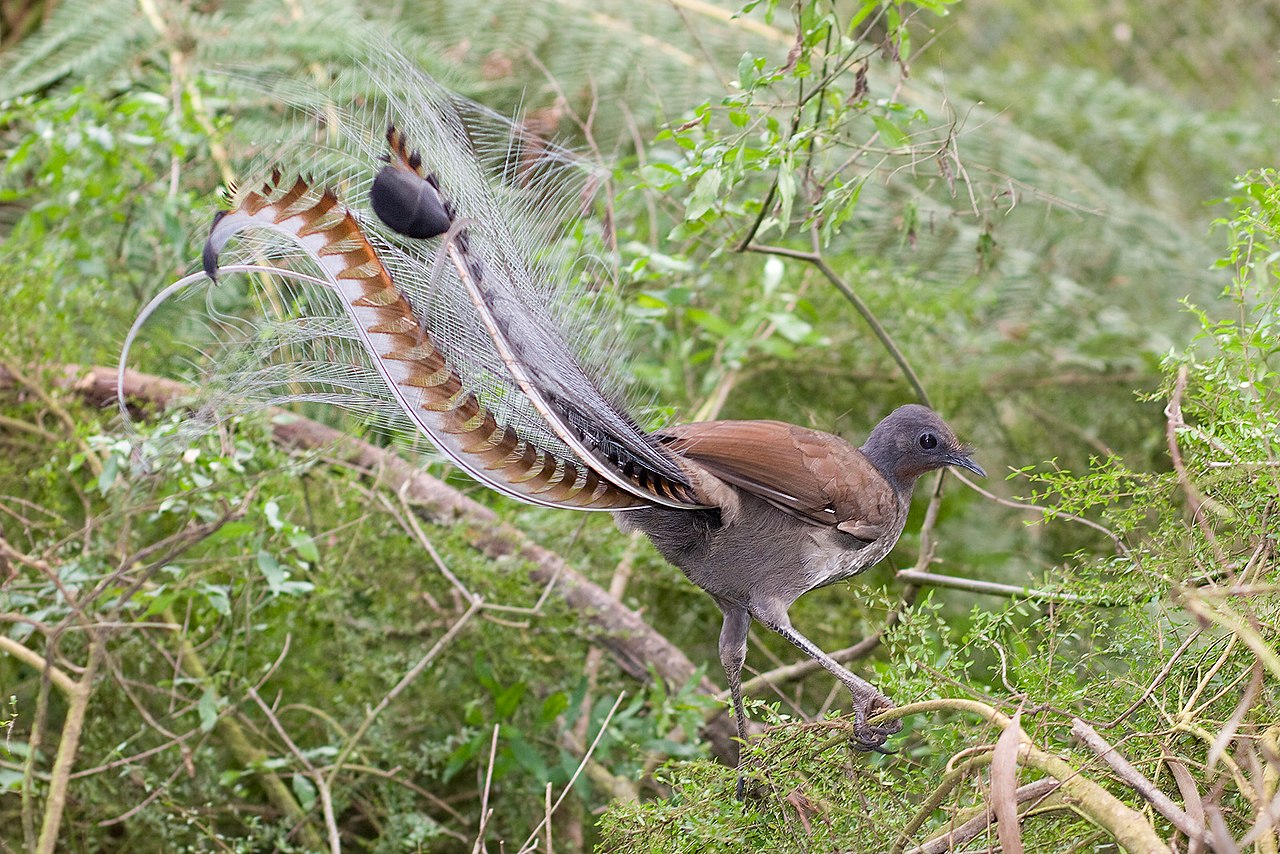
Imagine a bird that can reproduce the sound of a chainsaw, a camera click, a gunshot, and even a baby's cry with terrifying accuracy. This is not a science fiction character, but a reality: the lyrebird, an endemic Australian bird that proves that nature is stranger than anything humans can create. With its near-perfect sound-mimicking ability, the lyrebird challenges our understanding of animal limits and sparks scientific wonder.
Revolutionary Vocal Anatomy
The lyrebird has a unique vocal organ: the syrinx, an advanced version of the human larynx. The syrinx is located at the junction of the trachea and bronchi, controlled by fine muscles that allow precise control over frequency and amplitude. Unlike humans, who require lips and tongue to shape sounds, the lyrebird can produce two different notes simultaneously, creating complex harmonies. Research by Dr. Anastasia Dalziell from the University of Wollongong shows that the lyrebird's syrinx has vocal folds that can vibrate at astonishing speeds, enabling mechanical sound imitations such as high-frequency camera clicks. This is an amazing evolutionary adaptation: nature has created a 'biological synthesizer' capable of mimicking almost all sounds in the environment.
Surprising List of Sounds
The lyrebird does not only mimic natural sounds like other birds, but also human-made sounds. Among the recorded ones include:
- The exact sound of a chainsaw
- SLR camera clicks
- Gunshots
- Human baby cries
- Car and engine noises
- Music from instruments like flutes
- Car alarm sounds
- Human voices (short phrases) in some cases
This ability is not just imitation, but adjusting sounds within context. In a study in Dandenong Ranges National Park, male lyrebirds were observed combining chainsaw sound imitations with their own songs to attract females, showing a complex social understanding.
Evolution and Purpose: Why Imitate?
Scientists believe the lyrebird's imitating ability developed as a sexual strategy. Males use complex songs containing sound imitations to attract females. The more and more accurate the imitations, the higher the chances of mating. This is an example of extreme 'sexual selection': females choose males with the largest 'sound repertoire'. In addition, sound imitations may also serve as warning signals to predators or to confuse threats. Evolution has selected the most creative lyrebirds in imitation, making them forest sound maestros.
Neuroscience Behind the Miracle
The lyrebird's brain is also extraordinary. The part of the brain that controls vocalization, such as the HVC (hyperstriatum ventrale, pars caudalis) and RA (robust nucleus of the arcopallium), is significantly larger compared to brain size. This allows for extensive memory storage of sounds and fine motor coordination to accurately reproduce sounds. Research using MRI scans shows that lyrebirds have neural networks similar to other songbirds but more dense, allowing lifelong sound learning. They can learn new sounds from their environment and add them to their repertoire, making them vocal innovators.
Threats and Conservation
Although amazing, lyrebirds face serious threats. Habitat loss due to logging and human development has reduced their population. In Australia, the species Menura novaehollandiae (Superb Lyrebird) and Menura alberti (Albert's Lyrebird) are classified as Vulnerable. Conservation efforts include protecting rainforests and awareness programs. Lyrebirds also serve as symbols of Australia's biodiversity uniqueness, reminding us that nature has wonders that cannot be replicated by human technology.
Conclusion: Nature Is Stranger Than Fiction
The lyrebird proves that nature is far more creative than science fiction. In a world where humans race to create robots and AI that can mimic voices, a small bird with a brain the size of a pea has been doing it for millions of years. The ability to mimic the sounds of saws, cameras, gunshots, and baby cries is not only amazing but also teaches us about the power of evolution. The lyrebird is a vocal maestro worth admiring and protecting, as it is proof that nature never stops surprising us.
---
Reference: Lyrebird — Wikipedia
Lyrebird: The Amazing Australian Bird That Mimics Saws, Cameras, and Baby Cries. Lyrebird, a land bird from Australia, has an extraordinary ability to mimic almost all sounds from nature and human-made sources—such as chainsaws, camera clicks, gunshots, and baby cries. With the male's stunning tail, this bird proves that nature is more creative than science fiction. This article explores the miracle of evolution and neuroscience behind its vocal abilities.. Introduction: A Wonder That Defies Logic
Imagine a bird that can reproduce the sound of a chainsaw, a camera click, a gunshot, and even a baby's cry with terrifying accuracy. This is not a science fiction character, but a reality: the lyrebird, an endemic Australian bird that proves that nature is stranger than anything humans can create. With its near-perfect sound-mimicking ability, the lyrebird challenges our understanding of animal limits and sparks scientific wonder.
Revolutionary Vocal Anatomy
The lyrebird has a unique vocal organ: the syrinx, an advanced version of the human larynx. The syrinx is located at the junction of the trachea and bronchi, controlled by fine muscles that allow precise control over frequency and amplitude. Unlike humans, who require lips and tongue to shape sounds, the lyrebird can produce two different notes simultaneously, creating complex harmonies. Research by Dr. Anastasia Dalziell from the University of Wollongong shows that the lyrebird's syrinx has vocal folds that can vibrate at astonishing speeds, enabling mechanical sound imitations such as high-frequency camera clicks. This is an amazing evolutionary adaptation: nature has created a 'biological synthesizer' capable of mimicking almost all sounds in the environment.
Surprising List of Sounds
The lyrebird does not only mimic natural sounds like other birds, but also human-made sounds. Among the recorded ones include:
- The exact sound of a chainsaw
- SLR camera clicks
- Gunshots
- Human baby cries
- Car and engine noises
- Music from instruments like flutes
- Car alarm sounds
- Human voices short phrases in some cases
This ability is not just imitation, but adjusting sounds within context. In a study in Dandenong Ranges National Park, male lyrebirds were observed combining chainsaw sound imitations with their own songs to attract females, showing a complex social understanding.
Evolution and Purpose: Why Imitate?
Scientists believe the lyrebird's imitating ability developed as a sexual strategy. Males use complex songs containing sound imitations to attract females. The more and more accurate the imitations, the higher the chances of mating. This is an example of extreme 'sexual selection': females choose males with the largest 'sound repertoire'. In addition, sound imitations may also serve as warning signals to predators or to confuse threats. Evolution has selected the most creative lyrebirds in imitation, making them forest sound maestros.
Neuroscience Behind the Miracle
The lyrebird's brain is also extraordinary. The part of the brain that controls vocalization, such as the HVC hyperstriatum ventrale, pars caudalis and RA robust nucleus of the arcopallium , is significantly larger compared to brain size. This allows for extensive memory storage of sounds and fine motor coordination to accurately reproduce sounds. Research using MRI scans shows that lyrebirds have neural networks similar to other songbirds but more dense, allowing lifelong sound learning. They can learn new sounds from their environment and add them to their repertoire, making them vocal innovators.
Threats and Conservation
Although amazing, lyrebirds face serious threats. Habitat loss due to logging and human development has reduced their population. In Australia, the species Menura novaehollandiae Superb Lyrebird and Menura alberti Albert's Lyrebird are classified as Vulnerable. Conservation efforts include protecting rainforests and awareness programs. Lyrebirds also serve as symbols of Australia's biodiversity uniqueness, reminding us that nature has wonders that cannot be replicated by human technology.
Conclusion: Nature Is Stranger Than Fiction
The lyrebird proves that nature is far more creative than science fiction. In a world where humans race to create robots and AI that can mimic voices, a small bird with a brain the size of a pea has been doing it for millions of years. The ability to mimic the sounds of saws, cameras, gunshots, and baby cries is not only amazing but also teaches us about the power of evolution. The lyrebird is a vocal maestro worth admiring and protecting, as it is proof that nature never stops surprising us.
---
Reference: Lyrebird — Wikipedia https://en.wikipedia.org/wiki/Lyrebird