The Brain Is Not a Camera: Why Recognizing Faces Is Not Automatic
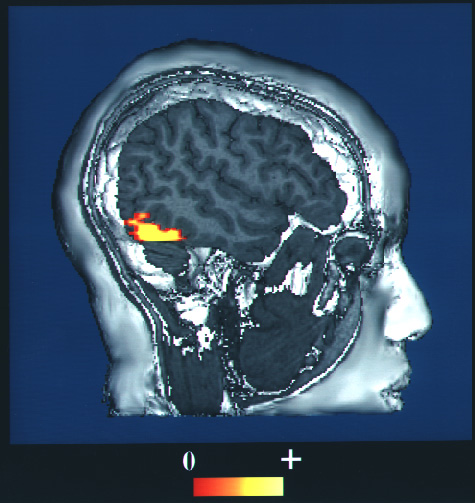
Human eyes capture light, but face recognition is not merely an optical function. It is a complex achievement by the central nervous system involving at least six different cortical areas—particularly the
fusiform face area (FFA) in the inferior temporal lobe,
occipital face area (OFA), and
superior temporal sulcus (STS). Unlike the recognition of common objects (such as a cup or a car), faces are processed holistically: the brain does not analyze eyes, nose, and mouth separately, but evaluates the spatial relationship between these features—the distance between eyes, the angle of the chin relative to the cheeks, the thickness of the lips relative to the forehead. This explains why people with prosopagnosia often still recognize emotional expressions or age, but fail to state 'that is Mr. Tan from the HR department' even after meeting them daily for two years.
Two Worlds of Prosopagnosia: Congenital vs Acquired
Although the term 'face blindness' suggests a loss of vision, prosopagnosia is not a visual disorder—it is a
perceptual disorder. There are two main forms: acquired prosopagnosia, which occurs after brain damage (such as stroke, head trauma, or encephalitis), and congenital prosopagnosia—which is present from birth without any history of neurological injury. Functional MRI studies show that congenital individuals often have normal anatomical structures in the FFA, but weak or asynchronous functional activation with other supporting areas. Genetics also plays a role: twin studies show heritability up to 70%, and mutations in the
OXTR gene (which regulates oxytocin receptors) and
PTK2B have been linked to high risk. Its prevalence is surprising—about 1 in 40 adults in Malaysia may experience it without realizing, as many consider it as 'lack of attention' or 'poor memory'.
Social Survival Strategies: What People Who Can't Recognize Faces Do
Individuals with congenital prosopagnosia often become extraordinary environmental strategists. They rely on non-facial cues: hair style, body posture, voice, clothing color, walking style, or even watch brand. A cognitive researcher at the University of Malaya—who was diagnosed at age 38—told how he identified students by monitoring their seating patterns in class and frequency of finger tapping on the desk. In a cross-cultural study in Singapore and Kuala Lumpur, 68% of prosopagnosia participants reported avoiding high-risk social situations such as large weddings or international meetings—not due to social anxiety, but because of fear of misaddressing or failing to recognize a professional mentor. This phenomenon raises deep questions: is 'recognition' itself—a biological process, or a social construct dependent on the brain's ability to coordinate multisensory information?
Behind the Mirror: The Inability to Recognize One's Own Face
One of the most unsettling aspects of prosopagnosia is
self-prosopagnosia: the inability to recognize one's own face in a photo or mirror—not caused by an identity disorder (as in schizophrenia), but by failure in feature-holistic processing. In experimental tests using scrambled face photos (with eyes above the mouth, or forehead below the chin), prosopagnosia participants did not show performance decline compared to controls—because they never processed faces holistically from the beginning. This proves that self-recognition is not an innate intuition, but the result of neuroplastic training that starts when babies first look at their mother's face. Without this stimulation—or with disruption in the processing pathway—'self' becomes an entity without a face, only narrative and bodily sensations.
Hidden Implications: From Public Safety to Interface Design
Prosopagnosia is not just a personal issue—it has structural implications. Automatic facial recognition systems (AFR) used in immigration or banking applications assume that all humans recognize faces the same way, yet 2.5% of the population do not have a stable 'face template' in long-term memory. In practice, police officers with prosopagnosia may fail to identify suspects from CCTV footage despite years of experience—not because of inefficiency, but because their brains do not develop a 'face trace' that can be compared. Digital interface design also needs to change: face-based icons (like user avatars) become exclusive. Future solutions may involve multimodal profiles—combining voice, unique gesture movements, and interaction patterns—rather than just faces as a single identity passport.
Questions Left in Front of the Mirror
If faces are not the gateway to identity, then what truly unites 'me'? Prosopagnosia is not just a deficiency—it is a mirror reflecting the limits of human uniqueness: we do not recognize others through our eyes, but through fragile, trained, and easily disrupted neuro-cognitive networks. And perhaps, in a world increasingly dependent on automatic facial recognition, this biological weakness is the most sincere reminder: that humans can never be reduced to a single image.
Rujukan: Prosopagnosia — Wikipedia
Why Your Brain Doesn't Recognize Your Own Mother's Face: The Science Behind Facial Paralysis. Prosopagnosia is a rare cognitive disorder that prevents face recognition—despite recognizing close family members or even one's own face—without affecting general vision or intelligence. It can be present from birth (congenital) with a prevalence of 2–2.5% or appear after brain injury. Its significance lies in revealing how the human brain constructs social identity through highly specific neurological processes that cannot be replaced by ordinary vision.. The Brain Is Not a Camera: Why Recognizing Faces Is Not Automatic
Human eyes capture light, but face recognition is not merely an optical function. It is a complex achievement by the central nervous system involving at least six different cortical areas—particularly the fusiform face area FFA in the inferior temporal lobe, occipital face area OFA , and superior temporal sulcus STS . Unlike the recognition of common objects such as a cup or a car , faces are processed holistically: the brain does not analyze eyes, nose, and mouth separately, but evaluates the spatial relationship between these features—the distance between eyes, the angle of the chin relative to the cheeks, the thickness of the lips relative to the forehead. This explains why people with prosopagnosia often still recognize emotional expressions or age, but fail to state 'that is Mr. Tan from the HR department' even after meeting them daily for two years.
Two Worlds of Prosopagnosia: Congenital vs Acquired
Although the term 'face blindness' suggests a loss of vision, prosopagnosia is not a visual disorder—it is a perceptual disorder. There are two main forms: acquired prosopagnosia, which occurs after brain damage such as stroke, head trauma, or encephalitis , and congenital prosopagnosia—which is present from birth without any history of neurological injury. Functional MRI studies show that congenital individuals often have normal anatomical structures in the FFA, but weak or asynchronous functional activation with other supporting areas. Genetics also plays a role: twin studies show heritability up to 70%, and mutations in the OXTR gene which regulates oxytocin receptors and PTK2B have been linked to high risk. Its prevalence is surprising—about 1 in 40 adults in Malaysia may experience it without realizing, as many consider it as 'lack of attention' or 'poor memory'.
Social Survival Strategies: What People Who Can't Recognize Faces Do
Individuals with congenital prosopagnosia often become extraordinary environmental strategists. They rely on non-facial cues: hair style, body posture, voice, clothing color, walking style, or even watch brand. A cognitive researcher at the University of Malaya—who was diagnosed at age 38—told how he identified students by monitoring their seating patterns in class and frequency of finger tapping on the desk. In a cross-cultural study in Singapore and Kuala Lumpur, 68% of prosopagnosia participants reported avoiding high-risk social situations such as large weddings or international meetings—not due to social anxiety, but because of fear of misaddressing or failing to recognize a professional mentor. This phenomenon raises deep questions: is 'recognition' itself—a biological process, or a social construct dependent on the brain's ability to coordinate multisensory information?
Behind the Mirror: The Inability to Recognize One's Own Face
One of the most unsettling aspects of prosopagnosia is self-prosopagnosia : the inability to recognize one's own face in a photo or mirror—not caused by an identity disorder as in schizophrenia , but by failure in feature-holistic processing. In experimental tests using scrambled face photos with eyes above the mouth, or forehead below the chin , prosopagnosia participants did not show performance decline compared to controls—because they never processed faces holistically from the beginning. This proves that self-recognition is not an innate intuition, but the result of neuroplastic training that starts when babies first look at their mother's face. Without this stimulation—or with disruption in the processing pathway—'self' becomes an entity without a face, only narrative and bodily sensations.
Hidden Implications: From Public Safety to Interface Design
Prosopagnosia is not just a personal issue—it has structural implications. Automatic facial recognition systems AFR used in immigration or banking applications assume that all humans recognize faces the same way, yet 2.5% of the population do not have a stable 'face template' in long-term memory. In practice, police officers with prosopagnosia may fail to identify suspects from CCTV footage despite years of experience—not because of inefficiency, but because their brains do not develop a 'face trace' that can be compared. Digital interface design also needs to change: face-based icons like user avatars become exclusive. Future solutions may involve multimodal profiles—combining voice, unique gesture movements, and interaction patterns—rather than just faces as a single identity passport.
Questions Left in Front of the Mirror
If faces are not the gateway to identity, then what truly unites 'me'? Prosopagnosia is not just a deficiency—it is a mirror reflecting the limits of human uniqueness: we do not recognize others through our eyes, but through fragile, trained, and easily disrupted neuro-cognitive networks. And perhaps, in a world increasingly dependent on automatic facial recognition, this biological weakness is the most sincere reminder: that humans can never be reduced to a single image.
Rujukan: Prosopagnosia — Wikipedia https://en.wikipedia.org/wiki/Prosopagnosia