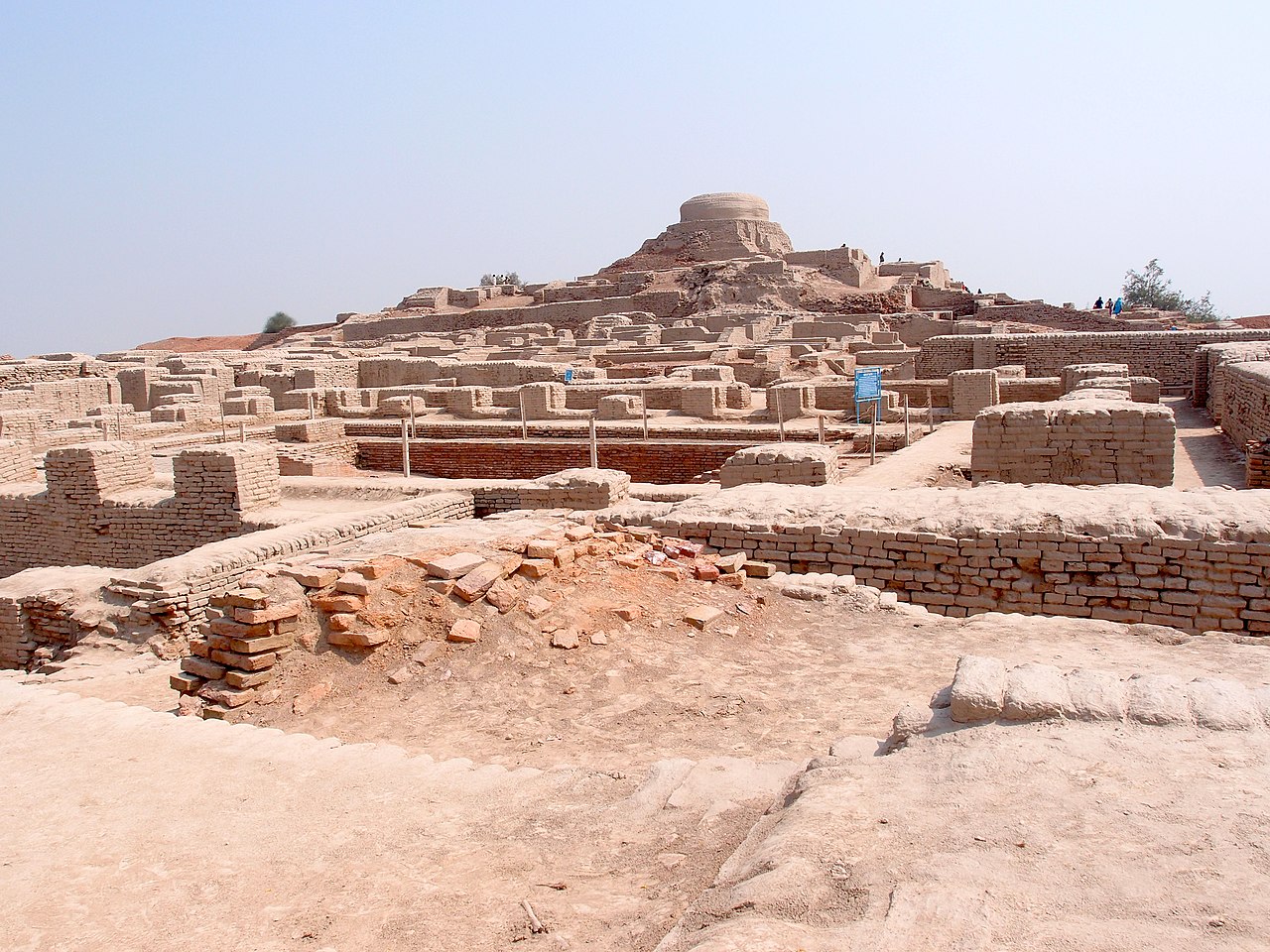
Introduction: A Surprise from the Sindh Desert
When you imagine an ancient city, what comes to mind? Perhaps the pyramids of Egypt, the walls of Babylon, or the Roman Colosseum. However, deep in the deserts of Pakistan, there is a city that had a modern sewage system thousands of years before the concept of 'pipes' existed. Mohenjo-daro, which means 'Mound of the Dead' in Sindhi, was the largest city of the Indus Valley Civilization that flourished around 2500 BCE. What truly surprised archaeologists was not its size, but its technological sophistication—especially its perfectly functioning drainage and toilet system 4,500 years ago.
Drainage System: An Underground Network More Advanced Than Ancient Rome
When excavations began in the 1920s, workers discovered something never seen before: an organized network of brick channels beneath the city's streets. Every house in Mohenjo-daro was connected to the central drainage system through clay pipes embedded in the walls. Wastewater from kitchens, bathrooms, and toilets flowed into main channels lined with bricks and covered with stones or perforated bricks for maintenance. These channels were so efficient that wastewater could be carried out of the city without contaminating residential areas.
What is even more astonishing is the use of 'manholes' or inspection points at regular intervals—similar to modern sewer systems. This allowed for regular cleaning, indicating that the people of Mohenjo-daro understood the importance of sanitation for public health. European cities only began building similar underground drainage systems in the 19th century, over 4,000 years later.
Flush Toilets: Lost Luxury
One of the most controversial discoveries is the flush toilets found in the houses of Mohenjo-daro. These toilets consisted of specially shaped bricks with wooden seats (now decayed) and vertical pipes connected to the drainage system. When water was poured from a special container, it would flush the waste directly into the underground channel. Imagine: a civilization without wheels or a complete writing system, yet they had functional flush toilets. This is far earlier than the flush toilets reportedly invented by Sir John Harington in 1596 for Queen Elizabeth I.
Even more surprising, these toilets were present in almost every house, not just in palaces. This indicates that sanitation was considered a right by the Indus society. Archaeologists have found evidence that the water for flushing may have come from public wells or rainwater collected on rooftops. This system was so efficient that there was no foul smell in the city—something difficult to achieve by medieval European cities.
Public Bath: The Mysterious Ancient Swimming Pool
In addition to private toilets, Mohenjo-daro had a structure called the 'Great Bath.' This was a large pool measuring 12 meters by 7 meters, made of waterproof bricks with a natural bitumen layer to prevent leaks. Water was filled from nearby wells and drained through pipes into the main channels. Scholars believe this bath was used for religious ceremonies or ritual purification, but its exact function remains a mystery.
What is interesting is how they managed the water. The city had more than 700 wells, making it one of the most densely populated ancient water supply systems in the world. Every house had access to clean water through its own well or a public well. Wastewater from the bath and toilets was carefully drained, showing a deep understanding of hydrology.
Lost Technology: Why Did This Civilization Collapse?
The big question that remains unanswered is: how did this society, which was highly advanced in terms of sanitation and engineering, disappear so suddenly around 1700 BCE? Early theories suggested Aryan invasions, but there is no evidence of major battles. Now, scientists believe climate change may have been the cause. The Ghaggar-Hakra River, the main source of water, started to dry up due to monsoon shifts, causing agricultural failure and gradual migration.
There are also theories that a major earthquake changed the course of the Indus River, destroying the gravity-dependent drainage system. Without flowing water, the flush toilets and sewers became clogged, leading to disease outbreaks. Ironyically, their own technological advancements may have accelerated their downfall when the highly water-dependent system failed.
Legacy of Mohenjo-daro: Lessons for the Modern World
Mohenjo-daro is a reminder that progress is not linear. This civilization achieved a level of sanitation that many cities around the world could not match until the industrial era. The underground drainage system, flush toilets, and efficient water management were achievements that required mature urban planning and a deep understanding of science.
Today, we face serious global sanitation challenges. According to WHO, 2 billion people still lack access to basic toilets. Mohenjo-daro shows that simple solutions, such as clay pipes and brick channels, can be very effective if implemented on a community scale. Perhaps we need to learn from the past to build a cleaner future.
Conclusion: Unanswered Mysteries
Mohenjo-daro continues to hold secrets. New excavations using ground-penetrating radar have revealed unexplored underground structures. Each new discovery challenges our assumptions about ancient life. Did they have lost mathematical knowledge? Did they create a writing system we have yet to understand? One thing is certain: these 4,500-year-old flush toilets are proof that 'primitive' is the wrong label for this highly advanced civilization.
When you sit on your modern toilet today, take a moment to reflect: we may only be rediscovering a wheel that was created thousands of years ago by a lost society in the deserts of Pakistan. Mohenjo-daro is not just a dead city—it is a mirror reflecting human potential, which we sometimes forget.
---
Reference: Mohenjo-daro — Wikipedia
Mohenjo-daro: The Ancient City with 4,500-Year-Old Flush Toilets. More than 4,500 years before modern plumbing systems, the city of Mohenjo-daro in the Indus Valley had flush toilets and an advanced underground drainage network. This discovery challenges our understanding of ancient civilizations and reveals lost engineering. This article explores the remarkable archaeological evidence about this hidden technology.. Introduction: A Surprise from the Sindh Desert
When you imagine an ancient city, what comes to mind? Perhaps the pyramids of Egypt, the walls of Babylon, or the Roman Colosseum. However, deep in the deserts of Pakistan, there is a city that had a modern sewage system thousands of years before the concept of 'pipes' existed. Mohenjo-daro, which means 'Mound of the Dead' in Sindhi, was the largest city of the Indus Valley Civilization that flourished around 2500 BCE. What truly surprised archaeologists was not its size, but its technological sophistication—especially its perfectly functioning drainage and toilet system 4,500 years ago.
Drainage System: An Underground Network More Advanced Than Ancient Rome
When excavations began in the 1920s, workers discovered something never seen before: an organized network of brick channels beneath the city's streets. Every house in Mohenjo-daro was connected to the central drainage system through clay pipes embedded in the walls. Wastewater from kitchens, bathrooms, and toilets flowed into main channels lined with bricks and covered with stones or perforated bricks for maintenance. These channels were so efficient that wastewater could be carried out of the city without contaminating residential areas.
What is even more astonishing is the use of 'manholes' or inspection points at regular intervals—similar to modern sewer systems. This allowed for regular cleaning, indicating that the people of Mohenjo-daro understood the importance of sanitation for public health. European cities only began building similar underground drainage systems in the 19th century, over 4,000 years later.
Flush Toilets: Lost Luxury
One of the most controversial discoveries is the flush toilets found in the houses of Mohenjo-daro. These toilets consisted of specially shaped bricks with wooden seats now decayed and vertical pipes connected to the drainage system. When water was poured from a special container, it would flush the waste directly into the underground channel. Imagine: a civilization without wheels or a complete writing system, yet they had functional flush toilets. This is far earlier than the flush toilets reportedly invented by Sir John Harington in 1596 for Queen Elizabeth I.
Even more surprising, these toilets were present in almost every house, not just in palaces. This indicates that sanitation was considered a right by the Indus society. Archaeologists have found evidence that the water for flushing may have come from public wells or rainwater collected on rooftops. This system was so efficient that there was no foul smell in the city—something difficult to achieve by medieval European cities.
Public Bath: The Mysterious Ancient Swimming Pool
In addition to private toilets, Mohenjo-daro had a structure called the 'Great Bath.' This was a large pool measuring 12 meters by 7 meters, made of waterproof bricks with a natural bitumen layer to prevent leaks. Water was filled from nearby wells and drained through pipes into the main channels. Scholars believe this bath was used for religious ceremonies or ritual purification, but its exact function remains a mystery.
What is interesting is how they managed the water. The city had more than 700 wells, making it one of the most densely populated ancient water supply systems in the world. Every house had access to clean water through its own well or a public well. Wastewater from the bath and toilets was carefully drained, showing a deep understanding of hydrology.
Lost Technology: Why Did This Civilization Collapse?
The big question that remains unanswered is: how did this society, which was highly advanced in terms of sanitation and engineering, disappear so suddenly around 1700 BCE? Early theories suggested Aryan invasions, but there is no evidence of major battles. Now, scientists believe climate change may have been the cause. The Ghaggar-Hakra River, the main source of water, started to dry up due to monsoon shifts, causing agricultural failure and gradual migration.
There are also theories that a major earthquake changed the course of the Indus River, destroying the gravity-dependent drainage system. Without flowing water, the flush toilets and sewers became clogged, leading to disease outbreaks. Ironyically, their own technological advancements may have accelerated their downfall when the highly water-dependent system failed.
Legacy of Mohenjo-daro: Lessons for the Modern World
Mohenjo-daro is a reminder that progress is not linear. This civilization achieved a level of sanitation that many cities around the world could not match until the industrial era. The underground drainage system, flush toilets, and efficient water management were achievements that required mature urban planning and a deep understanding of science.
Today, we face serious global sanitation challenges. According to WHO, 2 billion people still lack access to basic toilets. Mohenjo-daro shows that simple solutions, such as clay pipes and brick channels, can be very effective if implemented on a community scale. Perhaps we need to learn from the past to build a cleaner future.
Conclusion: Unanswered Mysteries
Mohenjo-daro continues to hold secrets. New excavations using ground-penetrating radar have revealed unexplored underground structures. Each new discovery challenges our assumptions about ancient life. Did they have lost mathematical knowledge? Did they create a writing system we have yet to understand? One thing is certain: these 4,500-year-old flush toilets are proof that 'primitive' is the wrong label for this highly advanced civilization.
When you sit on your modern toilet today, take a moment to reflect: we may only be rediscovering a wheel that was created thousands of years ago by a lost society in the deserts of Pakistan. Mohenjo-daro is not just a dead city—it is a mirror reflecting human potential, which we sometimes forget.
---
Reference: Mohenjo-daro — Wikipedia https://en.wikipedia.org/wiki/Mohenjo-daro