Do You Think You Think Freely? Think Again
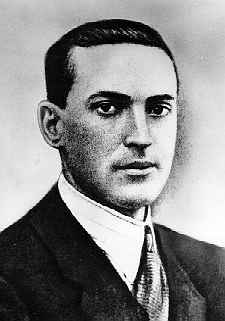
Have you ever considered that every thought, every emotion, and every decision you make might not be entirely yours? It sounds like a scene from a science fiction movie, but this is what Lev Vygotsky and Alexander Luria tried to uncover in their revolutionary project: cultural-historical psychology. They were not just looking for new theories; they wanted to reveal how cultural and historical power subtly—or not so subtly—controls the human mind. This is the real 'black psychology': a form of collective manipulation that happens every day without you realizing it.
The Myth of the Individual Mind: You Are a Product of Your Environment
Most of us are taught that psychology is about the individual—personality, genetics, and free will. Vygotsky and Luria rejected this. They argued that the mind is not an isolated entity. Instead, it is the result of continuous interaction with cultural tools—especially language, symbols, and technology. In their view, 'consciousness' is not something that emerges in a vacuum. It is inherently 'social.' This means that the way you think about concepts such as justice, love, or truth has actually been programmed by your culture. If you were born into a society that values collectivism, for example, your brain will be 'programmed' differently than someone raised in an individualistic culture.
Language: The Most Subtle Weapon of Manipulation
Look at language—the main tool in Vygotsky's theory. Language is not just a medium of communication; it is a tool for controlling thought. Vygotsky emphasized the 'zone of proximal development' (ZPD), which is the gap between what a person can do independently and what they can achieve with the help of another. In the context of 'black psychology,' this can be exploited: authorities, such as governments or media, can use language to define what is 'normal' and what can be thought. Those who control language control the mind. Phrases like 'freedom' or 'security' can be manipulated to legitimize oppression, and we unconsciously accept them as true because they are framed within our cultural context.
Human History: A Trap That Hinders Progress?
Another surprising aspect of cultural-historical psychology is the emphasis on the history of the human species. Vygotsky and Luria believed that human psychological development is not linear. They studied how changes in material tools (such as the use of abacuses or writing) changed the mental structure of humans. Imagine this: societies that do not use writing have radically different ways of thinking. They rely more on contextual memory and concrete thinking. However, when writing is introduced, it allows abstract thinking—and with it, more sophisticated manipulation. In today's digital age, social media algorithms are new 'cultural tools' that continue to reshape our ability to focus, remember, and evaluate. Subtly, they control our attention, making us more susceptible to ads and propaganda.
Superman Science: Utopia or Dystopia?
Vygotsky and Luria envisioned creating a 'superman science'—that is, a theory that could shape new humans through social and cultural change. This sounds noble, but it also carries a dark meaning. If the mind is a product of culture, then anyone who controls culture can control the mind. In the context of the Soviet Union at that time, this was used to justify aggressive education and indoctrination programs. Imagine if this theory were used by a totalitarian regime: they would not only control your actions but also reshape the way you think about freedom and identity. This is the most dangerous form of 'black psychology': the ability to make oppression seem natural and inevitable.
How to Protect Your Mind?
So, how can we protect ourselves from this subtle manipulation? First, awareness is key. Acknowledging that our thoughts are not entirely free is the first step. Second, we need to be active cultural critics: constantly questioning dominant narratives, the language used, and the cultural tools we use. Third, we should expose ourselves to various cultural perspectives. The more diverse input we receive, the harder it is for one cultural system to control us completely. Remember, cultural-historical psychology is not only about understanding how we are shaped, but also about how we can free ourselves.
Conclusion: You Are a Battlefield of Culture
In conclusion, don't think of your mind as a strong fortress. It is more like a battlefield where cultural and historical powers fight every moment. Vygotsky and Luria have given us the tools to see this battle, but the choice to resist or submit lies with you. By understanding cultural-historical psychology, you not only become more aware of yourself, but also more difficult to manipulate. This is the most powerful weapon in this era of information manipulation.
Reference: Cultural-historical psychology — Wikipedia
Your Mind Is Controlled by Culture: Vygotsky's 'Black Psychology'. Vygotsky was not an ordinary psychologist. His theory reveals that your mind is actually shaped by culture and language. This article explores how 'black psychology' of culture manipulates the way you think, feel, and act, as well as how social power can suppress or liberate consciousness.. Do You Think You Think Freely? Think Again
Have you ever considered that every thought, every emotion, and every decision you make might not be entirely yours? It sounds like a scene from a science fiction movie, but this is what Lev Vygotsky and Alexander Luria tried to uncover in their revolutionary project: cultural-historical psychology. They were not just looking for new theories; they wanted to reveal how cultural and historical power subtly—or not so subtly—controls the human mind. This is the real 'black psychology': a form of collective manipulation that happens every day without you realizing it.
The Myth of the Individual Mind: You Are a Product of Your Environment
Most of us are taught that psychology is about the individual—personality, genetics, and free will. Vygotsky and Luria rejected this. They argued that the mind is not an isolated entity. Instead, it is the result of continuous interaction with cultural tools—especially language, symbols, and technology. In their view, 'consciousness' is not something that emerges in a vacuum. It is inherently 'social.' This means that the way you think about concepts such as justice, love, or truth has actually been programmed by your culture. If you were born into a society that values collectivism, for example, your brain will be 'programmed' differently than someone raised in an individualistic culture.
Language: The Most Subtle Weapon of Manipulation
Look at language—the main tool in Vygotsky's theory. Language is not just a medium of communication; it is a tool for controlling thought. Vygotsky emphasized the 'zone of proximal development' ZPD , which is the gap between what a person can do independently and what they can achieve with the help of another. In the context of 'black psychology,' this can be exploited: authorities, such as governments or media, can use language to define what is 'normal' and what can be thought. Those who control language control the mind. Phrases like 'freedom' or 'security' can be manipulated to legitimize oppression, and we unconsciously accept them as true because they are framed within our cultural context.
Human History: A Trap That Hinders Progress?
Another surprising aspect of cultural-historical psychology is the emphasis on the history of the human species. Vygotsky and Luria believed that human psychological development is not linear. They studied how changes in material tools such as the use of abacuses or writing changed the mental structure of humans. Imagine this: societies that do not use writing have radically different ways of thinking. They rely more on contextual memory and concrete thinking. However, when writing is introduced, it allows abstract thinking—and with it, more sophisticated manipulation. In today's digital age, social media algorithms are new 'cultural tools' that continue to reshape our ability to focus, remember, and evaluate. Subtly, they control our attention, making us more susceptible to ads and propaganda.
Superman Science: Utopia or Dystopia?
Vygotsky and Luria envisioned creating a 'superman science'—that is, a theory that could shape new humans through social and cultural change. This sounds noble, but it also carries a dark meaning. If the mind is a product of culture, then anyone who controls culture can control the mind. In the context of the Soviet Union at that time, this was used to justify aggressive education and indoctrination programs. Imagine if this theory were used by a totalitarian regime: they would not only control your actions but also reshape the way you think about freedom and identity. This is the most dangerous form of 'black psychology': the ability to make oppression seem natural and inevitable.
How to Protect Your Mind?
So, how can we protect ourselves from this subtle manipulation? First, awareness is key. Acknowledging that our thoughts are not entirely free is the first step. Second, we need to be active cultural critics: constantly questioning dominant narratives, the language used, and the cultural tools we use. Third, we should expose ourselves to various cultural perspectives. The more diverse input we receive, the harder it is for one cultural system to control us completely. Remember, cultural-historical psychology is not only about understanding how we are shaped, but also about how we can free ourselves.
Conclusion: You Are a Battlefield of Culture
In conclusion, don't think of your mind as a strong fortress. It is more like a battlefield where cultural and historical powers fight every moment. Vygotsky and Luria have given us the tools to see this battle, but the choice to resist or submit lies with you. By understanding cultural-historical psychology, you not only become more aware of yourself, but also more difficult to manipulate. This is the most powerful weapon in this era of information manipulation.
Reference: Cultural-historical psychology — Wikipedia https://en.wikipedia.org/wiki/Cultural-historical psychology