Introduction: The Natural Wonder of Pamukkale
Pamukkale, which means
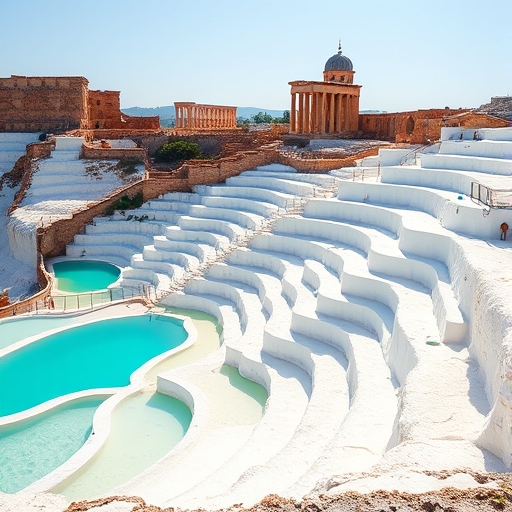
‘white cotton’ in Turkish, is located in the Denizli region of southwestern Turkey. It is a geological phenomenon rarely found: white travertine terraces flowing down from the hill, creating a landscape resembling a giant cotton castle. The hot water flowing through the limestone layers is rich in minerals, particularly calcium carbonate, which deposits into layers of white crystals that shine under the sun.
The White Travertine Terraces: A Natural Beauty Formed Naturally
The formation of travertine begins when hot water from a geothermal source seeps into limestone cracks. The water contains a mineral solution that, when in contact with the air, cools down and causes calcium carbonate to crystallize. Over time, these crystals thicken into thick layers, producing white terraces resembling a pile of cotton. Every year, new layers continue to form, making Pamukkale a dynamic landscape that is constantly changing.
Hierapolis: The Ancient Roman Spa City Above Pamukkale
Above this natural beauty stands
Hierapolis, a Roman spa city founded in the 2nd century BC by King Pergamon, Eumenes II. The name
Hierapolis comes from Greek, meaning “holy city”. The Romans of that time considered the hot mineral water at Pamukkale a source of healing, making it the main health destination of the Roman Empire. Important buildings such as the
Roman Theater,
Cleopatra's Tomb, and the
Archaeological Museum can still be seen, showcasing the ingenuity of Roman architecture and the blending of local elements with Roman culture.
Historical Significance and UNESCO World Heritage Site
In 1988, UNESCO recognized Pamukkale-Hierapolis as a World Heritage Site. This recognition is not only due to its unique geology but also its historical value spanning over two millennia. This site reflects the interaction between humans and the natural environment: how ancient societies utilized mineral resources for health purposes and how they adapted their architecture to the natural landscape. Archaeological studies in Hierapolis have uncovered artifacts such as mosaics, statues, and manuscripts that provide insight into daily life, beliefs, and medical practices during the Roman era.
Visitor Experience and Conservation Challenges
Today, Pamukkale attracts millions of visitors every year. Visitors can walk on the travertine terraces, enjoy the hot mineral water pools, and explore the ruins of Hierapolis. However, this popularity poses a challenge to conservation. Human footsteps on the fragile mineral surface can damage the delicate layers. Therefore, the management has introduced wooden boardwalks and control platforms to protect the original structure. Additionally, a restoration project in the 1990s involving the relocation of travertine layers to nearby areas helped to recover the damaged parts.
Pamukkale is not just a tourist destination; it is a living witness to the wonders of nature and cultural heritage that are intertwined. Visiting this place offers the opportunity to delve into Roman history, feel the warmth of the mineral water, and marvel at the unparalleled natural beauty.
Pamukkale: The White Cotton Castle that Preserves Roman History in Turkish Land. Pamukkale, known as the 'Cotton Castle', stands out with its stunning travertine terraces and hot mineral water pools. Above this natural beauty stands the ancient Roman spa city of Hierapolis, making this site a remarkable historical heritage.. Introduction: The Natural Wonder of Pamukkale
Pamukkale, which means ‘white cotton’ in Turkish, is located in the Denizli region of southwestern Turkey. It is a geological phenomenon rarely found: white travertine terraces flowing down from the hill, creating a landscape resembling a giant cotton castle. The hot water flowing through the limestone layers is rich in minerals, particularly calcium carbonate, which deposits into layers of white crystals that shine under the sun.
The White Travertine Terraces: A Natural Beauty Formed Naturally
The formation of travertine begins when hot water from a geothermal source seeps into limestone cracks. The water contains a mineral solution that, when in contact with the air, cools down and causes calcium carbonate to crystallize. Over time, these crystals thicken into thick layers, producing white terraces resembling a pile of cotton. Every year, new layers continue to form, making Pamukkale a dynamic landscape that is constantly changing.
Hierapolis: The Ancient Roman Spa City Above Pamukkale
Above this natural beauty stands Hierapolis , a Roman spa city founded in the 2nd century BC by King Pergamon, Eumenes II. The name Hierapolis comes from Greek, meaning “holy city”. The Romans of that time considered the hot mineral water at Pamukkale a source of healing, making it the main health destination of the Roman Empire. Important buildings such as the Roman Theater , Cleopatra's Tomb , and the Archaeological Museum can still be seen, showcasing the ingenuity of Roman architecture and the blending of local elements with Roman culture.
Historical Significance and UNESCO World Heritage Site
In 1988, UNESCO recognized Pamukkale-Hierapolis as a World Heritage Site. This recognition is not only due to its unique geology but also its historical value spanning over two millennia. This site reflects the interaction between humans and the natural environment: how ancient societies utilized mineral resources for health purposes and how they adapted their architecture to the natural landscape. Archaeological studies in Hierapolis have uncovered artifacts such as mosaics, statues, and manuscripts that provide insight into daily life, beliefs, and medical practices during the Roman era.
Visitor Experience and Conservation Challenges
Today, Pamukkale attracts millions of visitors every year. Visitors can walk on the travertine terraces, enjoy the hot mineral water pools, and explore the ruins of Hierapolis. However, this popularity poses a challenge to conservation. Human footsteps on the fragile mineral surface can damage the delicate layers. Therefore, the management has introduced wooden boardwalks and control platforms to protect the original structure. Additionally, a restoration project in the 1990s involving the relocation of travertine layers to nearby areas helped to recover the damaged parts.
Pamukkale is not just a tourist destination; it is a living witness to the wonders of nature and cultural heritage that are intertwined. Visiting this place offers the opportunity to delve into Roman history, feel the warmth of the mineral water, and marvel at the unparalleled natural beauty.