Pamukkale, meaning 'cotton palace' in Turkish, is one of the most amazing geological formations in the world. Located in the Denizli region, in southwestern Turkey, this white landscape is not just a regular tourist destination; it is a physical manifestation of tectonic movement, complex hydrogeological processes, and thousands of years of human civilization. The uniqueness of this site has made it a meeting point between earth science, archaeology, and modern conservation efforts.
The geological foundation of Pamukkale lies in its highly active hydrothermal system. This area is part of a complex tectonic zone, where the movement of the Earth's crust allows groundwater to be heated by magma beneath the surface. These hot waters, which can reach temperatures between 35 to 100 degrees Celsius, rise to the surface through a network of fractures and faults. As they travel upwards, the water dissolves various minerals, especially calcium bicarbonate, from the surrounding rocks.
When this mineral-rich water emerges on the surface and is exposed to air, a critical chemical process occurs. A decrease in pressure and exposure to atmospheric temperature causes carbon dioxide gas to be released from the water. This degassing process reduces the solubility of calcium carbonate, forcing it to precipitate or crystallize out of the water solution. These deposits form the white limestone structures known as travertine.
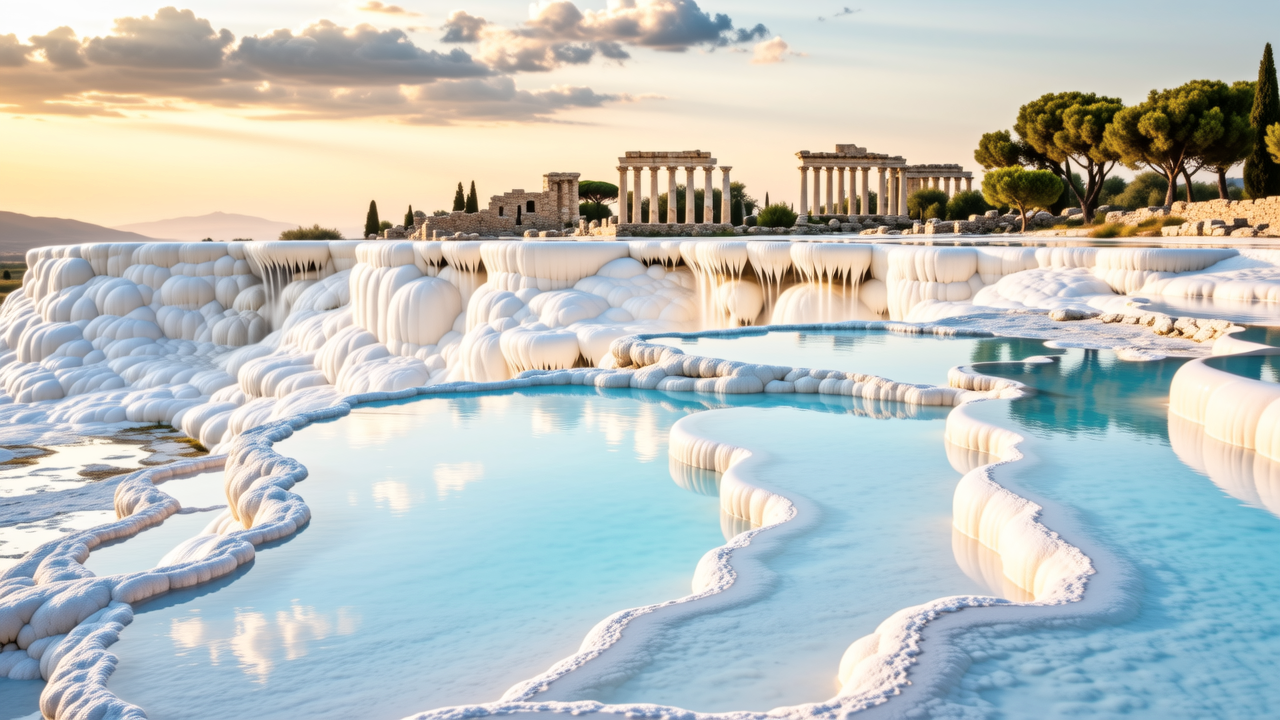
For thousands of years, this continuous deposition process has built the iconic landscape of Pamukkale. Slowly flowing water down steep slopes builds layer upon layer of travertine, eventually forming terraced pools that interconnect. These terraces stretch for 2.7 kilometers and reach heights of up to 160 meters. The snow-like whiteness of the travertine contrasts dramatically with the blue-green hues of the thermal water contained in the pools, creating a breathtaking panorama.
However, the importance of Pamukkale goes beyond its geological wonders. Just above the travertine terraces lie the ruins of the ancient city of Hierapolis. Founded in the 2nd century BCE, it is believed to have been established by the kings of Pergamon. Hierapolis was developed as a center for thermal treatment and spa. The ancients recognized the therapeutic properties of the water here and used it to treat various ailments, from skin problems to rheumatic diseases.
Hierapolis reached its peak during the Roman and Byzantine eras. The city became an important cultural, commercial, and religious center. The archaeological remains that still exist today, including a well-preserved large theater, columned streets, and extensive Roman bath complexes, are silent witnesses to its former glory. In addition, the Necropolis (ancient cemetery) in Hierapolis is one of the largest in Asia Minor, indicating the city's significance as a healing destination and, for some, a final resting place.
In ancient times, this site also had deep spiritual significance. There is a cave in Hierapolis called the Plutonium, which releases toxic gases (high concentrations of carbon dioxide) from underground. Ancient priests used this phenomenon in their religious rituals, demonstrating 'divine power' by entering the cave unharmed while the sacrificial animals brought along would die due to suffocation. This reinforced the myth of the area as an entrance to the underworld.
By the mid-20th century, Pamukkale faced a serious environmental crisis. The construction of modern hotels directly above the ruins of Hierapolis and the building of roads across the travertine terraces began to destroy the authenticity of the site. Thermal water was diverted to fill hotel swimming pools, causing the travertine terraces to dry out and lose their original white color. In addition, mechanical damage caused by visitors walking on the terraces with shoes accelerated the deterioration of this fragile geological structure.
Recognizing this critical threat, drastic measures were taken to save Pamukkale. In 1988, the site, along with Hierapolis, was recognized as a UNESCO World Heritage Site. This recognition became a catalyst for comprehensive conservation efforts. Hotels built in sensitive areas were demolished, and man-made roads were replaced with artificial pools that mimic natural structures.
Today, water management and visitor access control are strictly enforced. Visitors are no longer allowed to walk on the original travertine terraces; instead, they are only permitted to access certain areas barefoot to prevent erosion and pollution. Thermal water is alternately directed to different parts of the terraces to maintain moisture and the whiteness of the travertine, while other parts are allowed to dry and harden, mimicking the natural cycle of its formation. These ongoing efforts demonstrate a commitment to preserving Pamukkale as a unique natural and historical treasure for future generations.
Pamukkale: Geological Wonder and Ancient Heritage in the Heart of Turkey. An in-depth analysis of the geological formation, history, and conservation importance of Pamukkale, a unique travertine landscape recognized by UNESCO.. Pamukkale, meaning 'cotton palace' in Turkish, is one of the most amazing geological formations in the world. Located in the Denizli region, in southwestern Turkey, this white landscape is not just a regular tourist destination; it is a physical manifestation of tectonic movement, complex hydrogeological processes, and thousands of years of human civilization. The uniqueness of this site has made it a meeting point between earth science, archaeology, and modern conservation efforts.
The geological foundation of Pamukkale lies in its highly active hydrothermal system. This area is part of a complex tectonic zone, where the movement of the Earth's crust allows groundwater to be heated by magma beneath the surface. These hot waters, which can reach temperatures between 35 to 100 degrees Celsius, rise to the surface through a network of fractures and faults. As they travel upwards, the water dissolves various minerals, especially calcium bicarbonate, from the surrounding rocks.
When this mineral-rich water emerges on the surface and is exposed to air, a critical chemical process occurs. A decrease in pressure and exposure to atmospheric temperature causes carbon dioxide gas to be released from the water. This degassing process reduces the solubility of calcium carbonate, forcing it to precipitate or crystallize out of the water solution. These deposits form the white limestone structures known as travertine.
For thousands of years, this continuous deposition process has built the iconic landscape of Pamukkale. Slowly flowing water down steep slopes builds layer upon layer of travertine, eventually forming terraced pools that interconnect. These terraces stretch for 2.7 kilometers and reach heights of up to 160 meters. The snow-like whiteness of the travertine contrasts dramatically with the blue-green hues of the thermal water contained in the pools, creating a breathtaking panorama.
However, the importance of Pamukkale goes beyond its geological wonders. Just above the travertine terraces lie the ruins of the ancient city of Hierapolis. Founded in the 2nd century BCE, it is believed to have been established by the kings of Pergamon. Hierapolis was developed as a center for thermal treatment and spa. The ancients recognized the therapeutic properties of the water here and used it to treat various ailments, from skin problems to rheumatic diseases.
Hierapolis reached its peak during the Roman and Byzantine eras. The city became an important cultural, commercial, and religious center. The archaeological remains that still exist today, including a well-preserved large theater, columned streets, and extensive Roman bath complexes, are silent witnesses to its former glory. In addition, the Necropolis ancient cemetery in Hierapolis is one of the largest in Asia Minor, indicating the city's significance as a healing destination and, for some, a final resting place.
In ancient times, this site also had deep spiritual significance. There is a cave in Hierapolis called the Plutonium, which releases toxic gases high concentrations of carbon dioxide from underground. Ancient priests used this phenomenon in their religious rituals, demonstrating 'divine power' by entering the cave unharmed while the sacrificial animals brought along would die due to suffocation. This reinforced the myth of the area as an entrance to the underworld.
By the mid-20th century, Pamukkale faced a serious environmental crisis. The construction of modern hotels directly above the ruins of Hierapolis and the building of roads across the travertine terraces began to destroy the authenticity of the site. Thermal water was diverted to fill hotel swimming pools, causing the travertine terraces to dry out and lose their original white color. In addition, mechanical damage caused by visitors walking on the terraces with shoes accelerated the deterioration of this fragile geological structure.
Recognizing this critical threat, drastic measures were taken to save Pamukkale. In 1988, the site, along with Hierapolis, was recognized as a UNESCO World Heritage Site. This recognition became a catalyst for comprehensive conservation efforts. Hotels built in sensitive areas were demolished, and man-made roads were replaced with artificial pools that mimic natural structures.
Today, water management and visitor access control are strictly enforced. Visitors are no longer allowed to walk on the original travertine terraces; instead, they are only permitted to access certain areas barefoot to prevent erosion and pollution. Thermal water is alternately directed to different parts of the terraces to maintain moisture and the whiteness of the travertine, while other parts are allowed to dry and harden, mimicking the natural cycle of its formation. These ongoing efforts demonstrate a commitment to preserving Pamukkale as a unique natural and historical treasure for future generations.