Flashback: When Earth Was Ice-Free
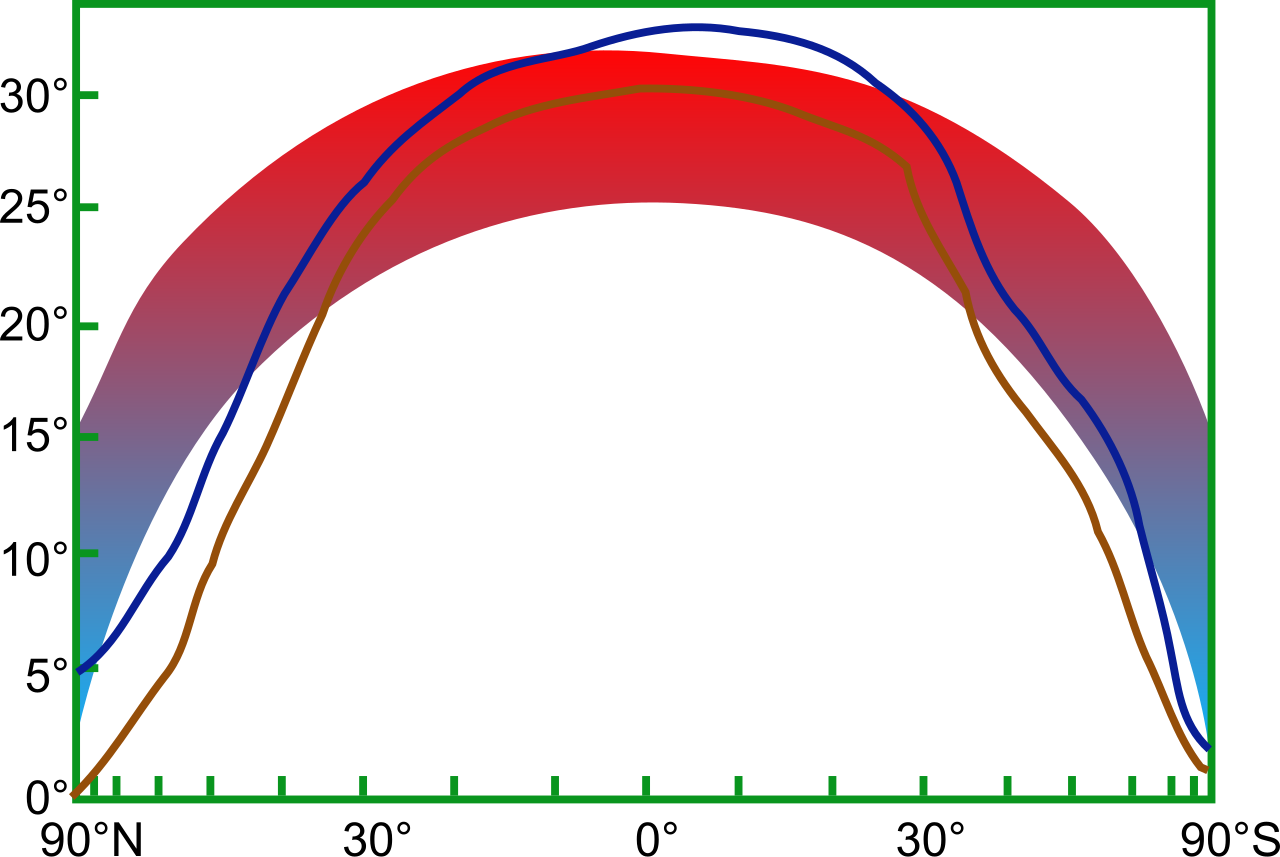
Imagine Earth without polar ice caps—a reality during the Cretaceous (145–66 million years ago) and Eocene (56–34 million years ago). At that time, dinosaurs still dominated the land, and the atmosphere was filled with carbon dioxide at levels two to five times higher than today. Global climate models consistently predicted that temperatures in the tropics should have soared drastically, far exceeding modern temperatures. However, evidence from fossil and marine sediment records showed something odd: tropical temperatures appeared much lower than model predictions. This contradiction, dubbed the
Cool Tropics Paradox, became a thorn in the side of climatologists for decades.
Conflicting Evidence: Fossils Cry Cold
In the 1980s and 1990s, scientists relied on temperature proxies such as oxygen isotope ratios (δ¹⁸O) in foraminifera shells—microscopic marine organisms. These data indicated tropical sea surface temperatures around 20–25°C during the Cretaceous and Eocene, far lower than the ~30°C predicted by models. In fact, there were records suggesting tropical temperatures of only 18°C at some locations. How could a 'feverish' Earth due to greenhouse gases have comfortable tropics? This seemed like a steam room with air conditioning only in the center. Scientists began to question whether their models were too sensitive to CO₂, or whether the proxies used had hidden flaws.
The Game Changer: New Proxies Reveal Secrets
A significant shift occurred in the early 21st century when new proxy techniques were introduced. One of the most revolutionary was TEX₈₆—based on lipids (organic compounds) from the membranes of bacteria living at the sea surface. Unlike oxygen isotopes, which are easily influenced by salinity or water pH, TEX₈₆ provides more stable temperature readings. When applied to Cretaceous and Eocene sediments, the results were surprising: tropical temperatures reached 28–35°C, consistent with model predictions. The paradox collapsed in an instant. Evidence showed that traditional oxygen isotope proxies may have been altered by diagenesis—chemical changes after deposition—causing lower temperature readings. In other words, the 'cool tropics' were merely an illusion caused by old methodological limitations.
The Low Gradient Problem: An Unresolved Issue
Although the
Cool Tropics Paradox is considered resolved, another puzzle remains: the
low-gradient problem. If the tropics heated up as predicted, why did polar temperatures also skyrocket—for example, the Arctic during the Eocene recorded temperatures of ~14°C, compared to ~5°C today? Current climate models fail to produce such a low temperature gradient between the equator and poles without using unrealistic parameters. This suggests that we do not fully understand global heat transport mechanisms, such as the role of clouds, ocean currents, or changes in ice cover. Some researchers propose that increased atmospheric humidity or changes in the carbon cycle may be key, but so far, the answer remains unclear.
Implications for the Future: Lessons from Ancient Times
This debate is not merely scientific nostalgia. Understanding how ancient Earth handled high temperatures can help predict the effects of modern global warming. If the low temperature gradient truly existed, it means that polar warming could be faster than equatorial warming—a phenomenon already being observed in the Arctic today. However, climate models used to predict climate change by 2100 still cannot accurately replicate Cretaceous conditions. This raises questions: are we overlooking some important climate feedbacks? Or are we relying too much on ancient data that may still not be precise enough?
Conclusion: One Step Forward, Two Steps Back?
The
Cool Tropics Paradox has taught us that climate science is not a straight path. Sometimes, what appears as a contradiction may only reflect the limitations of our tools. With the introduction of the TEX₈₆ proxy, we succeeded in aligning models with data—yet the
low-gradient problem remains a thorn. It reminds us that Earth is a far more complex system than computer simulations. When we look back to the Cretaceous era, we are not only seeking answers but also sharpening the questions that will guide future research. The mysteries of ancient climate are not yet exhausted; perhaps they are just waiting to be unraveled by the next generation of scientists.
---
Reference: Cool tropics paradox — Wikipedia
Cool Tropics Paradox: Ancient Climate Mystery Solved. For decades, scientists were puzzled when climate models predicted hot tropics during the Cretaceous and Eocene, but fossil evidence showed more moderate temperatures. This phenomenon, known as the 'Cool Tropics Paradox,' was finally resolved with the discovery of new temperature proxies. However, the puzzle of the low temperature gradient between the equator and poles still challenges the latest climate models.. Flashback: When Earth Was Ice-Free
Imagine Earth without polar ice caps—a reality during the Cretaceous 145–66 million years ago and Eocene 56–34 million years ago . At that time, dinosaurs still dominated the land, and the atmosphere was filled with carbon dioxide at levels two to five times higher than today. Global climate models consistently predicted that temperatures in the tropics should have soared drastically, far exceeding modern temperatures. However, evidence from fossil and marine sediment records showed something odd: tropical temperatures appeared much lower than model predictions. This contradiction, dubbed the Cool Tropics Paradox , became a thorn in the side of climatologists for decades.
Conflicting Evidence: Fossils Cry Cold
In the 1980s and 1990s, scientists relied on temperature proxies such as oxygen isotope ratios δ¹⁸O in foraminifera shells—microscopic marine organisms. These data indicated tropical sea surface temperatures around 20–25°C during the Cretaceous and Eocene, far lower than the 30°C predicted by models. In fact, there were records suggesting tropical temperatures of only 18°C at some locations. How could a 'feverish' Earth due to greenhouse gases have comfortable tropics? This seemed like a steam room with air conditioning only in the center. Scientists began to question whether their models were too sensitive to CO₂, or whether the proxies used had hidden flaws.
The Game Changer: New Proxies Reveal Secrets
A significant shift occurred in the early 21st century when new proxy techniques were introduced. One of the most revolutionary was TEX₈₆—based on lipids organic compounds from the membranes of bacteria living at the sea surface. Unlike oxygen isotopes, which are easily influenced by salinity or water pH, TEX₈₆ provides more stable temperature readings. When applied to Cretaceous and Eocene sediments, the results were surprising: tropical temperatures reached 28–35°C, consistent with model predictions. The paradox collapsed in an instant. Evidence showed that traditional oxygen isotope proxies may have been altered by diagenesis—chemical changes after deposition—causing lower temperature readings. In other words, the 'cool tropics' were merely an illusion caused by old methodological limitations.
The Low Gradient Problem: An Unresolved Issue
Although the Cool Tropics Paradox is considered resolved, another puzzle remains: the low-gradient problem . If the tropics heated up as predicted, why did polar temperatures also skyrocket—for example, the Arctic during the Eocene recorded temperatures of 14°C, compared to 5°C today? Current climate models fail to produce such a low temperature gradient between the equator and poles without using unrealistic parameters. This suggests that we do not fully understand global heat transport mechanisms, such as the role of clouds, ocean currents, or changes in ice cover. Some researchers propose that increased atmospheric humidity or changes in the carbon cycle may be key, but so far, the answer remains unclear.
Implications for the Future: Lessons from Ancient Times
This debate is not merely scientific nostalgia. Understanding how ancient Earth handled high temperatures can help predict the effects of modern global warming. If the low temperature gradient truly existed, it means that polar warming could be faster than equatorial warming—a phenomenon already being observed in the Arctic today. However, climate models used to predict climate change by 2100 still cannot accurately replicate Cretaceous conditions. This raises questions: are we overlooking some important climate feedbacks? Or are we relying too much on ancient data that may still not be precise enough?
Conclusion: One Step Forward, Two Steps Back?
The Cool Tropics Paradox has taught us that climate science is not a straight path. Sometimes, what appears as a contradiction may only reflect the limitations of our tools. With the introduction of the TEX₈₆ proxy, we succeeded in aligning models with data—yet the low-gradient problem remains a thorn. It reminds us that Earth is a far more complex system than computer simulations. When we look back to the Cretaceous era, we are not only seeking answers but also sharpening the questions that will guide future research. The mysteries of ancient climate are not yet exhausted; perhaps they are just waiting to be unraveled by the next generation of scientists.
---
Reference: Cool tropics paradox — Wikipedia https://en.wikipedia.org/wiki/Cool tropics paradox