The Deceptive Name: Why 'Podcast' Is No Longer About iPod
The term 'podcast' first appeared in 2004, coined by British journalist Ben Hammersley as a combination of 'iPod' and 'broadcast'. At that time, the concept was simple: digital audio recordings that could be downloaded to an iPod and listened to offline. However, the name has now become a historical irony — since 2015, the majority of podcast listeners no longer use Apple devices; according to a report by Edison Research (2023), only 28% of podcast users in Southeast Asia access content through Apple Podcasts, while Spotify, Google Podcasts, and local platforms like Podbean and Anchor dominate. More intriguingly, the term 'podcast' is now widely used even when the content is not directly downloaded to devices — many listeners stream via browsers or social media apps without saving files. This indicates that podcasts are no longer about 'physical transfer' but about
scheduled availability,
temporal ownership, and
user choice.
From Sound to Screen: The Rise of Video Podcasts and the Dual-Audience Dilemma
In the mid-2020s, video podcasts began to surprise the industry. Platforms like YouTube became primary distribution channels — Bloomberg reported in early 2025 that over one billion people watched video-formatted podcasts on YouTube each month. In Malaysia, chains such as
The Rakyat Post Podcast and
Cakap-Cakap have fully transitioned to video format with data graphics, host expressions, and automatic subtitle displays. However, this shift brings aesthetic and ethical dilemmas: when hosts show documents, maps, or book pages during discussions, audio-only listeners — who still represent 37% of the total global listener base (according to Podcast Insights, 2024) — lose important context. This has sparked a 'audio-first design' movement, where producers like
Bicara Budaya (Indonesia) and
Suara Melayu (Malaysia) explicitly create two versions: one pure audio with descriptive narratives, and one video with additional visual elements. Reflective question: Should true podcasts prioritize accessibility or maximum experience? Or has it already become a medium too diverse to be defined singularly?
Unbound Structure: Between Strict Scripts and Spontaneous Conversations
Unlike traditional radio programs tightly controlled by schedules and broadcast durations, podcasts offer unprecedented structural flexibility. Some series like
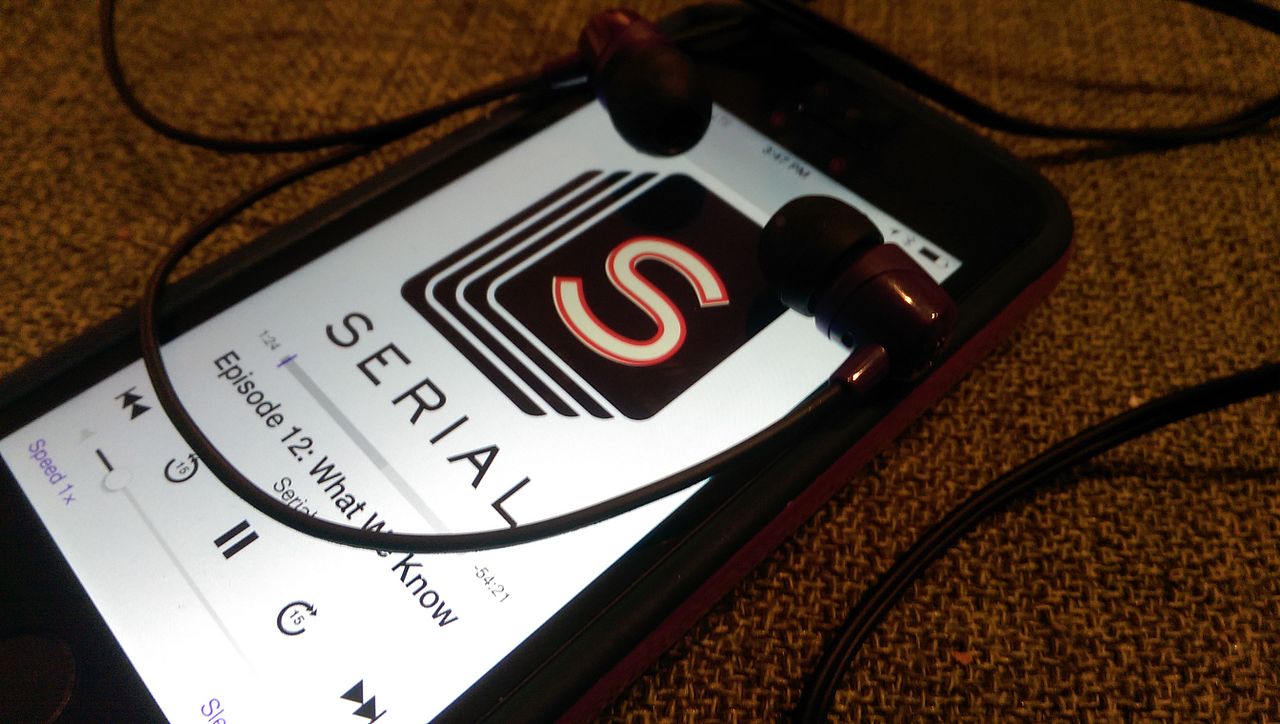
Serial (US) use layered documentary narratives with detailed scripts, specially designed background sounds, and hours of editing for each 45-minute episode. Conversely, local series such as
Kopi O & Cakap (Singapore) or
Ruang Baca (Brunei) often take the form of spontaneous conversations without scripts, where pauses, laughter, and topic shifts are part of the appeal. A study by University of Malaya (2023) showed that adults in the region value 'acoustic authenticity' — such as the sound of a coffee cup placed on a table or rain in the background — because it creates a sense of presence and intimacy. This explains why podcasts are not just 'digital radio', but a new form of
social audiographic that builds emotional connections through vocal imperfections.
Cultural Impact of Listening: When the Brain Relearns
The habit of repeatedly listening to podcasts — while driving, cooking, or exercising — has changed how the human brain processes complex information. Cognitive neuroscience shows that repeated listening enhances
auditory memory encoding, the process by which the brain stores information through the auditory channel without visual support. In Indonesia, educational programs like
Sejarah Itu Dekat have proven that high school students who listen to history episodes twice a week show a 22% improvement in chronological memory tests compared to the control group (LIPI Report, 2024). In Malaysia, the
Baca Sambil Dengar initiative by the Dewan Bahasa dan Pustaka (DBP) combines podcasts with e-books, allowing readers to synchronize text and voice — a strategy now adopted by schools in Sarawak and Sabah to improve mother tongue literacy. This shows that podcasts are not just entertainment, but a pedagogical tool rewriting the curriculum of the 21st century.
The Future of Podcasts: Will It Become 'Audio-NFT' or a Democratic Platform?
Although the global podcast market reached a value of USD14.4 billion in 2024 (Statista), the challenges remain: unstable monetization, dominance of big platforms, and lack of cross-border audio copyright standards. In ASEAN, collaborative efforts such as the
ASEAN Audio Alliance (launched in 2023) aim to build a shared repository of metadata for Malay, Indonesian, and Thai podcasts — enabling cross-searching and credit recognition between countries. On the technological side, experiments with Web3 are underway: projects like
Suara Nusantara in Jakarta offer exclusive episodes as audio tokens (audio-NFTs), where token holders can access oral history archives not available on commercial platforms. However, the most important question remains the same: will podcasts continue to be a democratic space where anyone can tell their story — or will they become an exclusive ecosystem controlled by algorithms and royalties? The answer, perhaps, lies in our own ears — and in our choice to keep listening, not just watching.
Rujukan: Podcast — Wikipedia
Podcast: The Revolution of Listening in the Digital Age That Is No Longer Just Audio. Podcasts have come a long way beyond their origins as audio broadcasts for iPods — now becoming a multimodal medium combining sound, visuals, and interactivity. This article explores the technical evolution, changes in listening culture, impact on the media industry, and social implications across the Nusantara region. Recent data shows over one billion monthly viewers on YouTube alone, indicating a fundamental transformation in how we consume episodic content.. The Deceptive Name: Why 'Podcast' Is No Longer About iPod
The term 'podcast' first appeared in 2004, coined by British journalist Ben Hammersley as a combination of 'iPod' and 'broadcast'. At that time, the concept was simple: digital audio recordings that could be downloaded to an iPod and listened to offline. However, the name has now become a historical irony — since 2015, the majority of podcast listeners no longer use Apple devices; according to a report by Edison Research 2023 , only 28% of podcast users in Southeast Asia access content through Apple Podcasts, while Spotify, Google Podcasts, and local platforms like Podbean and Anchor dominate. More intriguingly, the term 'podcast' is now widely used even when the content is not directly downloaded to devices — many listeners stream via browsers or social media apps without saving files. This indicates that podcasts are no longer about 'physical transfer' but about scheduled availability , temporal ownership , and user choice .
From Sound to Screen: The Rise of Video Podcasts and the Dual-Audience Dilemma
In the mid-2020s, video podcasts began to surprise the industry. Platforms like YouTube became primary distribution channels — Bloomberg reported in early 2025 that over one billion people watched video-formatted podcasts on YouTube each month. In Malaysia, chains such as The Rakyat Post Podcast and Cakap-Cakap have fully transitioned to video format with data graphics, host expressions, and automatic subtitle displays. However, this shift brings aesthetic and ethical dilemmas: when hosts show documents, maps, or book pages during discussions, audio-only listeners — who still represent 37% of the total global listener base according to Podcast Insights, 2024 — lose important context. This has sparked a 'audio-first design' movement, where producers like Bicara Budaya Indonesia and Suara Melayu Malaysia explicitly create two versions: one pure audio with descriptive narratives, and one video with additional visual elements. Reflective question: Should true podcasts prioritize accessibility or maximum experience? Or has it already become a medium too diverse to be defined singularly?
Unbound Structure: Between Strict Scripts and Spontaneous Conversations
Unlike traditional radio programs tightly controlled by schedules and broadcast durations, podcasts offer unprecedented structural flexibility. Some series like Serial US use layered documentary narratives with detailed scripts, specially designed background sounds, and hours of editing for each 45-minute episode. Conversely, local series such as Kopi O & Cakap Singapore or Ruang Baca Brunei often take the form of spontaneous conversations without scripts, where pauses, laughter, and topic shifts are part of the appeal. A study by University of Malaya 2023 showed that adults in the region value 'acoustic authenticity' — such as the sound of a coffee cup placed on a table or rain in the background — because it creates a sense of presence and intimacy. This explains why podcasts are not just 'digital radio', but a new form of social audiographic that builds emotional connections through vocal imperfections.
Cultural Impact of Listening: When the Brain Relearns
The habit of repeatedly listening to podcasts — while driving, cooking, or exercising — has changed how the human brain processes complex information. Cognitive neuroscience shows that repeated listening enhances auditory memory encoding , the process by which the brain stores information through the auditory channel without visual support. In Indonesia, educational programs like Sejarah Itu Dekat have proven that high school students who listen to history episodes twice a week show a 22% improvement in chronological memory tests compared to the control group LIPI Report, 2024 . In Malaysia, the Baca Sambil Dengar initiative by the Dewan Bahasa dan Pustaka DBP combines podcasts with e-books, allowing readers to synchronize text and voice — a strategy now adopted by schools in Sarawak and Sabah to improve mother tongue literacy. This shows that podcasts are not just entertainment, but a pedagogical tool rewriting the curriculum of the 21st century.
The Future of Podcasts: Will It Become 'Audio-NFT' or a Democratic Platform?
Although the global podcast market reached a value of USD14.4 billion in 2024 Statista , the challenges remain: unstable monetization, dominance of big platforms, and lack of cross-border audio copyright standards. In ASEAN, collaborative efforts such as the ASEAN Audio Alliance launched in 2023 aim to build a shared repository of metadata for Malay, Indonesian, and Thai podcasts — enabling cross-searching and credit recognition between countries. On the technological side, experiments with Web3 are underway: projects like Suara Nusantara in Jakarta offer exclusive episodes as audio tokens audio-NFTs , where token holders can access oral history archives not available on commercial platforms. However, the most important question remains the same: will podcasts continue to be a democratic space where anyone can tell their story — or will they become an exclusive ecosystem controlled by algorithms and royalties? The answer, perhaps, lies in our own ears — and in our choice to keep listening, not just watching.
Rujukan: Podcast — Wikipedia https://en.wikipedia.org/wiki/Podcast