1. Magic Ink That Changes Color with Movement
Imagine holding a banknote and seeing a number at a certain corner. When you tilt it, its color changes from green to blue or silver to gold. This is not magic, but an advanced technology known as optically variable ink (OVI). This ink contains microscopic pigments that reflect light at different wavelengths depending on the viewing angle. The result is a color that appears to change as if alive. This technique is widely used on banknotes, passports, and postage stamps. For forgers, consistently producing the same color is almost impossible because it requires precise chemical formulations and printing processes. Moreover, some OVI inks also contain magnetic or infrared properties that can only be detected by special scanning machines. These features make it not only visually appealing but also extremely difficult to imitate.
2. Holograms: 3D Images Containing Thousands of Hidden Information
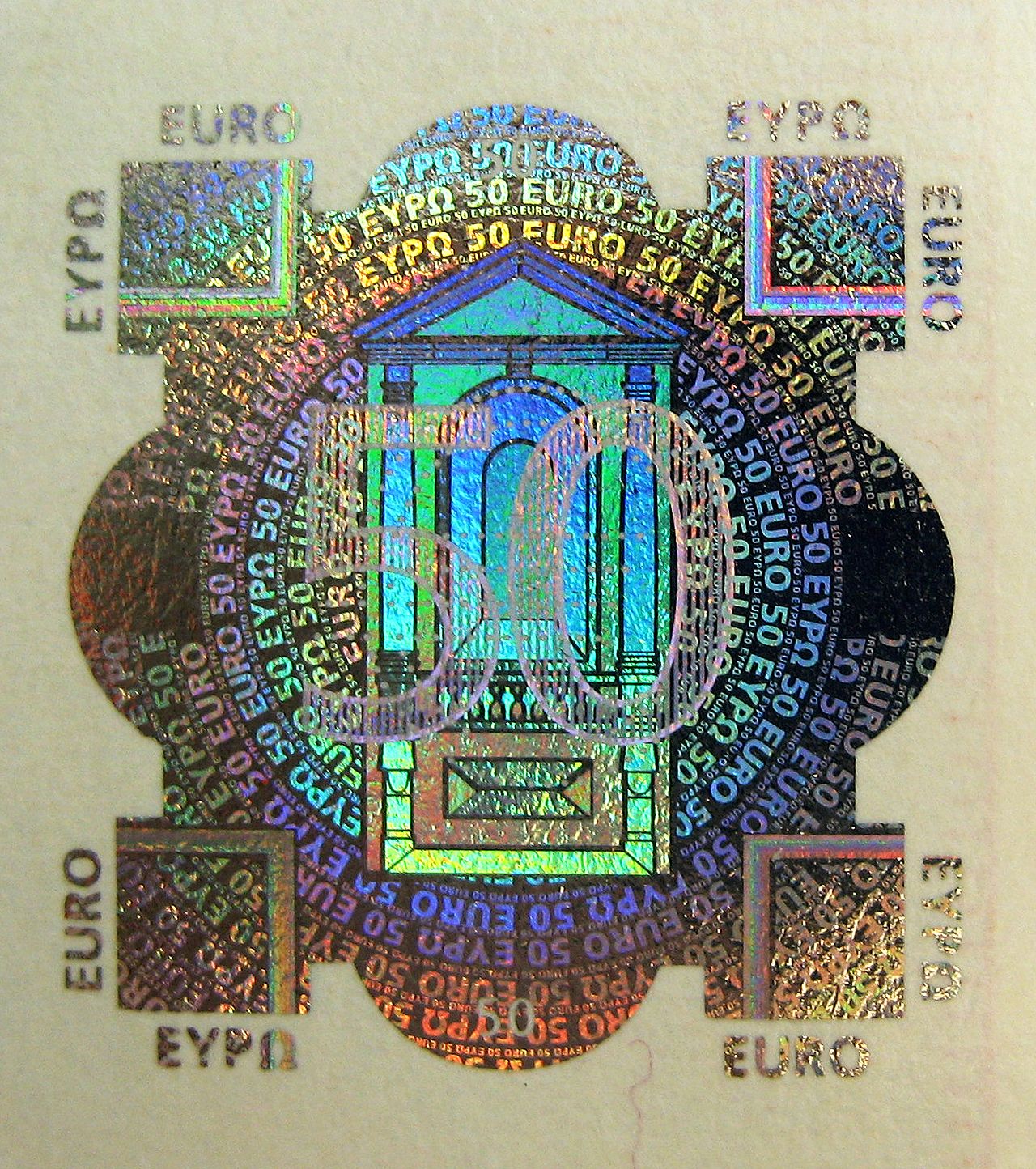
You've probably seen the shiny strips on credit cards or passports that look like 3D images. That's a hologram, another powerful weapon in the security printing industry. Holograms are created by recording the interference patterns of light from the original object using a laser. The result is an image that is not just a picture, but a three-dimensional record that changes when viewed from different angles. Even more impressive, modern holograms can hide data such as microtext or hidden images that only appear under ultraviolet light. This makes them a very difficult-to-counterfeit verification tool. Central banks around the world, from Bank Negara Malaysia to the Bank of England, use holograms as a primary security feature on their banknotes. In fact, there are holograms that can only be read with special devices, adding another layer of protection.
3. Microtext: Letters as Small as a Flea That Can Only Be Read by Machines
If you take a magnifying glass and look closely at a banknote or passport, you might be surprised to see a series of tiny, fine letters. It may read 'BANK NEGARA MALAYSIA' or 'PASSPORT' in a font size that is almost invisible to the naked eye. This is called microtext or microprint. Its size is usually between 0.1 to 0.5 millimeters. For forgers, producing such fine text clearly is a big challenge because regular printing machines cannot print at such high resolutions. If forged, this text would appear blurry or merged. In addition, microtext is often placed in unexpected locations, such as the corners of images or along the edges of designs, making it difficult for careless forgers to detect.
4. Security Thread: Metallic Strips Hidden Inside the Paper
Have you ever noticed a thin metallic strip embedded in banknotes, sometimes appearing as a shiny line? That is the security thread. This thread is made of polymer or metal and is inserted into the paper during the manufacturing process. It can be partially or fully visible, depending on the design. In addition to serving as a visual element, this thread can also contain hidden information such as microtext, serial numbers, or patterns that only appear under ultraviolet light. Even more advanced, there are security threads that are magnetic or contain barcodes that can be read by machines. This feature makes it an effective verification tool, especially for banks and financial institutions that use automated bill counters.
5. Watermark: Ghost Image Formed Since the Paper Was Made
Watermarks are one of the oldest security techniques in the world of printing, yet they remain effective to this day. They are created by altering the density of paper fibers during the manufacturing process. The result is a specific image or pattern that appears as a shadow or 'ghost' when the paper is held up to light. Watermarks can be images, logos, or text, and are difficult to counterfeit because they are formed within the structure of the paper itself. For forgers, replicating a watermark requires them to recreate the exact fiber pattern, which is almost impossible to do with regular printing machines. In addition, watermarks can be combined with other security features such as colored inks or security threads to further enhance the level of protection.
6. Intaglio Printing: Raised Print That Can Be Felt
If you run your fingers over the surface of a banknote, you may feel a slight raised area on certain parts, such as on a portrait or number. This is the result of intaglio printing, where thick ink is pressed into the paper using engraved metal plates. The result is ink that forms a layer that protrudes from the surface of the paper, giving a unique tactile effect. For forgers, imitating this texture is extremely difficult because it requires not only a specialized printing machine but also high-level skills in engraving plates. Additionally, intaglio printing allows for the creation of very fine details, such as fine lines on hair or fabric textures, which are difficult to imitate with regular printing technology. This technique is widely used on banknotes, stamps, and identity documents around the world.
The world of security printing is a battlefield between creators and forgers, where technology continues to evolve to protect our value and identity. From color-changing inks to microscopic text, each feature is proof of how important it is for us to safeguard the authenticity and security of the documents we trust every day.
---
*Reference: [Security printing — Wikipedia](https://en.wikipedia.org/wiki/Security_printing)*
The Secret of Security Printing: 5 Crazy Technologies That Make Forgers Cry. Ever wondered why paper money, passports, and stamps are so hard to counterfeit? The answer lies in the secret world of 'security printing' — the art of printing that uses advanced technology to protect valuable documents. From color-changing inks to microscopic text that can only be read by machines, this article will reveal 5 of the craziest techniques used to combat counterfeiting. Are you ready to be amazed by the level of detail that can fool the human eye?. 1. Magic Ink That Changes Color with Movement
Imagine holding a banknote and seeing a number at a certain corner. When you tilt it, its color changes from green to blue or silver to gold. This is not magic, but an advanced technology known as optically variable ink OVI . This ink contains microscopic pigments that reflect light at different wavelengths depending on the viewing angle. The result is a color that appears to change as if alive. This technique is widely used on banknotes, passports, and postage stamps. For forgers, consistently producing the same color is almost impossible because it requires precise chemical formulations and printing processes. Moreover, some OVI inks also contain magnetic or infrared properties that can only be detected by special scanning machines. These features make it not only visually appealing but also extremely difficult to imitate.
2. Holograms: 3D Images Containing Thousands of Hidden Information
You've probably seen the shiny strips on credit cards or passports that look like 3D images. That's a hologram, another powerful weapon in the security printing industry. Holograms are created by recording the interference patterns of light from the original object using a laser. The result is an image that is not just a picture, but a three-dimensional record that changes when viewed from different angles. Even more impressive, modern holograms can hide data such as microtext or hidden images that only appear under ultraviolet light. This makes them a very difficult-to-counterfeit verification tool. Central banks around the world, from Bank Negara Malaysia to the Bank of England, use holograms as a primary security feature on their banknotes. In fact, there are holograms that can only be read with special devices, adding another layer of protection.
3. Microtext: Letters as Small as a Flea That Can Only Be Read by Machines
If you take a magnifying glass and look closely at a banknote or passport, you might be surprised to see a series of tiny, fine letters. It may read 'BANK NEGARA MALAYSIA' or 'PASSPORT' in a font size that is almost invisible to the naked eye. This is called microtext or microprint. Its size is usually between 0.1 to 0.5 millimeters. For forgers, producing such fine text clearly is a big challenge because regular printing machines cannot print at such high resolutions. If forged, this text would appear blurry or merged. In addition, microtext is often placed in unexpected locations, such as the corners of images or along the edges of designs, making it difficult for careless forgers to detect.
4. Security Thread: Metallic Strips Hidden Inside the Paper
Have you ever noticed a thin metallic strip embedded in banknotes, sometimes appearing as a shiny line? That is the security thread. This thread is made of polymer or metal and is inserted into the paper during the manufacturing process. It can be partially or fully visible, depending on the design. In addition to serving as a visual element, this thread can also contain hidden information such as microtext, serial numbers, or patterns that only appear under ultraviolet light. Even more advanced, there are security threads that are magnetic or contain barcodes that can be read by machines. This feature makes it an effective verification tool, especially for banks and financial institutions that use automated bill counters.
5. Watermark: Ghost Image Formed Since the Paper Was Made
Watermarks are one of the oldest security techniques in the world of printing, yet they remain effective to this day. They are created by altering the density of paper fibers during the manufacturing process. The result is a specific image or pattern that appears as a shadow or 'ghost' when the paper is held up to light. Watermarks can be images, logos, or text, and are difficult to counterfeit because they are formed within the structure of the paper itself. For forgers, replicating a watermark requires them to recreate the exact fiber pattern, which is almost impossible to do with regular printing machines. In addition, watermarks can be combined with other security features such as colored inks or security threads to further enhance the level of protection.
6. Intaglio Printing: Raised Print That Can Be Felt
If you run your fingers over the surface of a banknote, you may feel a slight raised area on certain parts, such as on a portrait or number. This is the result of intaglio printing, where thick ink is pressed into the paper using engraved metal plates. The result is ink that forms a layer that protrudes from the surface of the paper, giving a unique tactile effect. For forgers, imitating this texture is extremely difficult because it requires not only a specialized printing machine but also high-level skills in engraving plates. Additionally, intaglio printing allows for the creation of very fine details, such as fine lines on hair or fabric textures, which are difficult to imitate with regular printing technology. This technique is widely used on banknotes, stamps, and identity documents around the world.
The world of security printing is a battlefield between creators and forgers, where technology continues to evolve to protect our value and identity. From color-changing inks to microscopic text, each feature is proof of how important it is for us to safeguard the authenticity and security of the documents we trust every day.
---
Reference: Security printing — Wikipedia https://en.wikipedia.org/wiki/Security printing