Introduction: A Small Trace That Carries Great Mysteries
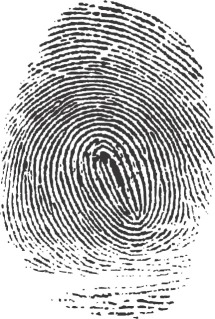
Every time you touch a glass, metal, or paper surface, you unknowingly leave a unique mark that no one else can replicate. This mark is known as a fingerprint, or scientifically, the impression left by friction ridges on the fingertips. Although it may seem trivial, fingerprints are one of the most important forensic evidences in the history of criminology. Their uniqueness and durability make them a key tool for identifying individuals, whether in criminal investigations or natural disasters. However, did you know that behind its simplicity, fingerprints hold deep scientific secrets and ongoing controversies?
The Science of Formation: How These Lines Are Formed?
Fingerprints form while in the womb, around weeks 10 to 24 of pregnancy. This process is influenced by mechanical pressure on the skin layer, amniotic fluid flow, and genetic factors. Although DNA determines the basic patterns such as circles, loops, or whorls, the fine details like ending points and ridge branches are the result of random interactions between rapidly dividing skin cells. This is why even identical twins, who share the same DNA, still have different fingerprints. This uniqueness makes fingerprints more reliable than DNA for distinguishing individuals in some situations, especially when DNA samples are contaminated or insufficient.
Uniqueness Throughout Life: The Only Mark That Never Changes
One of the most fascinating characteristics of fingerprints is that they remain the same throughout a person's life. Although the skin peels, wounds, or burns, as long as the basal skin layer is not severely damaged, the original pattern will regrow accurately. This is different from DNA, which can mutate or be affected by medical treatments. Therefore, authorities often use fingerprints as a long-term, reliable marker. In cases of natural disasters such as tsunamis or large fires, the fingerprints of victims who are difficult to identify often become the last resort for returning identities to their families.
Forensic Applications: From Glass to Courtroom
In forensic science, recovering partial fingerprints from a crime scene is a critical step. The moisture and natural oils on the fingers leave impressions on surfaces such as glass or metal. To obtain full fingerprints, investigators use ink or special powder that adheres to the friction ridges. Fingerprint records usually include the fingertips and thumb, but sometimes the bottom of the fingers are also recorded for completeness. Although this method has been used for over a century, it is not free from criticism. Many academics, judges, and journalists question the accuracy of fingerprint matching, especially when dealing with partial or blurred prints. Human error, investigator bias, and lack of uniform international standards often become sources of controversy.
Challenges and Controversies: Are Fingerprints Truly Strong Evidence?
Since the first use of fingerprints in court in the early 20th century, confidence in this method has grown stronger. However, several high-profile cases have revealed its weaknesses. For example, in 2004, a Spanish police officer mistakenly matched the fingerprint of Brandon Mayfield, an American attorney, with a fingerprint found at the scene of a bombing in Madrid. Mayfield was detained for two weeks before the mistake was discovered. This incident showed that although fingerprints are unique, the matching process can fail if subjective. Therefore, modern research emphasizes the use of automatic algorithms and statistical analysis to reduce the risk of errors. However, questions about the limits of fingerprint accuracy remain a hot debate among forensic scientists.
Life Implications: More Than Just Identification
Besides forensic applications, fingerprints are also used in daily technology. Modern smartphones, for example, use fingerprint scanners for device security. This takes advantage of the uniqueness and convenience of fingerprints as a biometric password. However, there are concerns about privacy and data security of fingerprints. Unlike passwords that can be changed, your fingerprint remains forever. If a fingerprint database is stolen, it can be used to illegally access devices or personal information. Therefore, users need to be cautious and choose devices that store fingerprint data locally and securely.
Conclusion: Reflections on Human Identity
Fingerprints are more than just an identification tool; they are a symbol of each individual's uniqueness. Every line, loop, and curve on the end of our fingers tells a story of biological development and an irreplaceable identity. However, like any scientific evidence, it is not perfect. The challenges in forensics and technology remind us that blind trust in any method can lead to serious consequences. So, while we admire the brilliance of fingerprints, let us also be critical and continue to support more transparent research. Reflective question: Are you truly ready to fully trust your identity on a set of small lines at the end of your fingers?
Reference: Fingerprint — Wikipedia
Hidden Secrets at the End of Fingers: Why Your Fingerprint Is More Unique Than DNA?. Fingerprints are not just a common identification tool; they are highly personal and hard-to-alter forensic evidence. This article explores the science behind fingerprint formation, their uniqueness throughout a lifetime, and their role in solving crimes and identifying disaster victims. However, despite its popularity, this method also faces controversies and challenges in the legal field.. Introduction: A Small Trace That Carries Great Mysteries
Every time you touch a glass, metal, or paper surface, you unknowingly leave a unique mark that no one else can replicate. This mark is known as a fingerprint, or scientifically, the impression left by friction ridges on the fingertips. Although it may seem trivial, fingerprints are one of the most important forensic evidences in the history of criminology. Their uniqueness and durability make them a key tool for identifying individuals, whether in criminal investigations or natural disasters. However, did you know that behind its simplicity, fingerprints hold deep scientific secrets and ongoing controversies?
The Science of Formation: How These Lines Are Formed?
Fingerprints form while in the womb, around weeks 10 to 24 of pregnancy. This process is influenced by mechanical pressure on the skin layer, amniotic fluid flow, and genetic factors. Although DNA determines the basic patterns such as circles, loops, or whorls, the fine details like ending points and ridge branches are the result of random interactions between rapidly dividing skin cells. This is why even identical twins, who share the same DNA, still have different fingerprints. This uniqueness makes fingerprints more reliable than DNA for distinguishing individuals in some situations, especially when DNA samples are contaminated or insufficient.
Uniqueness Throughout Life: The Only Mark That Never Changes
One of the most fascinating characteristics of fingerprints is that they remain the same throughout a person's life. Although the skin peels, wounds, or burns, as long as the basal skin layer is not severely damaged, the original pattern will regrow accurately. This is different from DNA, which can mutate or be affected by medical treatments. Therefore, authorities often use fingerprints as a long-term, reliable marker. In cases of natural disasters such as tsunamis or large fires, the fingerprints of victims who are difficult to identify often become the last resort for returning identities to their families.
Forensic Applications: From Glass to Courtroom
In forensic science, recovering partial fingerprints from a crime scene is a critical step. The moisture and natural oils on the fingers leave impressions on surfaces such as glass or metal. To obtain full fingerprints, investigators use ink or special powder that adheres to the friction ridges. Fingerprint records usually include the fingertips and thumb, but sometimes the bottom of the fingers are also recorded for completeness. Although this method has been used for over a century, it is not free from criticism. Many academics, judges, and journalists question the accuracy of fingerprint matching, especially when dealing with partial or blurred prints. Human error, investigator bias, and lack of uniform international standards often become sources of controversy.
Challenges and Controversies: Are Fingerprints Truly Strong Evidence?
Since the first use of fingerprints in court in the early 20th century, confidence in this method has grown stronger. However, several high-profile cases have revealed its weaknesses. For example, in 2004, a Spanish police officer mistakenly matched the fingerprint of Brandon Mayfield, an American attorney, with a fingerprint found at the scene of a bombing in Madrid. Mayfield was detained for two weeks before the mistake was discovered. This incident showed that although fingerprints are unique, the matching process can fail if subjective. Therefore, modern research emphasizes the use of automatic algorithms and statistical analysis to reduce the risk of errors. However, questions about the limits of fingerprint accuracy remain a hot debate among forensic scientists.
Life Implications: More Than Just Identification
Besides forensic applications, fingerprints are also used in daily technology. Modern smartphones, for example, use fingerprint scanners for device security. This takes advantage of the uniqueness and convenience of fingerprints as a biometric password. However, there are concerns about privacy and data security of fingerprints. Unlike passwords that can be changed, your fingerprint remains forever. If a fingerprint database is stolen, it can be used to illegally access devices or personal information. Therefore, users need to be cautious and choose devices that store fingerprint data locally and securely.
Conclusion: Reflections on Human Identity
Fingerprints are more than just an identification tool; they are a symbol of each individual's uniqueness. Every line, loop, and curve on the end of our fingers tells a story of biological development and an irreplaceable identity. However, like any scientific evidence, it is not perfect. The challenges in forensics and technology remind us that blind trust in any method can lead to serious consequences. So, while we admire the brilliance of fingerprints, let us also be critical and continue to support more transparent research. Reflective question: Are you truly ready to fully trust your identity on a set of small lines at the end of your fingers?
Reference: Fingerprint — Wikipedia https://en.wikipedia.org/wiki/Fingerprint