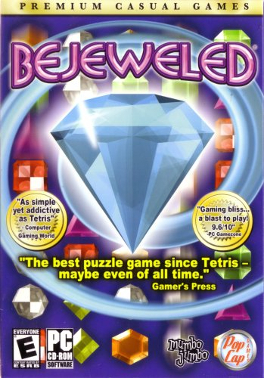
In the early era of the millennium, the digital video game landscape underwent a drastic change as simple yet addictive gameplay concepts began taking over online platforms. Among the most important works that pioneered this phenomenon was Bejeweled, a match-three puzzle game developed and published by independent game development company PopCap Games. Launched for the first time in 2000, Bejeweled not only managed to capture the attention of millions of players worldwide, but also set a new standard for the casual gaming genre that persists to this day.
The Origins of Bejeweled: From Diamond Mine to Web Browser
The birth of
Bejeweled stemmed from inspiration drawn from an earlier web browser game titled
Colors Game. Developers at PopCap Games saw great potential in the game's core mechanics and decided to restructure the gameplay with more appealing visuals and captivating audio feedback. Upon its initial release in 2000, the game was named
Diamond Mine and was hosted directly on the official PopCap Games website as a browser game based on Flash and Java technologies.
The early success of Diamond Mine caught the attention of tech giant Microsoft, which then struck a licensing deal to feature the game on their famous entertainment portal, MSN Games. However, due to trademark issues and broader marketing needs, the game's name was officially changed to Bejeweled. This rebranding proved to be an extremely successful strategic move, as the new name accurately depicted the core of the game based on shimmering precious gemstones.
Match-Three Mechanics: Simple Harmony That Captivates
From a gameplay mechanic perspective,
Bejeweled adopted fundamental principles that are extremely easy to understand for people of all backgrounds. The game board consists of a grid filled with various types of multicolored and shaped gemstones. Players are required to arrange or align at least three identical gemstones in a single horizontal or vertical row by swapping the positions of two adjacent gems.
When combinations of three or more gems are successfully formed, those gems disappear from the board, allowing gems at the top to fall down and fill the empty spaces. This process often triggers chain reactions (combos) that award high bonus points to the player. The simplicity of the game controls, accompanied by visual effects of breaking gems and triumphant cheers, creates an effective psychological reward cycle in keeping players entertained.
Launch of Bejeweled Deluxe and Retail Market Penetration
Seeing the exploding popularity online, PopCap Games decided to expand the brand into the physical software and paid download market. In May 2001, the company launched an upgraded version named
Bejeweled Deluxe. This retail version offered high-resolution graphics, streamlined background music, as well as new game modes such as the "Time Trial" mode and the time-limitless "Endless" mode.
The decision to sell Bejeweled Deluxe as a paid game proved to be a catalyst for extraordinary financial success for PopCap Games. It proved that personal computer users were willing to pay for simple yet high-quality games, thereby changing the industry's perception that browser puzzle games held no significant commercial value in retail stores.
The Impact of Bejeweled on the Casual Video Game Industry
The success of
Bejeweled laid a solid foundation for the widespread existence of the "casual video game" genre. Before the emergence of
Bejeweled, the video game industry was largely dominated by hardcore games requiring advanced hardware and long time commitments.
Bejeweled proved that there was a massive target market among ordinary users who wanted quick entertainment between work or leisure time.
The influence of this game can be clearly seen in the development of popular titles that followed in the next decade. The match-three gemstone formula pioneered by Bejeweled was adapted, modified, and inspired by hundreds of other developers across various platforms, including mobile phones and social media. Without the foundational success built by PopCap Games through Bejeweled, the rapid development of today's smartphone gaming industry might have taken a very different direction.
Legacy and Long-term Influence in Digital Pop Culture
As one of the best-selling and most influential video games in history,
Bejeweled is not just ordinary software design, but an important digital cultural artifact. The game has been ported to almost every existing electronic platform, ranging from personal computers, home gaming consoles, early mobile phones, iOS and Android devices, to displays on in-flight entertainment systems and smartwatches.
Overall, Bejeweled teaches us that innovation in the art of video games does not always require complex three-dimensional graphics or intricate storylines. Sometimes, the beauty of a work lies in design simplicity that is capable of providing universal fun to anyone regardless of age or background. Its success remains a major benchmark in the history of modern application and video game development.
Source: Wikipedia — https://en.wikipedia.org/wiki/Bejeweled_(video_game) | License: CC BY-SA 4.0
Puzzle Game Revolution: History and Impact of Bejeweled in the Digital Entertainment Industry. Bejeweled is an iconic match-three puzzle game developed by PopCap Games and first introduced in the year 2000. Originating from a browser game titled Colors Game and initially named Diamond Mine, the game evolved into a global phenomenon after being licensed to MSN Games. This article explores the development history, gameplay mechanics, and the profound impact of Bejeweled on the casual video game industry.. In the early era of the millennium, the digital video game landscape underwent a drastic change as simple yet addictive gameplay concepts began taking over online platforms. Among the most important works that pioneered this phenomenon was Bejeweled , a match-three puzzle game developed and published by independent game development company PopCap Games. Launched for the first time in 2000, Bejeweled not only managed to capture the attention of millions of players worldwide, but also set a new standard for the casual gaming genre that persists to this day.
The Origins of Bejeweled: From Diamond Mine to Web Browser
The birth of Bejeweled stemmed from inspiration drawn from an earlier web browser game titled Colors Game . Developers at PopCap Games saw great potential in the game's core mechanics and decided to restructure the gameplay with more appealing visuals and captivating audio feedback. Upon its initial release in 2000, the game was named Diamond Mine and was hosted directly on the official PopCap Games website as a browser game based on Flash and Java technologies.
The early success of Diamond Mine caught the attention of tech giant Microsoft, which then struck a licensing deal to feature the game on their famous entertainment portal, MSN Games. However, due to trademark issues and broader marketing needs, the game's name was officially changed to Bejeweled . This rebranding proved to be an extremely successful strategic move, as the new name accurately depicted the core of the game based on shimmering precious gemstones.
Match-Three Mechanics: Simple Harmony That Captivates
From a gameplay mechanic perspective, Bejeweled adopted fundamental principles that are extremely easy to understand for people of all backgrounds. The game board consists of a grid filled with various types of multicolored and shaped gemstones. Players are required to arrange or align at least three identical gemstones in a single horizontal or vertical row by swapping the positions of two adjacent gems.
When combinations of three or more gems are successfully formed, those gems disappear from the board, allowing gems at the top to fall down and fill the empty spaces. This process often triggers chain reactions combos that award high bonus points to the player. The simplicity of the game controls, accompanied by visual effects of breaking gems and triumphant cheers, creates an effective psychological reward cycle in keeping players entertained.
Launch of Bejeweled Deluxe and Retail Market Penetration
Seeing the exploding popularity online, PopCap Games decided to expand the brand into the physical software and paid download market. In May 2001, the company launched an upgraded version named Bejeweled Deluxe . This retail version offered high-resolution graphics, streamlined background music, as well as new game modes such as the "Time Trial" mode and the time-limitless "Endless" mode.
The decision to sell Bejeweled Deluxe as a paid game proved to be a catalyst for extraordinary financial success for PopCap Games. It proved that personal computer users were willing to pay for simple yet high-quality games, thereby changing the industry's perception that browser puzzle games held no significant commercial value in retail stores.
The Impact of Bejeweled on the Casual Video Game Industry
The success of Bejeweled laid a solid foundation for the widespread existence of the "casual video game" genre. Before the emergence of Bejeweled , the video game industry was largely dominated by hardcore games requiring advanced hardware and long time commitments. Bejeweled proved that there was a massive target market among ordinary users who wanted quick entertainment between work or leisure time.
The influence of this game can be clearly seen in the development of popular titles that followed in the next decade. The match-three gemstone formula pioneered by Bejeweled was adapted, modified, and inspired by hundreds of other developers across various platforms, including mobile phones and social media. Without the foundational success built by PopCap Games through Bejeweled , the rapid development of today's smartphone gaming industry might have taken a very different direction.
Legacy and Long-term Influence in Digital Pop Culture
As one of the best-selling and most influential video games in history, Bejeweled is not just ordinary software design, but an important digital cultural artifact. The game has been ported to almost every existing electronic platform, ranging from personal computers, home gaming consoles, early mobile phones, iOS and Android devices, to displays on in-flight entertainment systems and smartwatches.
Overall, Bejeweled teaches us that innovation in the art of video games does not always require complex three-dimensional graphics or intricate storylines. Sometimes, the beauty of a work lies in design simplicity that is capable of providing universal fun to anyone regardless of age or background. Its success remains a major benchmark in the history of modern application and video game development.
Source: Wikipedia — https://en.wikipedia.org/wiki/Bejeweled video game License: CC BY-SA 4.0