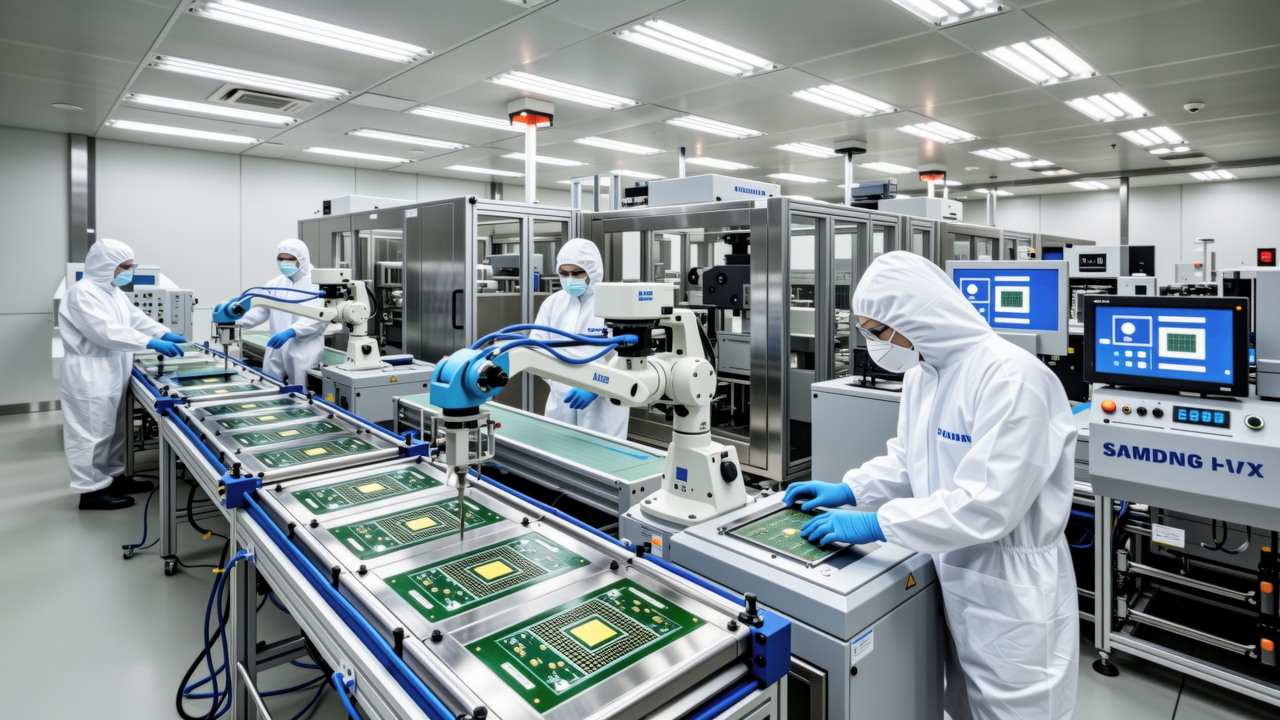
Suwon, 24 June — In the increasingly fierce technological competition among global powers, South Korea has solidified its position as the most critical semiconductor manufacturer on the planet. Samsung Electronics and SK Hynix, two leading South Korean technology giants that control more than 70 percent of the global DRAM memory market, have simultaneously announced success in developing a new generation of memory chip technology that sets new industry records.
Samsung successfully produced the fourth-generation High Bandwidth Memory (HBM4) DRAM chip using the most advanced 12nm manufacturing process to date. This chip offers a 40 percent higher data transfer speed compared to the previous generation while consuming 25 percent less electrical power — a combination highly sought after by companies developing AI servers and large-scale data centers.
The importance of this achievement in the context of global artificial intelligence development is unquestionable. Every large-scale AI model — from GPT to Gemini and Claude — relies on high-speed memory chips to operate efficiently. With a sudden surge in demand for global AI computing capacity, the demand for HBM chips has far exceeded current production capacity.
Both Samsung and SK Hynix are currently in the process of significantly expanding their production capacity. New billion-dollar factories are being built in South Korea, with some production operations also expanding to the United States and Europe as a response to geopolitical pressures to 'decouple' the semiconductor supply chain from a single Asian supplier.
The South Korean government supports the growth of this industry through highly competitive fiscal incentive packages. Semiconductor companies receive tax reductions of up to 25 percent for investments in new production facilities in South Korea, making South Korea remain an attractive location for semiconductor investment despite competition from incentives offered by the United States and Europe.
South Korea's level of dominance in memory semiconductors makes it an indispensable player in global technology geopolitics, giving Seoul significant diplomatic influence in its relations with Washington, Beijing, and European capitals.
Semiconductor Revolution in South Korea: Samsung and SK Hynix Lead the New Generation Chip Era. South Korean semiconductor manufacturers have launched a new generation of memory chips that set new records in speed and capacity, reinforcing Korea's dominance in the global technology supply chain.. Suwon, 24 June — In the increasingly fierce technological competition among global powers, South Korea has solidified its position as the most critical semiconductor manufacturer on the planet. Samsung Electronics and SK Hynix, two leading South Korean technology giants that control more than 70 percent of the global DRAM memory market, have simultaneously announced success in developing a new generation of memory chip technology that sets new industry records.
Samsung successfully produced the fourth-generation High Bandwidth Memory HBM4 DRAM chip using the most advanced 12nm manufacturing process to date. This chip offers a 40 percent higher data transfer speed compared to the previous generation while consuming 25 percent less electrical power — a combination highly sought after by companies developing AI servers and large-scale data centers.
The importance of this achievement in the context of global artificial intelligence development is unquestionable. Every large-scale AI model — from GPT to Gemini and Claude — relies on high-speed memory chips to operate efficiently. With a sudden surge in demand for global AI computing capacity, the demand for HBM chips has far exceeded current production capacity.
Both Samsung and SK Hynix are currently in the process of significantly expanding their production capacity. New billion-dollar factories are being built in South Korea, with some production operations also expanding to the United States and Europe as a response to geopolitical pressures to 'decouple' the semiconductor supply chain from a single Asian supplier.
The South Korean government supports the growth of this industry through highly competitive fiscal incentive packages. Semiconductor companies receive tax reductions of up to 25 percent for investments in new production facilities in South Korea, making South Korea remain an attractive location for semiconductor investment despite competition from incentives offered by the United States and Europe.
South Korea's level of dominance in memory semiconductors makes it an indispensable player in global technology geopolitics, giving Seoul significant diplomatic influence in its relations with Washington, Beijing, and European capitals.