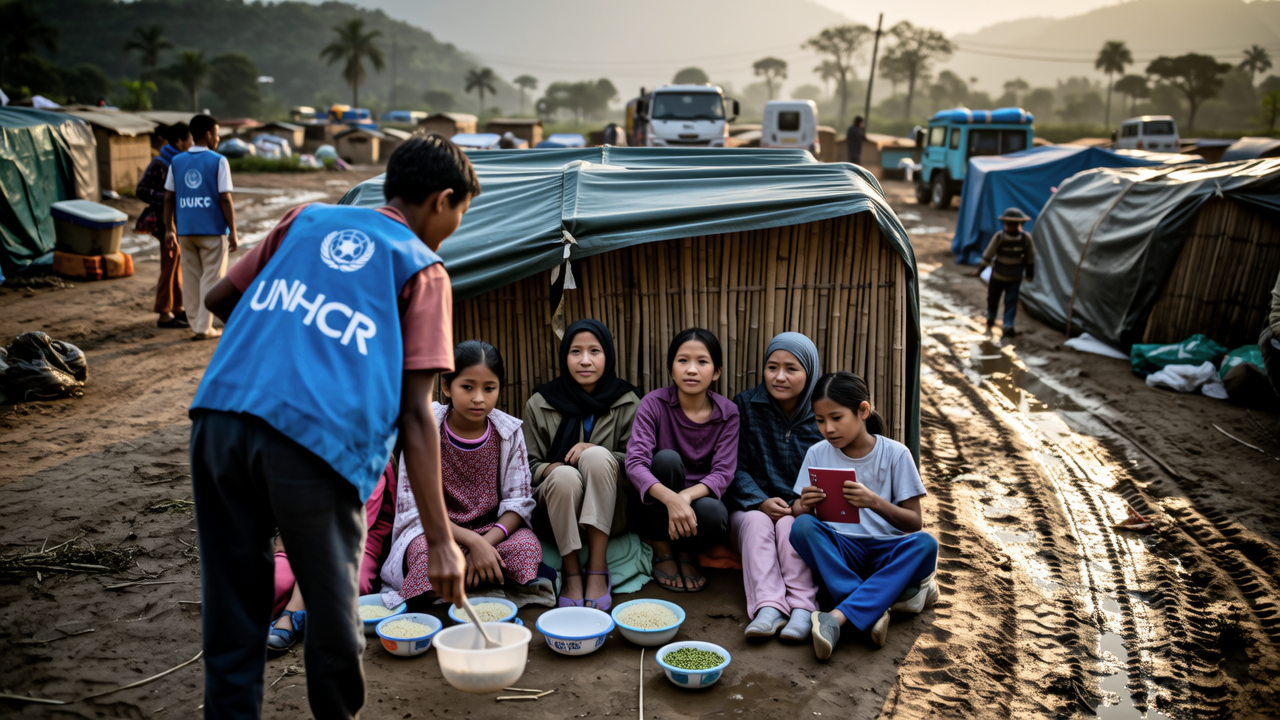
In the makeshift camps in Cox's Bazar, Bangladesh, more than 900,000 Rohingya refugees struggle with daily life. International aid flows in, but the question grows stronger: is this movement truly for humanity, or just a stage for hidden interests?
What is the actual Rohingya crisis?
This crisis stems from ethnic and religious conflicts in Rakhine State, Myanmar, where the Muslim Rohingya community has been a target of discrimination and violence for decades. In 2017, military attacks caused over 700,000 victims to flee to Bangladesh, according to a United Nations (UN) report. They now live in overcrowded camps, completely dependent on foreign aid.
Why is the humanitarian issue doubted?
Although many organizations such as UNHCR and ICRC carry out aid missions, doubts arise due to several factors. First, there are reports of fund abuse, where certain individuals or groups are accused of making personal profits. Second, some countries use this crisis to pressure Myanmar or enhance their diplomatic image. For example, Malaysia and Indonesia often express solidarity, yet actions at the regional level are often slow.
Who is taking advantage?
Human trafficking
Local criminal syndicates take advantage by offering false relocation promises. Many refugees have to pay thousands of ringgit for these 'services,' eventually becoming victims of trafficking.
Political actors
Some political parties use the Rohingya issue as election capital. Expressions of sympathy are often not followed by concrete actions, increasing cynicism among refugees and local people.
Aid organizations
There are cases where local NGOs are paid to implement programs, but the results are minimal. Independent audits found that most funds were used for administration, not for food or medicine.
What is the impact on refugees?
The direct effect is insufficient aid. Health centers lack medicine, sanitation systems are imperfect, and children do not receive formal education. More worrying, stigma against Rohingya is increasing in the host country, with accusations that they are an economic burden and a security threat.
How to distinguish genuine aid?
To ensure aid is truly humanitarian, several steps need to be taken:
- Financial transparency of aid organizations.
- Involvement of independent monitors in the camps.
- Reporting channels for refugees to report improper practices.
Positive examples include initiatives from local welfare organizations supervised by the Rohingya community itself.
Is there hope?
Although there are many uncertainties, there are also sincere efforts. Volunteers from various countries continue to provide educational and psychosocial services. Technology such as biometric registration has reduced fraud in aid distribution. Individual solidarity, regardless of origin, becomes a beacon of hope amid the darkness of this crisis.
In facing the Rohingya issue, we must be critical but not lose empathy. Every cent of aid is a trust—its use needs to be audited to reach those who truly need it. If not, humanity will only become an empty slogan.
Rohingya: Between True Humanity and Exploitation. The Rohingya refugee crisis has drawn global attention with significant humanitarian aid, but various parties are accused of exploiting the situation. This article explores the real motives behind the global response and the fate of the refugees.. In the makeshift camps in Cox's Bazar, Bangladesh, more than 900,000 Rohingya refugees struggle with daily life. International aid flows in, but the question grows stronger: is this movement truly for humanity, or just a stage for hidden interests?
What is the actual Rohingya crisis?
This crisis stems from ethnic and religious conflicts in Rakhine State, Myanmar, where the Muslim Rohingya community has been a target of discrimination and violence for decades. In 2017, military attacks caused over 700,000 victims to flee to Bangladesh, according to a United Nations UN report. They now live in overcrowded camps, completely dependent on foreign aid.
Why is the humanitarian issue doubted?
Although many organizations such as UNHCR and ICRC carry out aid missions, doubts arise due to several factors. First, there are reports of fund abuse, where certain individuals or groups are accused of making personal profits. Second, some countries use this crisis to pressure Myanmar or enhance their diplomatic image. For example, Malaysia and Indonesia often express solidarity, yet actions at the regional level are often slow.
Who is taking advantage?
Human trafficking
Local criminal syndicates take advantage by offering false relocation promises. Many refugees have to pay thousands of ringgit for these 'services,' eventually becoming victims of trafficking.
Political actors
Some political parties use the Rohingya issue as election capital. Expressions of sympathy are often not followed by concrete actions, increasing cynicism among refugees and local people.
Aid organizations
There are cases where local NGOs are paid to implement programs, but the results are minimal. Independent audits found that most funds were used for administration, not for food or medicine.
What is the impact on refugees?
The direct effect is insufficient aid. Health centers lack medicine, sanitation systems are imperfect, and children do not receive formal education. More worrying, stigma against Rohingya is increasing in the host country, with accusations that they are an economic burden and a security threat.
How to distinguish genuine aid?
To ensure aid is truly humanitarian, several steps need to be taken:
- Financial transparency of aid organizations.
- Involvement of independent monitors in the camps.
- Reporting channels for refugees to report improper practices.
Positive examples include initiatives from local welfare organizations supervised by the Rohingya community itself.
Is there hope?
Although there are many uncertainties, there are also sincere efforts. Volunteers from various countries continue to provide educational and psychosocial services. Technology such as biometric registration has reduced fraud in aid distribution. Individual solidarity, regardless of origin, becomes a beacon of hope amid the darkness of this crisis.
In facing the Rohingya issue, we must be critical but not lose empathy. Every cent of aid is a trust—its use needs to be audited to reach those who truly need it. If not, humanity will only become an empty slogan.