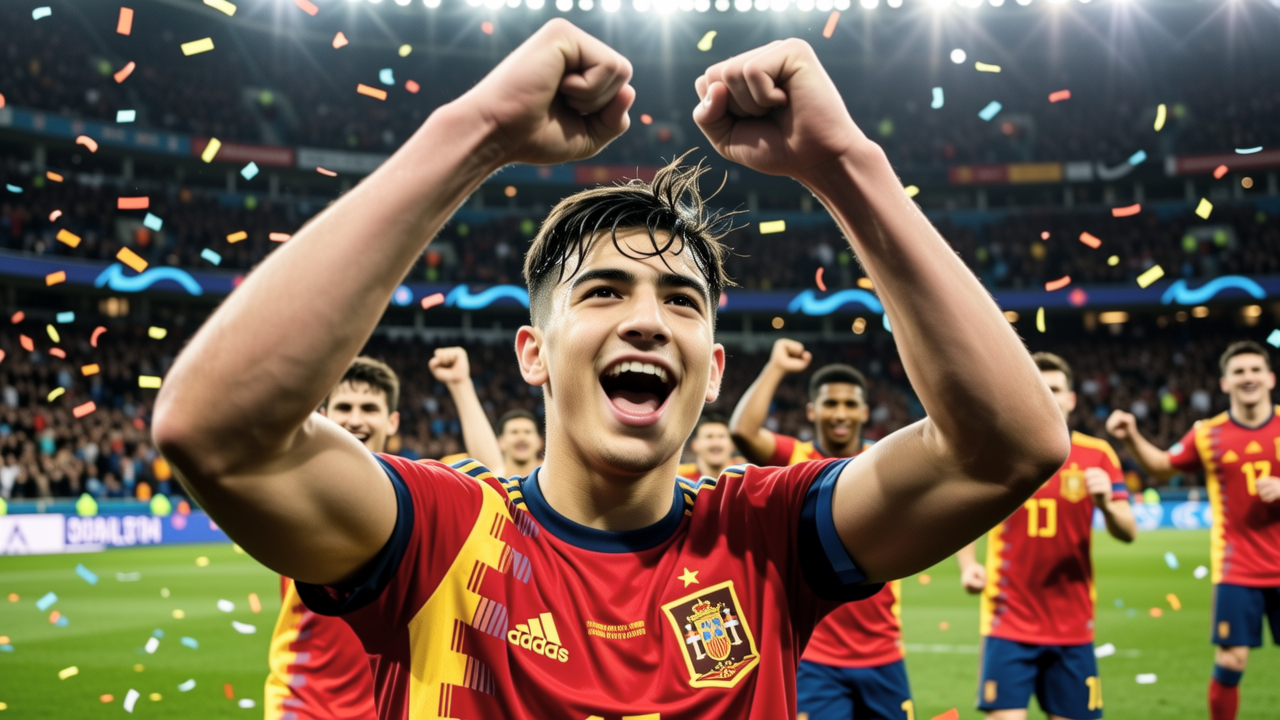
A Shaky Start
Spain began their 2026 World Cup campaign with a disappointing 1-1 draw against an underdog team, a result that left the high-profile squad under pressure. Questions immediately arose regarding their blunt attack, inconsistent defense, and a lack of the fluid play characteristic of La Roja. International media began questioning Luis de la Fuente's decision to sideline Lamine Yamal in the first match due to a minor injury recovery.
The second match against Saudi Arabia proved to be a turning point. With Yamal back on the right wing, Spain played with more agility, took more risks, and stayed truer to their tiki-taka identity – not just short passes, but coordinated off-the-ball movement and high pressing after losing possession. The 18-year-old not only opened up space but also opened the door to victory.
Convincing Victory Over Saudi Arabia
At Lusail Stadium, Spain dictated the tempo from the first minute. The opening goal came in the 23rd minute: Yamal's left-footed shot from outside the box curled delicately into the bottom left corner – an attempt showcasing energy, technique, and timely goal-scoring instinct.
Saudi Arabia tried to respond, but Spain's defense appeared more organized. Aymeric Laporte and Dani Carvajal defended the flanks with discipline, while Rodri acted as a dynamic shield in front of the backline. Alvaro Morata added a second goal in the 58th minute after receiving a cross from Yamal, before Pedri sealed the 3-0 victory in the 74th minute with a well-placed shot from inside the box.
Statistics reflected their dominance: 68% possession, 15 shots on goal (compared to Saudi Arabia's three), and 11 key passes – six of which came from Yamal. Morata's sharpness also returned, having failed to score in his previous three consecutive matches.
Lamine Yamal's Role
Yamal is not just a talented young player – he became the gravitational center of Spain's attack. His agility on the right wing forced opposing defenders wide, creating gaps for Nico Williams on the left and space for Pedri to operate in the center. In this match, he scored one goal, provided two assists, and completed 92% of his passes – including four key passes and three successful dribbles past defenders.
According to post-match press conference reports, Luis de la Fuente emphasized Yamal's exceptional maturity for his age and his ability to read the game at a high level. Team insiders stated that Yamal consistently stressed collective cooperation in pre-match discussions – an attitude that also rubbed off on his teammates.
What's Next for Spain?
This victory places Spain second in Group C with three points, behind Brazil, who also won their first two matches. The final group game against Brazil is scheduled for Stadium MetLife, New Jersey – an absolute test of tactics, mentality, and physicality.
If Spain wins or draws, they have a chance to advance as group winners or runners-up, potentially avoiding early knockout stage encounters with strong teams like Germany or Argentina. However, consistency remains a challenge: the performance against Saudi Arabia may not be replicable against a more organized and experienced team like Brazil.
The absence of Sergio Busquets is still felt in the transition from defense to attack, but the contributions of Gavi and Yamal show that the new generation can fill that void – not by imitation, but with their own style.
Tactical Analysis
De la Fuente remained loyal to the 4-3-3 formation but with key adjustments: Yamal and Williams were given freedom to move diagonally, not just stay wide. This forced opposing full-backs into quick – and often confused – decisions. Rodri played further forward than usual, acting as a pivotal midfielder linking Laporte with Pedri, while Morata functioned as a false nine, often dropping deep to receive the ball and link play from midfield.
The high press after losing possession successfully prevented Saudi Arabia from mounting more than two meaningful attacks in 90 minutes. However, the finishing rate still needs improvement: out of 15 attempts, only three were on target – a sign that final accuracy and the courage to shoot in tight situations need to be honed.
Conclusion
The 3-0 victory over Saudi Arabia was more than just three points. It was proof that Spain can blend the legacy of tiki-taka with the energy of a new generation. Yamal is not a complementary player – he is the trigger for transformation. The match against Brazil is no longer a test of reputation, but a test of endurance: whether this resurgence is temporary or truly signals the rebirth of La Roja.