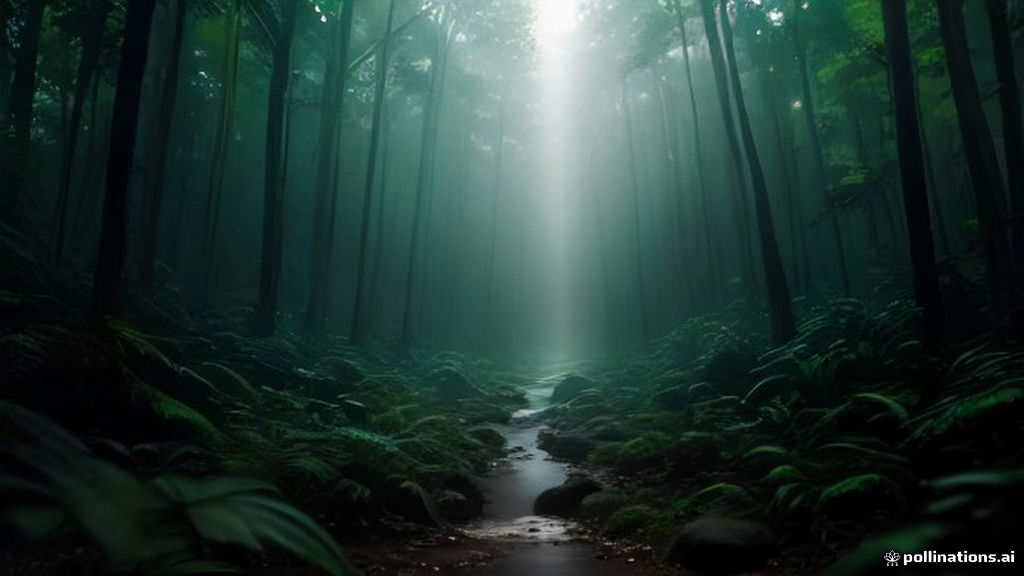
When you step into a quiet forest, you might imagine trees as solitary living beings competing with one another for sunlight and soil nutrients. This perception has dominated botanical science for centuries. However, scientific discoveries in recent decades have uncovered a truly astonishing reality: the soil beneath our feet is actually teeming with a highly complex network of communication and energy exchange, much like a natural 'internet'.
This underground network is known among scientists as the Wood Wide Web. It is formed by a network of microscopic fungi that forge symbiotic relationships with tree roots. This phenomenon not only changes how we understand botany, but also proves that forest ecosystems function like a giant single organism cooperating for mutual survival.
The Wonder of Symbiosis: How the Mycelial Network Works
At the center of this mysterious network is a fungal structure called mycelium. Mycelium consists of microscopic fine threads called hyphae, which spread widely throughout the soil and connect roots from various different tree species. This cooperative relationship between fungi and plant roots is scientifically known as a mycorrhizal relationship.
In this symbiotic bond, the exchange of nutrients occurs continuously and equitably. Trees carrying out photosynthesis produce energy-rich carbon and sugars, delivering a portion of these organic compounds to the fungi. In return, the fungi—with their vast reach of hyphae in the soil—absorb water and essential minerals such as nitrogen and phosphorus, transferring them directly to the trees' root systems. Without this fungal network, most trees in the forest would struggle to obtain sufficient nutrients.
The Language of Trees: Warning Systems and Resource Sharing
The capability of this network does not stop at mere food exchange. In-depth research shows that trees use the mycorrhizal network to 'communicate' and warn each other when threatened by danger. When a tree is attacked by pests or caterpillars, it secretes specific chemical and electrical signals through the underground fungal network to neighboring trees.
As soon as nearby trees receive these emergency signals, they immediately activate their self-defense mechanisms before pests have a chance to attack. For example, neighboring trees will initiate the production of toxic chemical compounds or tannins in their leaves to make them bitter and unpalatable to insects. This premature defensive action dramatically increases the overall survival rate of the forest community.
Furthermore, this network enables the transfer of resources from strong trees to weaker ones. Large, mature trees with dense foliage—often referred to as 'Mother Trees'—use this underground network to channel sugars and nutrients to saplings growing in shaded areas receiving less sunlight. Through this support, young seedlings can survive and grow until they can reach the forest canopy.
The Dark Side of the 'Wood Wide Web': Chemical Warfare and Sabotage
While this underground network is often portrayed as a symbol of harmonious cooperation, nature is not devoid of competition and aggressive survival tactics. Some plant species exploit this mycorrhizal network not to guide their neighbors, but to launch chemical sabotage.
For example, certain species of walnut trees secrete a natural chemical toxin known as juglone through their root and fungal networks. This chemical compound spreads to the surrounding area and stymies the growth of competing plants nearby, thereby ensuring the walnut tree dominates space and soil resources. There are also specific parasitic plant species that lack chlorophyll for photosynthesis; they continuously steal carbon and nutrients from other trees through these fungal network connections without offering anything in return.
Implications for Conservation and the Future of Forests
Understanding the
Wood Wide Web carries immense implications for modern forestry and environmental conservation practices. Clear-cutting trees in forest areas not only fells tree trunks above the surface, but also destroys the underground mycelial network that has formed over hundreds of years. When Mother Trees are cut down, the entire underground support ecosystem collapses, making it difficult for saplings in the area to grow healthily.
In addition, reforestation efforts that focus solely on a single tree species (monoculture) are now known to be more vulnerable to disease threats and climate change. Diverse forest species with rich underground networks are far more resilient because they can support one another during drought seasons or pest outbreaks.
Recognizing the existence of this underground communication network teaches us that forests are not merely collections of trees standing in isolation, but rather deeply interconnected and interdependent communities. Every time we preserve a mother tree in the forest, we are actually preserving a lifeline that supports thousands of other lives around it.
---
Reference: Bahasa rahsia di dalam hutan/Nor'aishah Abu Shah — Google Scholar
Did You Know That Forests Have an Underground Communication Network Similar to the Internet?. When we walk through a forest, we might see trees standing separately as individual entities. However, modern scientific research proves that beneath the ground lies a complex fungal network known as the 'Wood Wide Web'. This mycelial network allows trees to share nutrients, warn each other about insect threats, and support young saplings.. When you step into a quiet forest, you might imagine trees as solitary living beings competing with one another for sunlight and soil nutrients. This perception has dominated botanical science for centuries. However, scientific discoveries in recent decades have uncovered a truly astonishing reality: the soil beneath our feet is actually teeming with a highly complex network of communication and energy exchange, much like a natural 'internet'.
This underground network is known among scientists as the Wood Wide Web . It is formed by a network of microscopic fungi that forge symbiotic relationships with tree roots. This phenomenon not only changes how we understand botany, but also proves that forest ecosystems function like a giant single organism cooperating for mutual survival.
The Wonder of Symbiosis: How the Mycelial Network Works
At the center of this mysterious network is a fungal structure called mycelium. Mycelium consists of microscopic fine threads called hyphae, which spread widely throughout the soil and connect roots from various different tree species. This cooperative relationship between fungi and plant roots is scientifically known as a mycorrhizal relationship.
In this symbiotic bond, the exchange of nutrients occurs continuously and equitably. Trees carrying out photosynthesis produce energy-rich carbon and sugars, delivering a portion of these organic compounds to the fungi. In return, the fungi—with their vast reach of hyphae in the soil—absorb water and essential minerals such as nitrogen and phosphorus, transferring them directly to the trees' root systems. Without this fungal network, most trees in the forest would struggle to obtain sufficient nutrients.
The Language of Trees: Warning Systems and Resource Sharing
The capability of this network does not stop at mere food exchange. In-depth research shows that trees use the mycorrhizal network to 'communicate' and warn each other when threatened by danger. When a tree is attacked by pests or caterpillars, it secretes specific chemical and electrical signals through the underground fungal network to neighboring trees.
As soon as nearby trees receive these emergency signals, they immediately activate their self-defense mechanisms before pests have a chance to attack. For example, neighboring trees will initiate the production of toxic chemical compounds or tannins in their leaves to make them bitter and unpalatable to insects. This premature defensive action dramatically increases the overall survival rate of the forest community.
Furthermore, this network enables the transfer of resources from strong trees to weaker ones. Large, mature trees with dense foliage—often referred to as 'Mother Trees'—use this underground network to channel sugars and nutrients to saplings growing in shaded areas receiving less sunlight. Through this support, young seedlings can survive and grow until they can reach the forest canopy.
The Dark Side of the 'Wood Wide Web': Chemical Warfare and Sabotage
While this underground network is often portrayed as a symbol of harmonious cooperation, nature is not devoid of competition and aggressive survival tactics. Some plant species exploit this mycorrhizal network not to guide their neighbors, but to launch chemical sabotage.
For example, certain species of walnut trees secrete a natural chemical toxin known as juglone through their root and fungal networks. This chemical compound spreads to the surrounding area and stymies the growth of competing plants nearby, thereby ensuring the walnut tree dominates space and soil resources. There are also specific parasitic plant species that lack chlorophyll for photosynthesis; they continuously steal carbon and nutrients from other trees through these fungal network connections without offering anything in return.
Implications for Conservation and the Future of Forests
Understanding the Wood Wide Web carries immense implications for modern forestry and environmental conservation practices. Clear-cutting trees in forest areas not only fells tree trunks above the surface, but also destroys the underground mycelial network that has formed over hundreds of years. When Mother Trees are cut down, the entire underground support ecosystem collapses, making it difficult for saplings in the area to grow healthily.
In addition, reforestation efforts that focus solely on a single tree species monoculture are now known to be more vulnerable to disease threats and climate change. Diverse forest species with rich underground networks are far more resilient because they can support one another during drought seasons or pest outbreaks.
Recognizing the existence of this underground communication network teaches us that forests are not merely collections of trees standing in isolation, but rather deeply interconnected and interdependent communities. Every time we preserve a mother tree in the forest, we are actually preserving a lifeline that supports thousands of other lives around it.
---
Reference: Bahasa rahsia di dalam hutan/Nor'aishah Abu Shah — Google Scholar https://ir.uitm.edu.my/id/eprint/87437/