🌍 Global coverage 24/7 • 🏯 East Asia: China, Japan, Korea • 🛕 South Asia: India • 🏰 Europe • 🗽 Americas • 🌍 Africa • 🕌 Middle East • 🇵🇸 Palestine Solidarity •
This article is a translation from the original language.
🕌 Stories & Lessons
Taj Mahal: The Mughal Architectural Crown Born from Shah Jahan's Eternal Love
The Taj Mahal in Agra, India, is not just a stunning white marble mausoleum; it is a manifestation of the deep love of Mughal Emperor Shah Jahan for his wife, Mumtaz Mahal. Built over 22 years with thousands of workers and artists from around the world, this monument symbolizes the peak of Mughal architecture and the grandeur of Islamic civilization. This article explores the history, figures, and eternal legacy of the Taj Mahal as proof of love and the refinement of Islamic art.
On the right bank of the Yamuna River in Agra, India, stands a monument shrouded in legend and the purity of love. The Taj Mahal, with its soaring white marble dome, is not just a mausoleum; it is an architectural sonata composed by a emperor whose heart was broken. In 1631, when Mumtaz Mahal, the beloved wife of Emperor Shah Jahan, died during the birth of their 14th child, the Mughal world lost its light. Yet from this sorrow emerged a masterpiece that would change the landscape of world architecture. Shah Jahan, the fifth ruler of the Mughal Empire who reigned from 1628 to 1658, did not just build a tomb; he built a promise of eternity. The Taj Mahal, which in Hindustani means "Crown of the Palace," is proof that true love can overcome death.
The Grieving Emperor: Shah Jahan and Mumtaz Mahal
Shah Jahan, whose original name was Khurram, was the grandson of the great Emperor Akbar. From a young age, he was raised in a tradition of high art and culture. However, his meeting with Arjumand Banu Begum, later known as Mumtaz Mahal ("The Jewel of the Palace"), changed his life. Mumtaz was not just a wife; she was a counselor, a friend, and a source of inspiration. When Mumtaz died in the hands of a midwife in Burhanpur, Shah Jahan was said to have grieved for a year, not appearing in public, and his hair turned white. From this deep sorrow, he decided to build a tomb never seen before in the world. He gathered architects, masons, calligraphers, and artists from across the empire—from Persia, the Ottoman Empire, to Europe. It is said that more than 20,000 workers worked day and night to realize his vision.
Mughal Architecture: A Marriage of Heaven and Earth
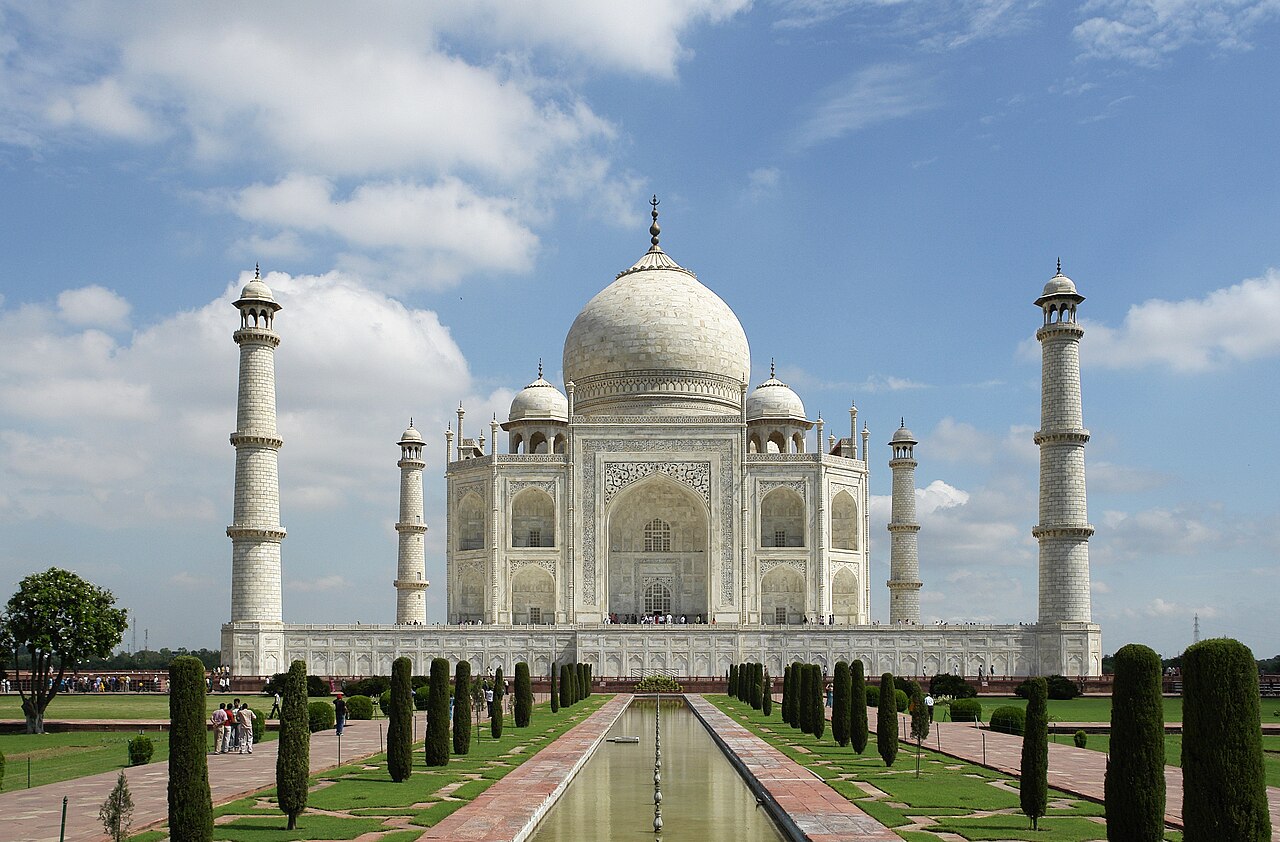
The Taj Mahal is the pinnacle of Mughal architecture, a style that combines Persian, Islamic, Indian, and Turkish elements. The 17-acre (42-acre) complex is designed with perfect symmetry, reflecting the concept of paradise in Islam. The grand main entrance, the mosque on the west side, and the guest house on the east side surround the central tomb. The formal four-part garden (charbagh) with water channels symbolizes the rivers of paradise. However, the most captivating feature is the main dome—a white marble structure that seems to float in the air. This dome is surrounded by four minarets that slightly tilt outward, not just for decoration, but designed to protect the tomb if it collapses.
Calligraphy on the walls of the Taj Mahal, containing verses from the Quran, is carved using the pietra dura technique—semi-precious stones such as lapis lazuli, crystal, and turquoise are arranged in white marble. This art is not only beautiful but also carries a spiritual message. The tomb of Mumtaz Mahal lies directly beneath the dome, while Shah Jahan's tomb was added later beside it, breaking the original symmetry, yet adding a layer of enduring love narrative.
Construction Process: Precision and Expertise
The construction of the main tomb was completed in 1648, but other works such as the mosque, guest house, and large wall took another five years. The first ceremony was held on February 6, 1643, on the 12th anniversary of Mumtaz Mahal's death. Shah Jahan himself attended, perhaps with a heart still full of sorrow. Building materials were imported from all over the world: white marble from Makrana in Rajasthan, jade from China, turquoise from Tibet, lapis lazuli from Afghanistan, and sapphire from Sri Lanka. Every stone was carefully selected. Legend has it that Shah Jahan cut off the head of the chief architect so that such a work could not be repeated—but this is merely a baseless myth. Instead, historical records show that architects such as Ustad Ahmad Lahauri and many others were honored.
Eternal Legacy: From Tomb to World Icon
The Taj Mahal is not just an architectural wonder; it is a symbol of the glory of Islamic civilization in India. In an era where empires were often measured by military strength, Shah Jahan chose to be measured by beauty. The Taj Mahal was recognized as a UNESCO World Heritage Site in 1983 and named one of the New Seven Wonders of the World in 2007. Every year, millions of visitors from around the world come to witness the beauty that changes color with the sunlight—pink at dawn, dazzling white at noon, and golden at sunset. However, behind its magnificence, the Taj Mahal also faces threats from pollution and erosion. Preservation efforts continue to ensure that Shah Jahan's love lives on.
Conclusion: Love That Transcends Time
The Taj Mahal teaches us that Islamic civilization is not only about war and conquest, but also about sensitivity, love, and beauty. Shah Jahan, through his grief and love, left a legacy more enduring than any palace or fortress. This monument is a reminder that behind every white marble stone, there is an unextinguished story of the heart. The Taj Mahal is not a tomb; it is a poem carved from stone, and it will continue to tell its story as long as the world turns.
Taj Mahal: The Mughal Architectural Crown Born from Shah Jahan's Eternal Love. The Taj Mahal in Agra, India, is not just a stunning white marble mausoleum; it is a manifestation of the deep love of Mughal Emperor Shah Jahan for his wife, Mumtaz Mahal. Built over 22 years with thousands of workers and artists from around the world, this monument symbolizes the peak of Mughal architecture and the grandeur of Islamic civilization. This article explores the history, figures, and eternal legacy of the Taj Mahal as proof of love and the refinement of Islamic art.. Love Frozen in White Marble
On the right bank of the Yamuna River in Agra, India, stands a monument shrouded in legend and the purity of love. The Taj Mahal, with its soaring white marble dome, is not just a mausoleum; it is an architectural sonata composed by a emperor whose heart was broken. In 1631, when Mumtaz Mahal, the beloved wife of Emperor Shah Jahan, died during the birth of their 14th child, the Mughal world lost its light. Yet from this sorrow emerged a masterpiece that would change the landscape of world architecture. Shah Jahan, the fifth ruler of the Mughal Empire who reigned from 1628 to 1658, did not just build a tomb; he built a promise of eternity. The Taj Mahal, which in Hindustani means "Crown of the Palace," is proof that true love can overcome death.
The Grieving Emperor: Shah Jahan and Mumtaz Mahal
Shah Jahan, whose original name was Khurram, was the grandson of the great Emperor Akbar. From a young age, he was raised in a tradition of high art and culture. However, his meeting with Arjumand Banu Begum, later known as Mumtaz Mahal "The Jewel of the Palace" , changed his life. Mumtaz was not just a wife; she was a counselor, a friend, and a source of inspiration. When Mumtaz died in the hands of a midwife in Burhanpur, Shah Jahan was said to have grieved for a year, not appearing in public, and his hair turned white. From this deep sorrow, he decided to build a tomb never seen before in the world. He gathered architects, masons, calligraphers, and artists from across the empire—from Persia, the Ottoman Empire, to Europe. It is said that more than 20,000 workers worked day and night to realize his vision.
Mughal Architecture: A Marriage of Heaven and Earth
The Taj Mahal is the pinnacle of Mughal architecture, a style that combines Persian, Islamic, Indian, and Turkish elements. The 17-acre 42-acre complex is designed with perfect symmetry, reflecting the concept of paradise in Islam. The grand main entrance, the mosque on the west side, and the guest house on the east side surround the central tomb. The formal four-part garden charbagh with water channels symbolizes the rivers of paradise. However, the most captivating feature is the main dome—a white marble structure that seems to float in the air. This dome is surrounded by four minarets that slightly tilt outward, not just for decoration, but designed to protect the tomb if it collapses.
Calligraphy on the walls of the Taj Mahal, containing verses from the Quran, is carved using the pietra dura technique—semi-precious stones such as lapis lazuli, crystal, and turquoise are arranged in white marble. This art is not only beautiful but also carries a spiritual message. The tomb of Mumtaz Mahal lies directly beneath the dome, while Shah Jahan's tomb was added later beside it, breaking the original symmetry, yet adding a layer of enduring love narrative.
Construction Process: Precision and Expertise
The construction of the main tomb was completed in 1648, but other works such as the mosque, guest house, and large wall took another five years. The first ceremony was held on February 6, 1643, on the 12th anniversary of Mumtaz Mahal's death. Shah Jahan himself attended, perhaps with a heart still full of sorrow. Building materials were imported from all over the world: white marble from Makrana in Rajasthan, jade from China, turquoise from Tibet, lapis lazuli from Afghanistan, and sapphire from Sri Lanka. Every stone was carefully selected. Legend has it that Shah Jahan cut off the head of the chief architect so that such a work could not be repeated—but this is merely a baseless myth. Instead, historical records show that architects such as Ustad Ahmad Lahauri and many others were honored.
Eternal Legacy: From Tomb to World Icon
The Taj Mahal is not just an architectural wonder; it is a symbol of the glory of Islamic civilization in India. In an era where empires were often measured by military strength, Shah Jahan chose to be measured by beauty. The Taj Mahal was recognized as a UNESCO World Heritage Site in 1983 and named one of the New Seven Wonders of the World in 2007. Every year, millions of visitors from around the world come to witness the beauty that changes color with the sunlight—pink at dawn, dazzling white at noon, and golden at sunset. However, behind its magnificence, the Taj Mahal also faces threats from pollution and erosion. Preservation efforts continue to ensure that Shah Jahan's love lives on.
Conclusion: Love That Transcends Time
The Taj Mahal teaches us that Islamic civilization is not only about war and conquest, but also about sensitivity, love, and beauty. Shah Jahan, through his grief and love, left a legacy more enduring than any palace or fortress. This monument is a reminder that behind every white marble stone, there is an unextinguished story of the heart. The Taj Mahal is not a tomb; it is a poem carved from stone, and it will continue to tell its story as long as the world turns.
---
Reference: Taj Mahal — Wikipedia https://en.wikipedia.org/wiki/Taj Mahal