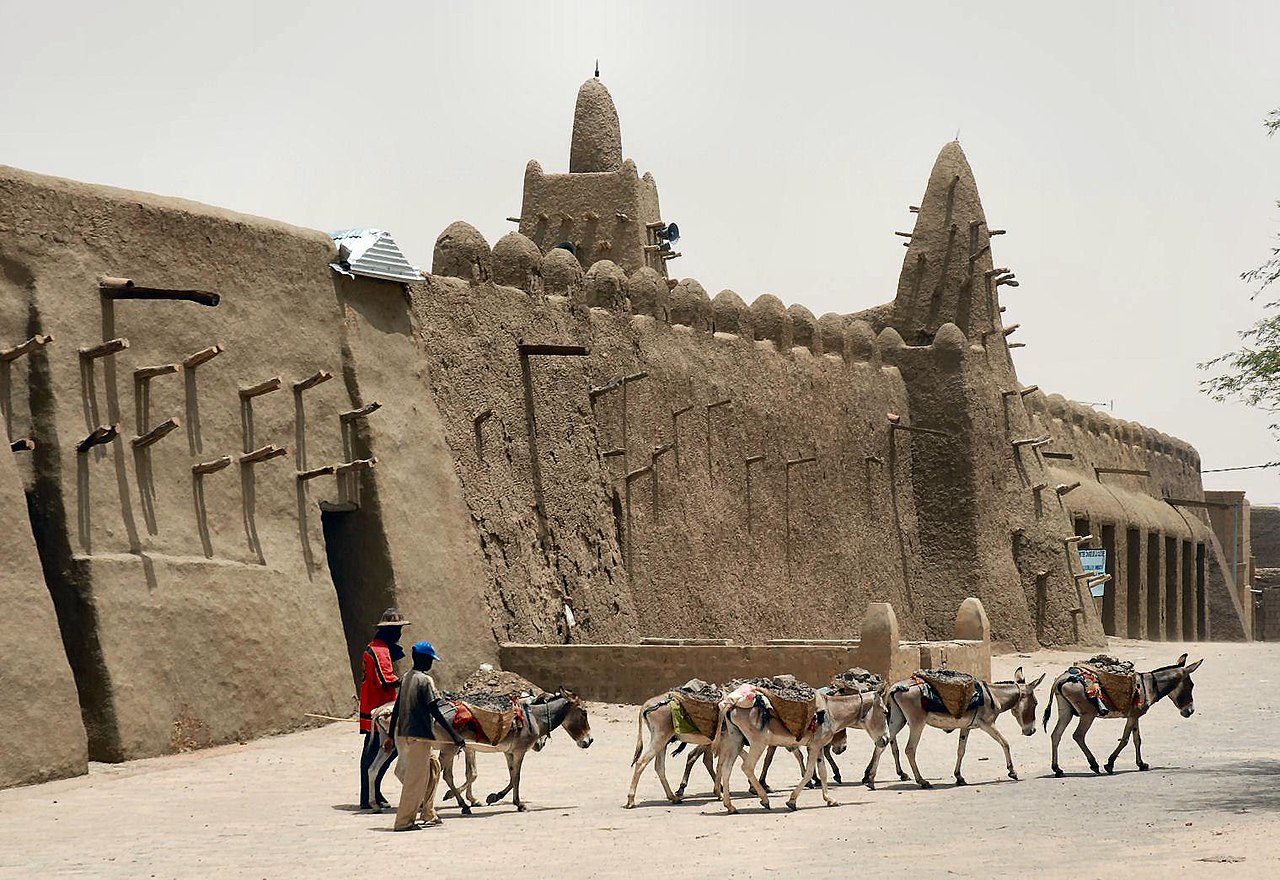
Timbuktu: A Jewel of Knowledge in the Middle of the Sahara Desert
Imagine a city located on the edge of the Sahara Desert, surrounded by breathtaking sands, yet becoming the most brilliant center of trade and intellect in medieval Africa. That is Timbuktu—a city whose name is often mentioned in legends as a place full of gold, but in reality, it is even richer in knowledge. In the history of Islamic civilization, Timbuktu is not just an ordinary town; it is a symbol of intellectual and spiritual brilliance that illuminated West Africa for centuries.
From a Nomadic Settlement to a Center of Knowledge
Timbuktu began as a temporary settlement established by the Tuareg tribe in the early 12th century. The name 'Timbuktu' is believed to come from the Tuareg word 'Tin Bukt,' meaning 'the place of Bukt,' referring to an old woman who guarded a well in the area. However, a major transformation occurred when the trans-Saharan trade routes shifted here, making Timbuktu a strategic crossroads for gold and salt.
The real success of Timbuktu began after the visit of the Mali Emperor, Mansa Musa, around 1325. Mansa Musa, known for his extraordinary wealth and grand pilgrimage to Mecca, made Timbuktu a center of governance and scholarship. He built large mosques such as the Djinguereber Mosque and the Sankore Mosque, which became pillars of the city's intellectual and spiritual development.
A Center of Knowledge Illuminating Africa
At its peak during the 14th to 16th centuries, Timbuktu became an unmatched center of Islamic knowledge in Africa. The Sankore University, which developed from a mosque, attracted thousands of students from across the Islamic world, including from Maghribi, Egypt, and the Arabian Peninsula. Here, they studied various fields such as theology, law, astronomy, mathematics, medicine, and philosophy.
Prominent scholars like Ahmad Baba al-Timbukti, a jurist and historian, taught and wrote in this city. The Timbuktu libraries hold thousands of manuscripts covering a wide range of topics, including science, literature, and history. These manuscripts are not only in Arabic but also in local languages such as Songhai and Fulfulde, showing the inclusive nature of knowledge here.
Wealth and Commercial Success
In addition to knowledge, Timbuktu was also renowned for its material wealth. As a center for the trade of salt, gold, and ivory, the city became a destination for merchants from the north and south. Salt from the Sahara mines, which was worth as much as gold at the time, was exchanged for gold from southern kingdoms. This trade activity made Timbuktu a prosperous city, with beautifully carved houses and bustling markets.
This wealth also attracted the attention of European explorers and writers, who often described Timbuktu as a place full of gold and luxury. However, more importantly, this wealth enabled the funding of educational institutions and libraries, making knowledge the city's most valuable asset.
Decline and Enduring Legacy
The glory of Timbuktu began to fade in the late 16th century when the Songhai Empire fell due to attacks from the Maghreb. Trade routes shifted towards the coast, and the city gradually lost its economic significance. However, Timbuktu's intellectual legacy continued to live on through the manuscripts stored in local libraries.
In the 20th century, Timbuktu became a focus for the world when thousands of manuscripts were rediscovered, preserving knowledge that had nearly been lost. Although it faced threats from militant groups in 2012, which destroyed some sacred tombs, efforts by local communities and international organizations to restore and preserve the manuscripts have successfully saved this heritage.
Timbuktu in the Memory of the World
Today, Timbuktu is recognized as a UNESCO World Heritage Site, despite facing challenges of poverty and conflict. However, the spirit of its former glory lives on in the folds of history. Timbuktu is not only a symbol of gold trade, but more importantly, it is proof that knowledge can flourish anywhere, even in the middle of a barren desert.
The story of Timbuktu is a lesson that Islamic civilization once reached a high level of excellence in the fields of intellectual and commercial endeavors, and was able to unite various cultures and knowledge from all over the world. It reminds us that true greatness does not lie in material wealth, but in the intellectual heritage left behind for future generations.
This article was written based on references from Wikipedia and authentic historical sources.
---
Rujukan: Timbuktu — Wikipedia
Timbuktu: The Golden City and Amazing Center of Islamic Knowledge in Africa. Timbuktu, an ancient city in Mali, was a center of Islamic civilization from the 14th to 16th centuries. Famous for its wealth from salt, gold, and ivory trade, the city also emerged as an intellectual hub with libraries and universities that attracted scholars from across the Islamic world. Its valuable intellectual heritage continues to be admired today.. Timbuktu: A Jewel of Knowledge in the Middle of the Sahara Desert
Imagine a city located on the edge of the Sahara Desert, surrounded by breathtaking sands, yet becoming the most brilliant center of trade and intellect in medieval Africa. That is Timbuktu—a city whose name is often mentioned in legends as a place full of gold, but in reality, it is even richer in knowledge. In the history of Islamic civilization, Timbuktu is not just an ordinary town; it is a symbol of intellectual and spiritual brilliance that illuminated West Africa for centuries.
From a Nomadic Settlement to a Center of Knowledge
Timbuktu began as a temporary settlement established by the Tuareg tribe in the early 12th century. The name 'Timbuktu' is believed to come from the Tuareg word 'Tin Bukt,' meaning 'the place of Bukt,' referring to an old woman who guarded a well in the area. However, a major transformation occurred when the trans-Saharan trade routes shifted here, making Timbuktu a strategic crossroads for gold and salt.
The real success of Timbuktu began after the visit of the Mali Emperor, Mansa Musa, around 1325. Mansa Musa, known for his extraordinary wealth and grand pilgrimage to Mecca, made Timbuktu a center of governance and scholarship. He built large mosques such as the Djinguereber Mosque and the Sankore Mosque, which became pillars of the city's intellectual and spiritual development.
A Center of Knowledge Illuminating Africa
At its peak during the 14th to 16th centuries, Timbuktu became an unmatched center of Islamic knowledge in Africa. The Sankore University, which developed from a mosque, attracted thousands of students from across the Islamic world, including from Maghribi, Egypt, and the Arabian Peninsula. Here, they studied various fields such as theology, law, astronomy, mathematics, medicine, and philosophy.
Prominent scholars like Ahmad Baba al-Timbukti, a jurist and historian, taught and wrote in this city. The Timbuktu libraries hold thousands of manuscripts covering a wide range of topics, including science, literature, and history. These manuscripts are not only in Arabic but also in local languages such as Songhai and Fulfulde, showing the inclusive nature of knowledge here.
Wealth and Commercial Success
In addition to knowledge, Timbuktu was also renowned for its material wealth. As a center for the trade of salt, gold, and ivory, the city became a destination for merchants from the north and south. Salt from the Sahara mines, which was worth as much as gold at the time, was exchanged for gold from southern kingdoms. This trade activity made Timbuktu a prosperous city, with beautifully carved houses and bustling markets.
This wealth also attracted the attention of European explorers and writers, who often described Timbuktu as a place full of gold and luxury. However, more importantly, this wealth enabled the funding of educational institutions and libraries, making knowledge the city's most valuable asset.
Decline and Enduring Legacy
The glory of Timbuktu began to fade in the late 16th century when the Songhai Empire fell due to attacks from the Maghreb. Trade routes shifted towards the coast, and the city gradually lost its economic significance. However, Timbuktu's intellectual legacy continued to live on through the manuscripts stored in local libraries.
In the 20th century, Timbuktu became a focus for the world when thousands of manuscripts were rediscovered, preserving knowledge that had nearly been lost. Although it faced threats from militant groups in 2012, which destroyed some sacred tombs, efforts by local communities and international organizations to restore and preserve the manuscripts have successfully saved this heritage.
Timbuktu in the Memory of the World
Today, Timbuktu is recognized as a UNESCO World Heritage Site, despite facing challenges of poverty and conflict. However, the spirit of its former glory lives on in the folds of history. Timbuktu is not only a symbol of gold trade, but more importantly, it is proof that knowledge can flourish anywhere, even in the middle of a barren desert.
The story of Timbuktu is a lesson that Islamic civilization once reached a high level of excellence in the fields of intellectual and commercial endeavors, and was able to unite various cultures and knowledge from all over the world. It reminds us that true greatness does not lie in material wealth, but in the intellectual heritage left behind for future generations.
This article was written based on references from Wikipedia and authentic historical sources.
---
Rujukan: Timbuktu — Wikipedia https://en.wikipedia.org/wiki/Timbuktu